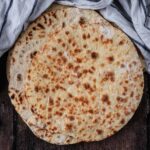
Easy Homemade Flatbread
These easy homemade flatbreads are soft, fluffy and made with no yeast. Cook them in a dry pan and serve with dips, wraps or salads.
Servings: 6 people
Calories: 174kcal
Ingredients
- 250 g of Self-raising flour
- 0.5 tablespoons of Baking powder
- 250 g of 0% fat Greek yogurt
Instructions
- Put 250 g of Self-raising flour and 0.5 tablespoons of Baking powder into a large bowl and then stir in 250 g of 0% fat Greek yogurt.
- Stir with a spoon until it forms a dough. If it is still really wet, add some more flour. Use your hands to bring it all together.
- Put the dough onto a floured work surface and knead for a few minutes until smooth and pliable.
- Divide the dough into 6 pieces.
- Using a floured rolling pin, roll each piece of dough out. Use a knife to cut into 8-inch circles.
- Heat a large flat pan over a medium heat (don't add oil). Add 1 flatbread at a time and cook for around 2 minutes (bubbles will start to form in the dough).
- Flip the flatbread over and cook for a further 2 minutes.
- Repeat with the remaining flatbreads.
Cutting them into neat circles is not vital, but we like a nice round flatbread.
Notes
- Use thick Greek yogurt for the best texture. If the yogurt is too runny, the dough will be sticky and you may need to add more flour.
- Do not add too much extra flour when rolling. A little flour stops the dough sticking, but too much can make the flatbreads dry.
- If the dough feels too sticky, add a small spoonful of flour at a time until it is easier to handle. If it feels too dry, add a little more yogurt.
- Do not over-knead the dough. It only needs a couple of minutes to become smooth. Too much kneading can make the flatbreads tougher.
- Roll them fairly thin, but not paper-thin. If they are too thick, they may stay doughy in the middle. If they are too thin, they can become crisp rather than soft.
- Make sure the pan is hot before adding the flatbread. A medium-high heat gives those golden spots and helps the flatbread puff slightly.
- If the flatbreads are browning too quickly but still feel doughy, turn the heat down a little. Every hob and pan is slightly different.
- Keep cooked flatbreads wrapped in a clean tea towel while you cook the rest. This helps them stay soft and warm.
Nutrition
Serving: 1flatbread | Calories: 174kcal | Carbohydrates: 33g | Protein: 7g | Sodium: 227mg | Potassium: 248mg | Fibre: 1g | Sugar: 3g | Vitamin C: 0.4mg | Calcium: 132mg | Iron: 0.5mg
See this recipe on the site by scanning this QR code:
