




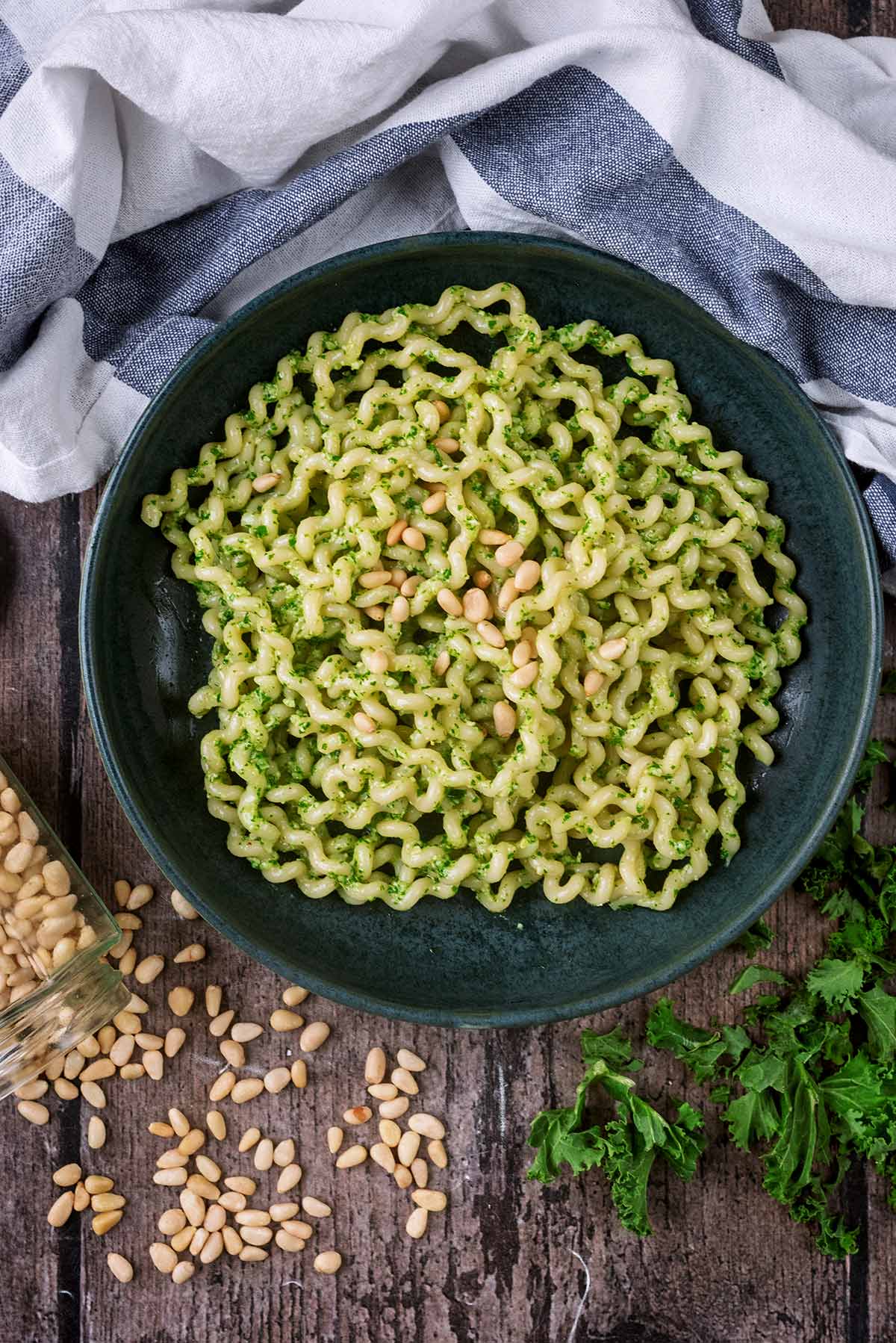
Pesto pasta is such a delicious simple meal option, but we have made it even more nutritious by making our own homemade pesto with kale. Great for fussy eaters, as you would never know that it has kale in it and just like regular pesto there are so many different ways to use it. Kale Pesto Pasta is a versatile family favourite that is ready in under 15 minutes.
Would you like to save this post?
A simple mix of kale, pine nuts, Parmesan cheese, garlic, lemon, and olive oil blended together, this is such an easy weeknight dinner. Pesto pasta is my go-to when I need dinner on the table quickly, but this kale pesto pasta is a meal you can feel really good about serving - especially if you are trying to get some extra greens into your family's diet.
What I love about this recipe, is that it is a great budget option. Store bought pesto is so expensive, and kale is often cheaper than fresh basil, it keeps well in the fridge, and it gives pesto a deeper, earthier flavour. It is such a great way to get some more kale into your diet. But, also, have you tried these Kale Crisps?
You can dress this meal up or down. Keep it simple and serve it as it is, have it as a side dish at a BBQ or top it with some cooked salmon or chicken.
Looking for more pesto recipes? Why not try our easy Chicken Pesto Pasta Salad, delicious Slow Cooker Pesto Chicken or our quick Pesto Salmon?
Jump to:
Ingredients and Substitutions
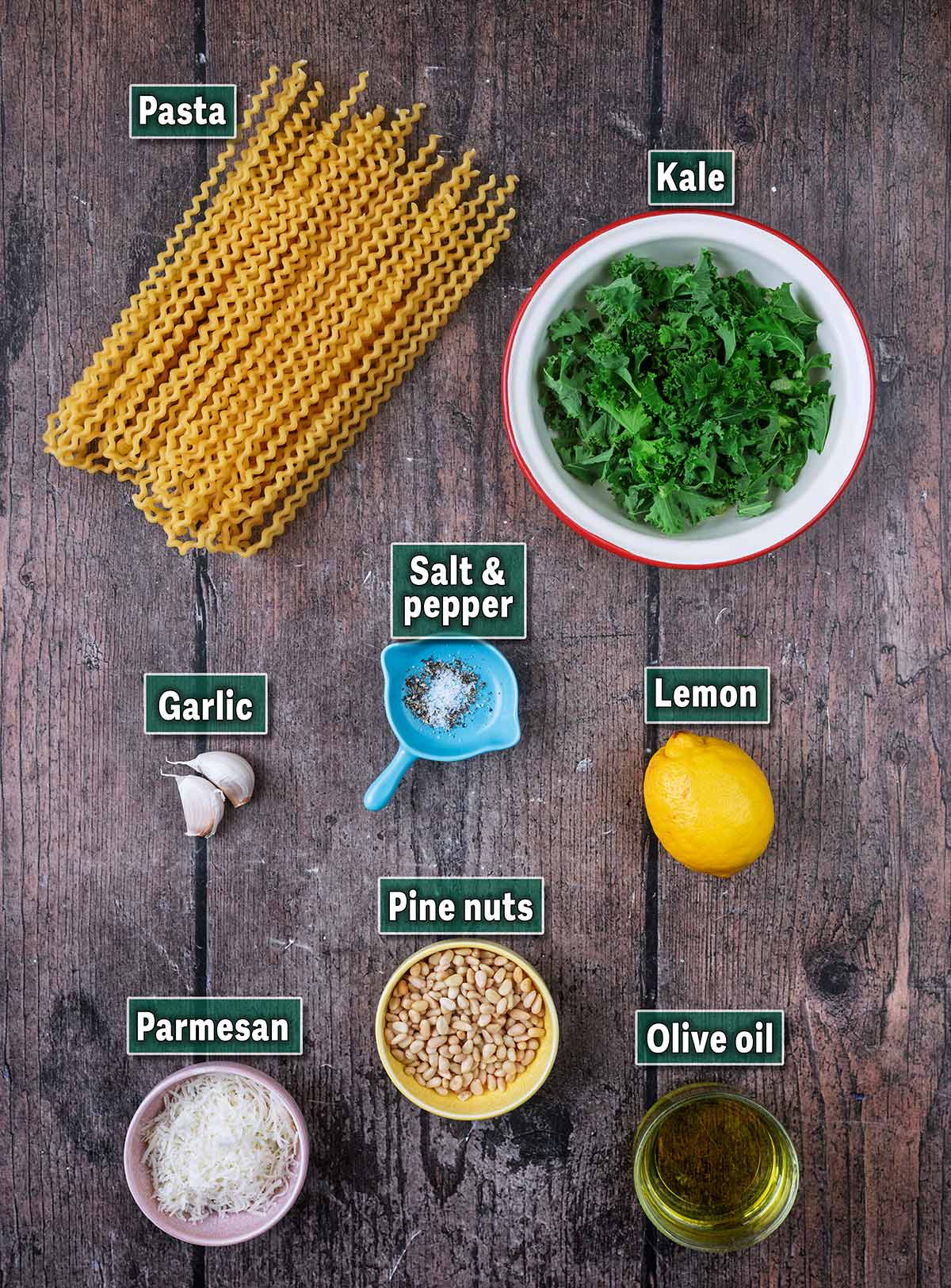
A full ingredients list, along with US Customary and Metric measurements, can be found in the recipe card at the end of this post.
- Kale - Make sure the stalks have been cut off so that it is easier to blend.
- Oil - A good quality extra virgin olive oil.
- Parmesan - Freshly grate your own rather than using pre-grated.
- Lemon - You can use fresh lemon juice and zest for extra lemon flavour.
- Garlic - Use fresh garlic.
- Water - This helps to loosen up the pesto without having to add extra oil.
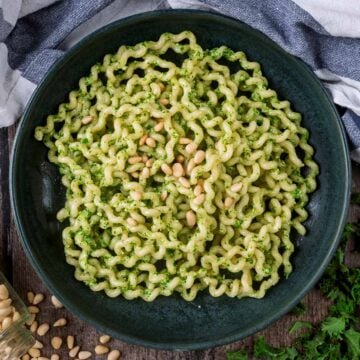
- Pasta - This is quite a simple dish, so I like to go a little more fancy with the pasta. This curly spaghetti shape we used here (known as fusilli lunghi) helps the pesto to cling to it and my kids loved it. But you can use any pasta shape.
Variations
Nuts - For a nuttier, more budget-friendly version, swap the pine nuts for walnuts, almonds, or sunflower seeds. The flavour will change slightly, but it will still be delicious.
Creamy - For a creamier sauce, stir in a spoonful of mascarpone, cream cheese, or ricotta when mixing the pesto through the pasta. This gives the dish a softer, richer finish and can help mellow the kale for children or fussier eaters.
Dairy free - Leave out the Parmesan and add a little nutritional yeast plus an extra pinch of salt.
How To Make Kale Pesto Pasta
- Step 1: Cook your pasta according to the packet instructions, normally 10-12 minutes.
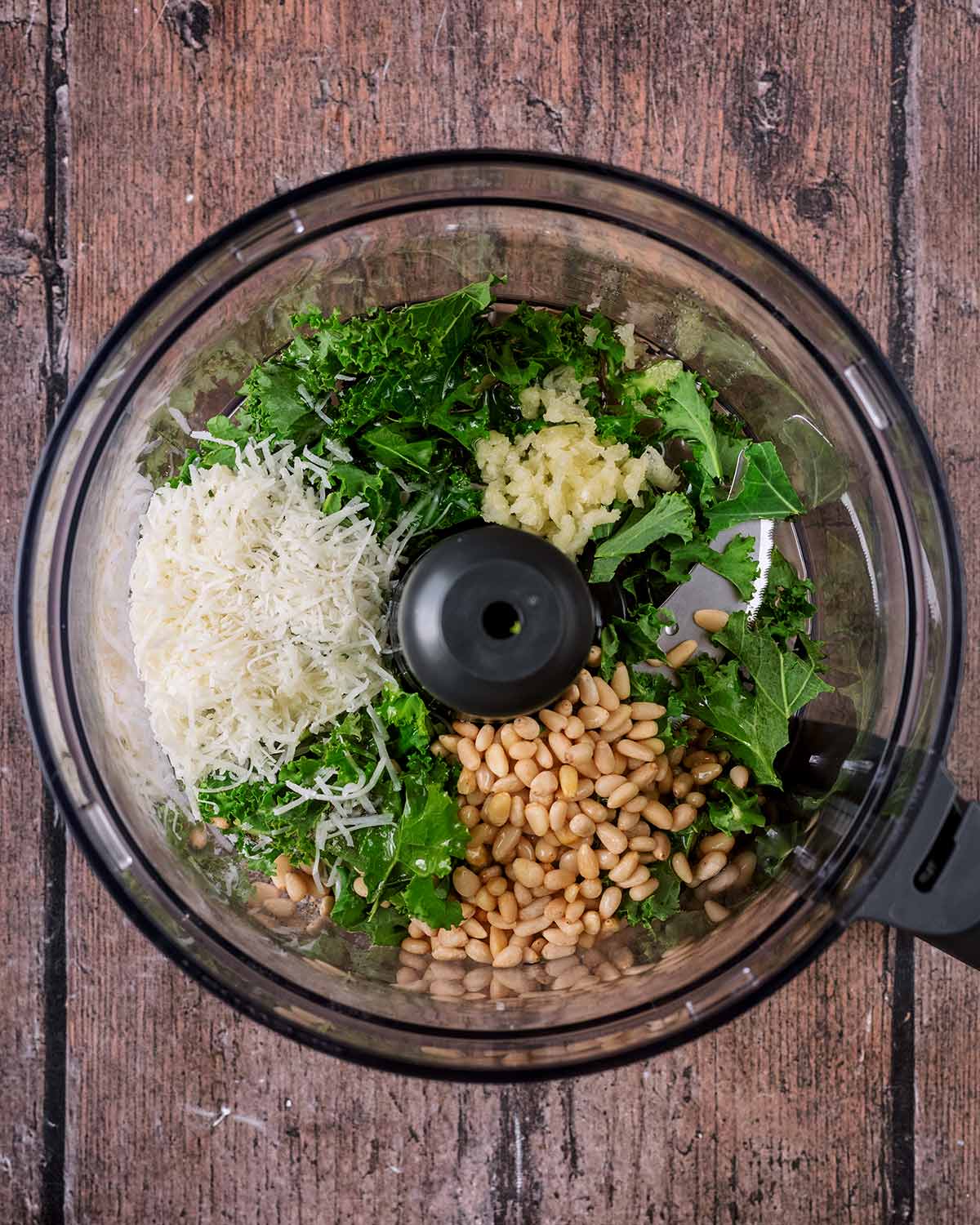
- Step 2: Put the pesto ingredients into a food processor.
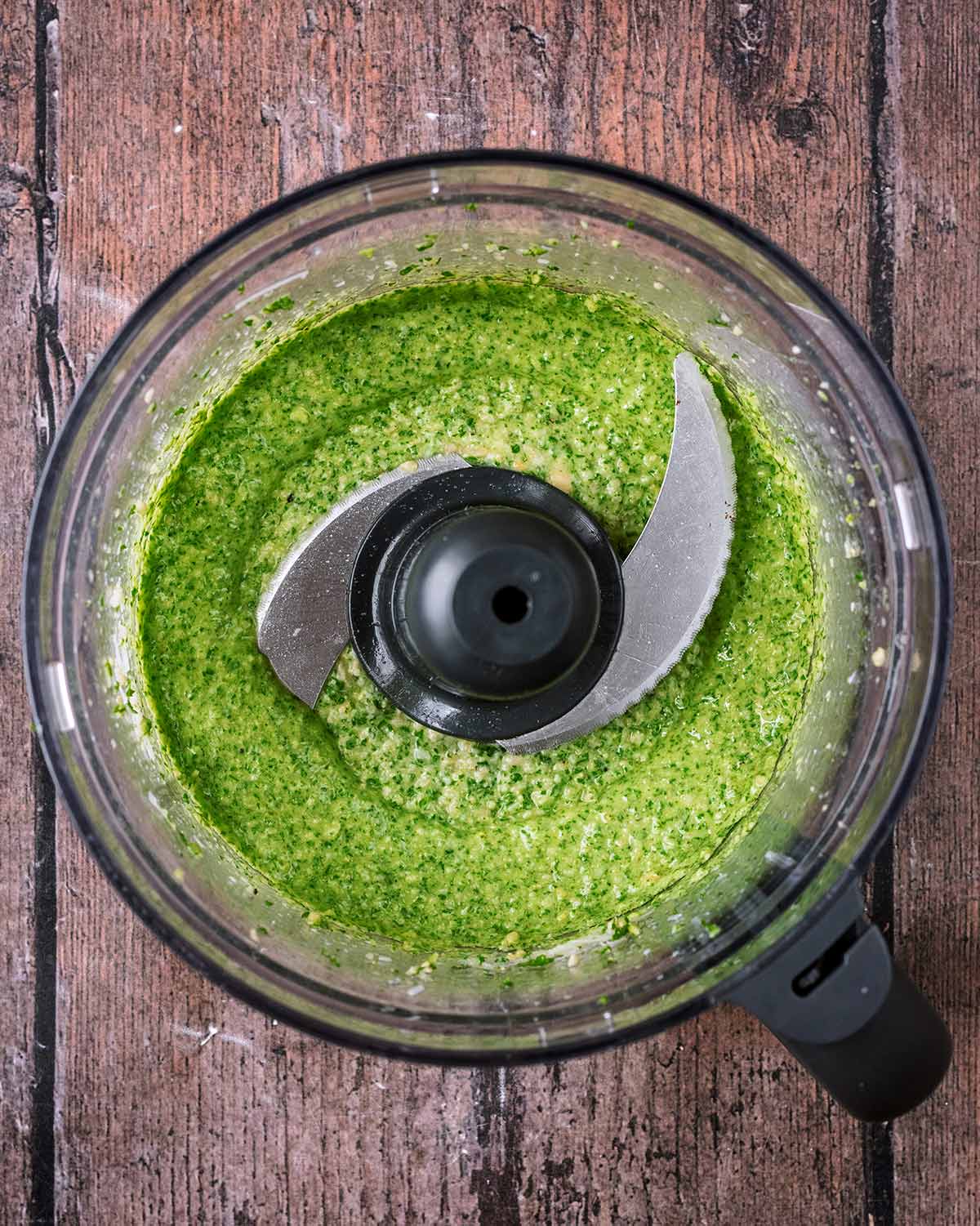
- Step 3: Process to form a smooth pesto.
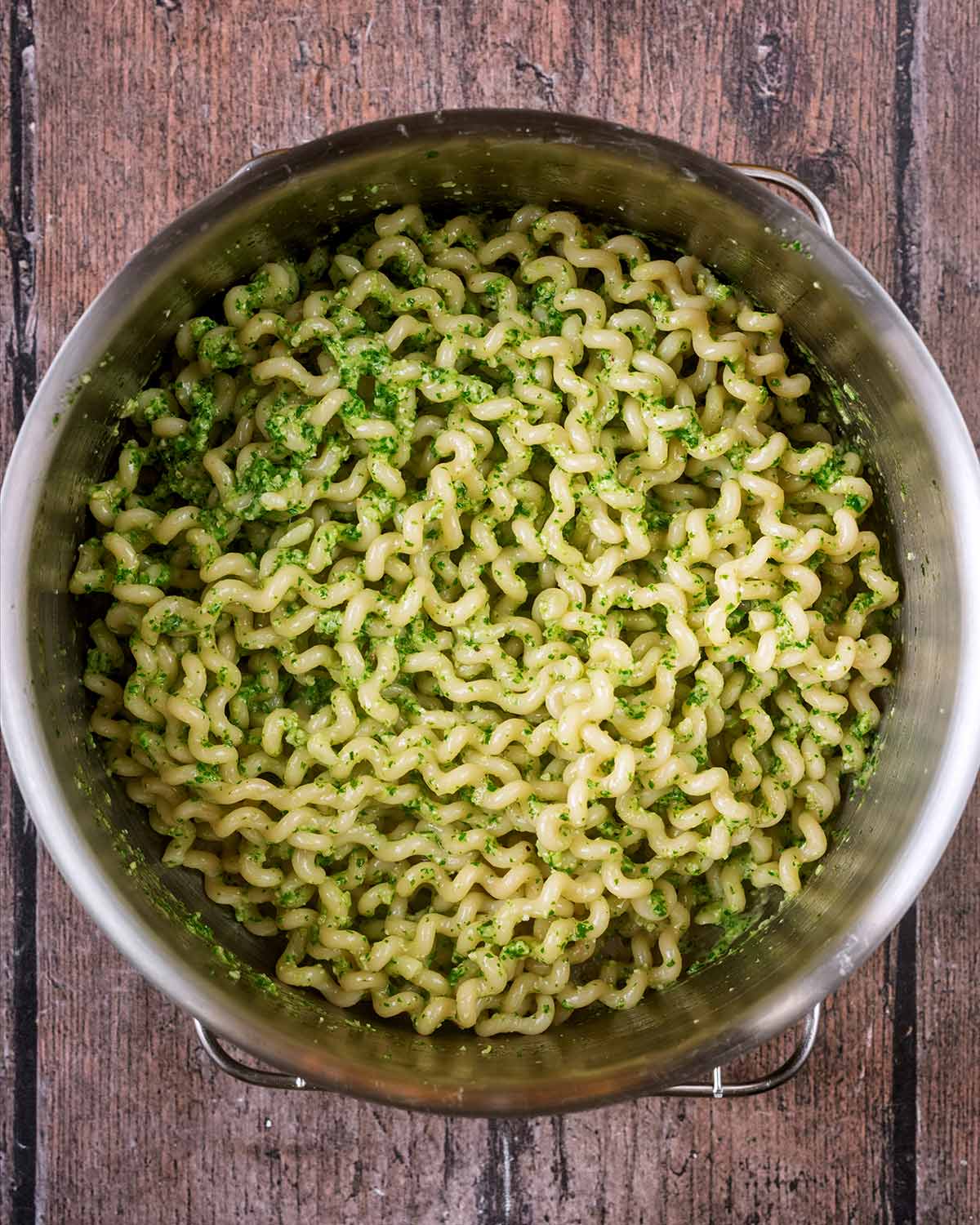
- Step 4: Once the pasta is cooked, drain and return to the pan. Stir the pesto through the cooked pasta and serve immediately.
Serving Suggestions
For protein, add shredded chicken, grilled salmon, crispy bacon, prawns, or white beans. This turns it from a simple pasta dish into a more filling meal.
For more vegetables, stir through peas or sweetcorn, roasted courgette (zucchini), broccoli, spinach, or cherry tomatoes. This is a great way to bulk out the meal while keeping it light.
You also can't go wrong with some garlic bread. Try this Air Fryer Garlic Bread.
Meal Prep and Storage
This kale pesto pasta recipe is great for meal prep, especially if you make the pesto ahead of time. The kale pesto can be stored in an airtight container in the fridge for up to 3 days. To help it stay bright, smooth the top and pour over a thin layer of olive oil before sealing. This helps reduce browning.
Freeze - You can also freeze the pesto in small portions for up to 3 months. Ice cube trays are useful for this because you can freeze individual amounts and defrost only what you need. Once frozen, pop the cubes into a freezer bag or container.
Leftovers - If you have leftover dressed pasta, store it in the fridge for up to 2 days. The pesto may thicken as it sits, so when reheating, add a splash of water and warm it gently to loosen the sauce. The pasta is also nice eaten cold as a pasta salad-style lunch the following day, especially with a few extra vegetables or a sprinkle of Parmesan on top.
For the best texture, I would recommend making the pesto in advance and cooking the pasta fresh when you are ready to eat. That way, the sauce keeps its bright flavour and silky texture.

Dannii's Top Tips
- Remove any thick, woody stems on the kale before blending. The leaves blend much more easily and give you a smoother sauce.
- Do not skip tasting the pesto before tossing it with the pasta. Kale can vary in bitterness, lemons vary in sharpness, and Parmesan varies in saltiness. A quick taste lets you balance everything properly and add more salt, pepper or lemon if needed.
- Avoid overheating the pesto. This is not a sauce that needs lots of cooking. Stir it through the hot pasta off the heat or over very low heat.
- If your pesto feels too thick, add water a tablespoon at a time until it blends smoothly. If it tastes a little flat, it almost always needs either more salt, more lemon, or a little extra Parmesan. If it tastes too sharp, add a touch more olive oil or Parmesan to soften it.
- To make it feel even more special, toast the pine nuts before blending. This is a small step, but it adds a deeper, warmer flavour that makes the pesto taste even better.

Frequently Asked Questions
Both work well. Curly kale gives a slightly more textured pesto, while cavolo nero usually blends a bit more smoothly and has a slightly deeper flavour.
Raw kale works perfectly well in this recipe when blended with olive oil, lemon, and water. If you prefer a milder flavour, you can blanch it briefly first.
Yes, just swap the pine nuts for sunflower seeds.
More Pasta Recipes

If you've tried this kale pesto pasta recipe, let us know how you got on in the comments below.
Tag us in your creations on Instagram @hungryhealthyhappy - Use the hashtag #hungryhealthyhappy too.
Recipe
Kale Pesto Pasta {15-Minute Recipe}



Recipe Video
Ingredients
- 280 g (10 oz) of Pasta
- 20 g (1 cup) of Kale - de-stalked
- 30 g (0.25 cup) of Pine nuts
- 15 g (0.5 oz) of Parmesan - grated
- 60 ml (0.25 cup) of Olive oil - extra virgin
- 1 tablespoon of Lemon juice
- 2 Garlic cloves - crushed
- 1 pinch of Fine sea salt
- 1 pinch of Ground black pepper
Instructions
- Cook 280 g of Pasta according to the packet instructions, normally 10-12 minutes.
- Put 20 g of Kale, 30 g of Pine nuts, 15 g of Parmesan, 60 ml of Olive oil, 1 tbsp of Lemon juice, 2 Garlic cloves, 1 pinch of Fine sea salt and 1 pinch of Ground black pepper into a food processor.
- Process to form a smooth pesto.
- Once the pasta is cooked, drain and return to the pan. Stir the pesto through the pasta and serve immediately.
Recipe Notes
- Remove any thick, woody stems on the kale before blending. The leaves blend much more easily and give you a smoother sauce.
- Do not skip tasting the pesto before tossing it with the pasta. Kale can vary in bitterness, lemons vary in sharpness, and Parmesan varies in saltiness. A quick taste lets you balance everything properly and add more salt, pepper or lemon if needed.
- Avoid overheating the pesto. This is not a sauce that needs lots of cooking. Stir it through the hot pasta off the heat or over very low heat.
- If your pesto feels too thick, add water a tablespoon at a time until it blends smoothly. If it tastes a little flat, it almost always needs either more salt, more lemon, or a little extra Parmesan. If it tastes too sharp, add a touch more olive oil or Parmesan to soften it.
- To make it feel even more special, toast the pine nuts before blending. This is a small step, but it adds a deeper, warmer flavour that makes the pesto taste even better.
Nutritional Information
Where nutritional information is provided, it is approximate and calculated using online tools. Values can vary depending on the ingredients and brands used, but we endeavour to be as accurate as possible.
All timings are a guide and may vary depending on the ingredients, equipment and, where relevant, the appliance used. Changing the serving size may also affect the time needed.

Comments
No Comments