


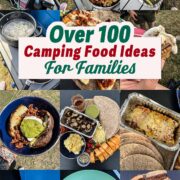
Camping food does not have to mean eating cold baked beans from a tin or surviving on cereal bars for the entire trip! I actually really love cooking when camping - it's a great excuse to get a little creative. So, here are over 100 Camping Food Ideas, to make your next camping trip unforgettable.
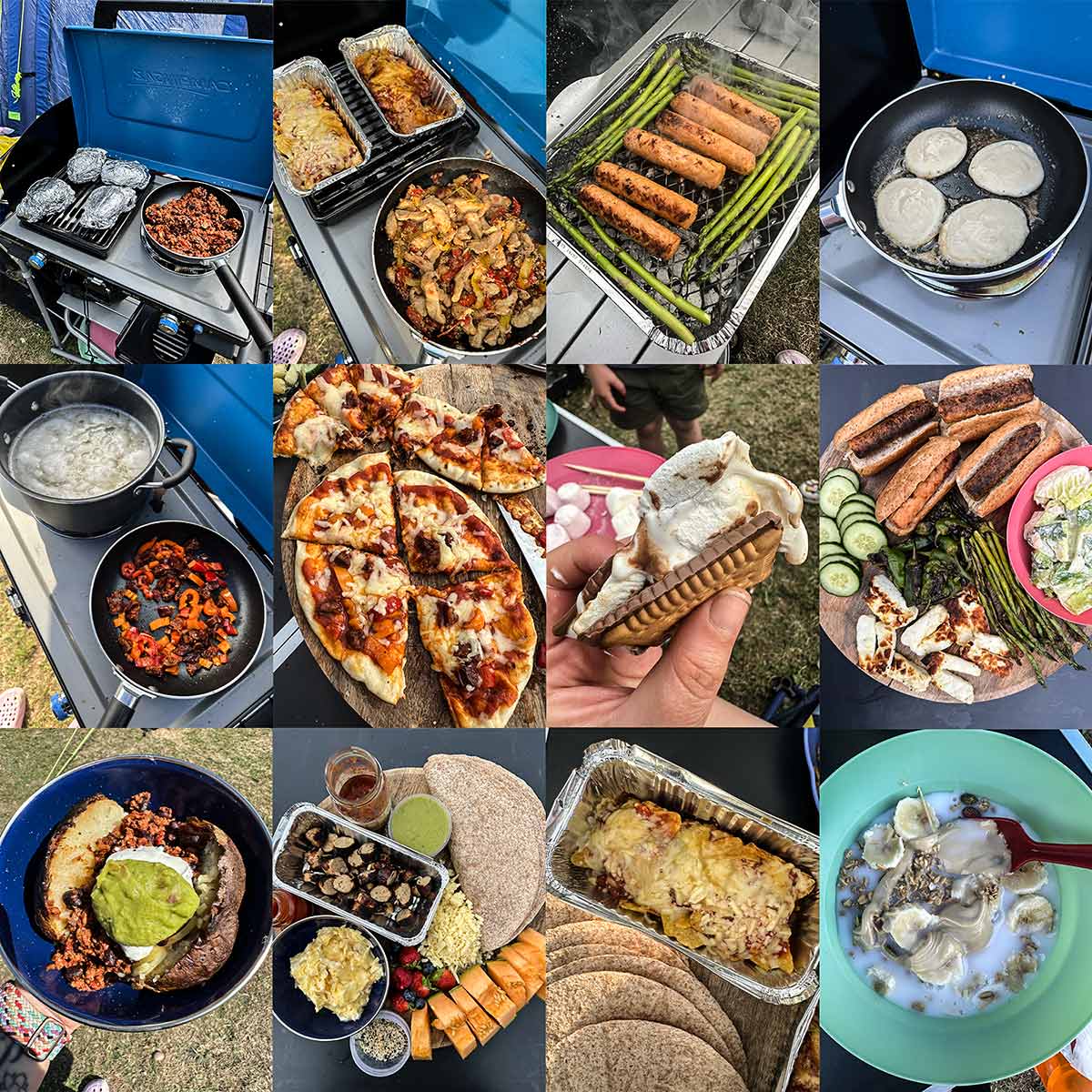
With a little planning, you can have filling breakfasts, easy lunches, family-friendly dinners and plenty of snacks without taking your entire kitchen with you. Also, there are SO many things you can prep ahead.
These family camping food ideas include meals that can be prepared at home, food that does not need to be kept in a fridge (we personally don't do electrical hook-up when camping), simple camping-stove recipes and fun campfire meals.
There are options for a one-night camping trip, longer family holidays and campsites where you only have basic cooking facilities. Hopefully there is something for everyone here.
The most important thing when it comes to campsite cooking is to plan around the equipment you actually have. A well-packed cool box gives you far more choice, but there are still plenty of camping meals you can make using only shelf-stable ingredients, boiling water and one pan.
Jump to:
- What Are the Best Foods to Take Camping?
- A Quick Note on Camping Food Safety
- Best Camping Food Ideas
- Camping Food at a Glance
- Camping Breakfast Ideas 🍳
- More Easy Camping Breakfasts
- Camping Lunch Ideas 🥗
- More Easy Camping Lunches
- Easy Camping Dinner Ideas 🥘
- More Camping Dinners
- Sweet Camping Snacks 🍪
- More Sweet Camping Snacks
- Savoury Camping Snacks 🥨
- More Savoury Camping Snacks
- Campfire Food Ideas 🔥
- More Minimal-Cook Campfire Food Ideas
- Camping Desserts and Treats
- Simple Weekend Camping Menu 📋
- Camping Menu Without a Cool Box 📋
- Camping Food Packing Tips 🧳
- How to Pack a Cool Box
- Camping Food Checklist ✅
- No-Fridge Camping Food Ideas 🥪
- What Equipment You'll Need 🎛️
- What We Actually Take Camping
- Common Mistakes to Avoid 🤦
- Frequently Asked Camping Questions
- More Camping Food Inspiration
- Feedback
What Are the Best Foods to Take Camping?
The best foods to take camping are easy to pack, simple to cook and flexible enough to use in more than one meal.
Good options include oats, granola, wraps, flatbreads, pasta, rice, couscous, tinned beans, tuna, chilli, soup, potatoes, fruit, cereal bars, flapjacks and plenty of snacks.
If you have a cool box, you can also take make-ahead meals like breakfast burritos, pasta salads, rice salads, muffins, chilli and cooked potatoes.
A Quick Note on Camping Food Safety
Camping food should be simple and fun, but it still needs to be stored and cooked safely. Keep chilled foods in a well-packed cool box with plenty of ice blocks (some campsites let you hire these/swap them too), and use meat, dairy, cooked rice, pasta salads and prepared foods early in your trip.
Always keep raw meat separate from ready-to-eat food, wash hands and utensils well (my kids actually love washing up at a campsite), and cook meat until it is piping hot all the way through (we take a meat thermometer with us).
Once chilled foods have been out of the cool box for a while, especially in warm weather, it is safest not to put them back for later.
Before planning any campfire or barbecue meals, check your campsite rules. Not all sites allow open fires, fire pits or disposable barbecues.
Never cook inside a tent, awning or enclosed space, and always keep cooking equipment away from tents, dry grass and anything flammable.
Now - let's move onto the fun part. Camping food ideas!
Best Camping Food Ideas
- Best no-cook breakfast: Granola with long-life milk.
- Best breakfast to make ahead: Freezer-friendly breakfast burritos.
- Best breakfast for children: Banana oat muffins.
- Best no-cook lunch: DIY camping Lunchables.
- Best cool-box lunch: Greek pasta salad.
- Best camping-stove dinner: Chilli with microwave or instant rice.
- Best campfire dinner: Foil-wrapped jacket potatoes (make ahead) with beans and cheese.
- Best vegetarian camping meal: Flatbread pizzas or bean quesadillas.
- Best camping snack: Flapjacks or energy balls.
- Best campfire dessert: Chocolate and marshmallow banana boats.
Camping Food at a Glance
Use the table below to find the best recipe for your camping adventure, whether you need a fast breakfast, something for a busy day, something relaxed or a meal your can enjoy as a whole family.
Click any recipe name in the table to jump straight to that recipe section.
|
Recipe |
Best for |
Prep at home? |
Equipment needed |
Cool box? |
|---|---|---|---|---|
|
First morning |
Yes |
Stove or foil over fire |
Yes |
|
|
Breakfast or snacks |
Yes |
None |
No |
|
|
No-cook breakfast |
Yes |
None |
For milk or yogurt |
|
|
Quick breakfast |
Yes |
None |
Yes |
|
|
Relaxed mornings |
Batter can be |
Frying pan and stove |
Usually |
|
|
Children and grazing lunches |
Yes |
None |
Usually |
|
|
Make-ahead lunch |
Yes |
None |
Yes |
|
|
Wraps, pizzas and dips |
Yes, or at camp |
Frying pan if cooking fresh |
Yes - for toppings |
|
|
Easy family dinner |
Yes |
One pan and stove |
Yes, if homemade |
|
|
Campfire dinner |
Partly |
Fire or barbecue |
Yes |
|
|
Sharing dinner |
No |
Foil tray and heat |
Cheese and toppings only |
|
|
Walks and active days |
Yes |
None |
Recommended in warm weather |
Breakfast Burritos
Best for: First morning
Prepare at home: Yes
Equipment: Stove or foil over fire
Cool box: Yes
Jump to burritosBanana Oat Muffins
Best for: Breakfast or snacks
Prepare at home: Yes
Equipment: None
Cool box: No
Jump to muffinsGranola
Best for: No-cook breakfast
Prepare at home: Yes
Equipment: None
Cool box: Only for fresh milk or yoghurt
Jump to granolaOvernight Oats
Best for: Quick breakfast
Prepare at home: Yes
Equipment: None
Cool box: Yes
Jump to overnight oatsPancakes
Best for: Relaxed mornings
Prepare at home: Batter can be prepared
Equipment: Frying pan and stove
Cool box: Usually
Jump to pancakesCamping Lunchables
Best for: Children and grazing lunches
Prepare at home: Yes
Equipment: None
Cool box: Usually
Jump to lunchablesGreek Pasta Salad
Best for: Make-ahead lunch
Prepare at home: Yes
Equipment: None
Cool box: Yes
Jump to pasta saladHomemade Flatbreads
Best for: Wraps, pizzas and dips
Prepare at home: Yes or at camp
Equipment: Frying pan if cooking fresh
Cool box: No
Jump to flatbreadsChilli and Rice
Best for: Easy family dinner
Prepare at home: Yes
Equipment: One pan and stove
Cool box: Yes if homemade
Jump to chilliJacket Potatoes
Best for: Campfire dinner
Prepare at home: Partly
Equipment: Fire or barbecue
Cool box: No
Jump to potatoesCampfire Nachos
Best for: Sharing dinner
Prepare at home: No
Equipment: Foil tray and heat
Cool box: Cheese only
Jump to nachosEnergy Balls
Best for: Walks and active days
Prepare at home: Yes
Equipment: None
Cool box: Recommended in warm weather
Jump to energy ballsWould you like to save this post?
Camping Breakfast Ideas 🍳
A good camping breakfast needs to be easy, filling and achievable before everyone has fully woken up. And, after coffee has been made.
For the first morning, you can take something homemade in a cool box - we do a jar of pancake batter. Later in the trip, switch to oats, cereal, bread and other ingredients that store easily.
Breakfast Burritos
These freezer-friendly breakfast burritos are one of the best breakfasts to take camping. Make and wrap them at home, then keep them chilled or frozen in the cool box.
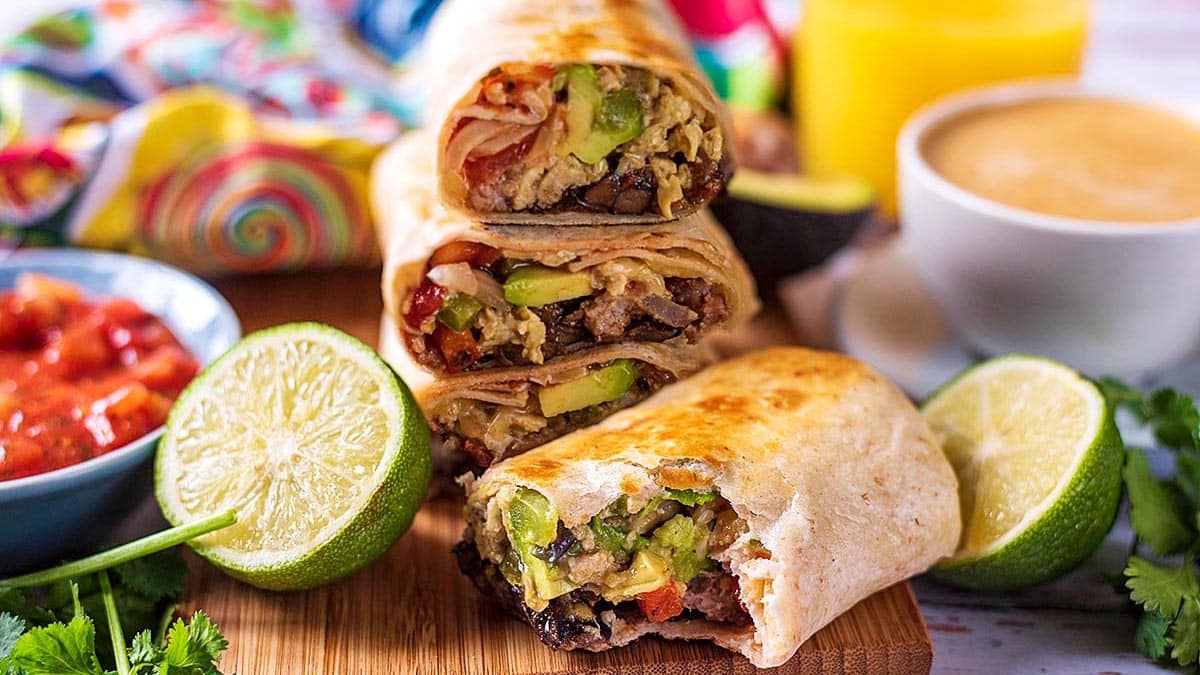
Reheat the burritos in a covered frying pan, on a camping stove or wrapped in foil over a barbecue. Eggs, sausage, vegetables and cheese make them a filling start to an active day.
Eat these early in the trip while your cool box is at its coldest.
Banana Oat Muffins
Our high protein banana muffins are portable, family-friendly and easy to eat without plates or cutlery.
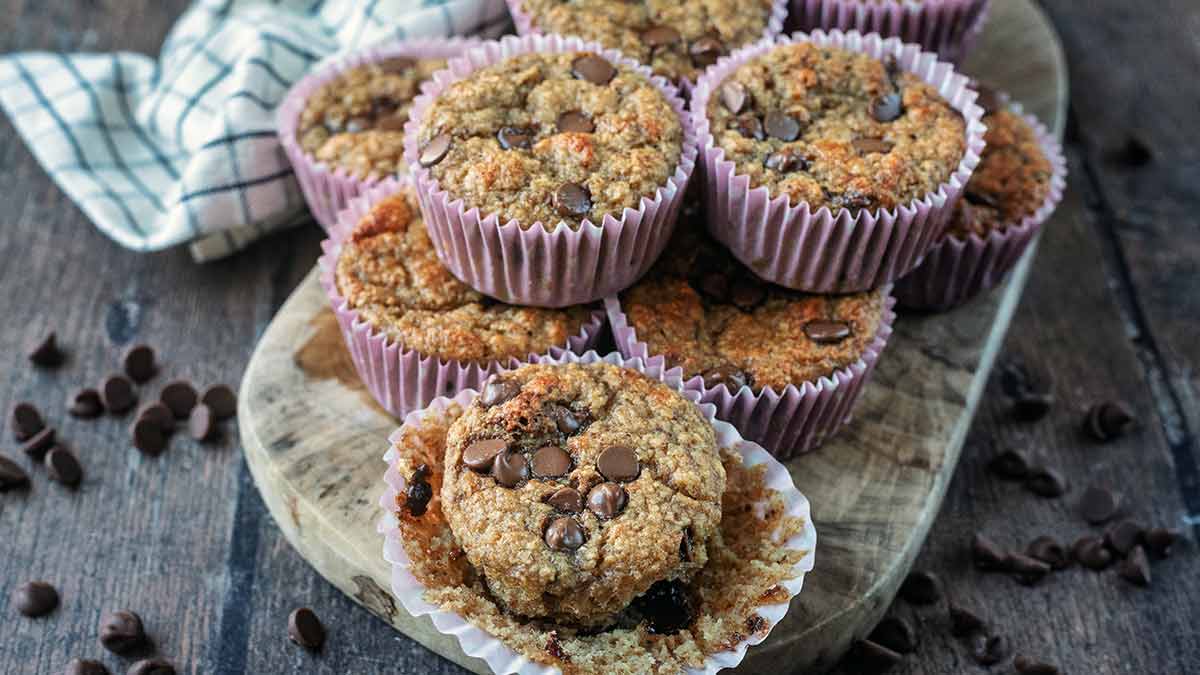
Bake them before you leave, allow them to cool completely and store them in an airtight container in the cool box.
Serve with fruit or yogurt from the cool box for an easy camping breakfast.
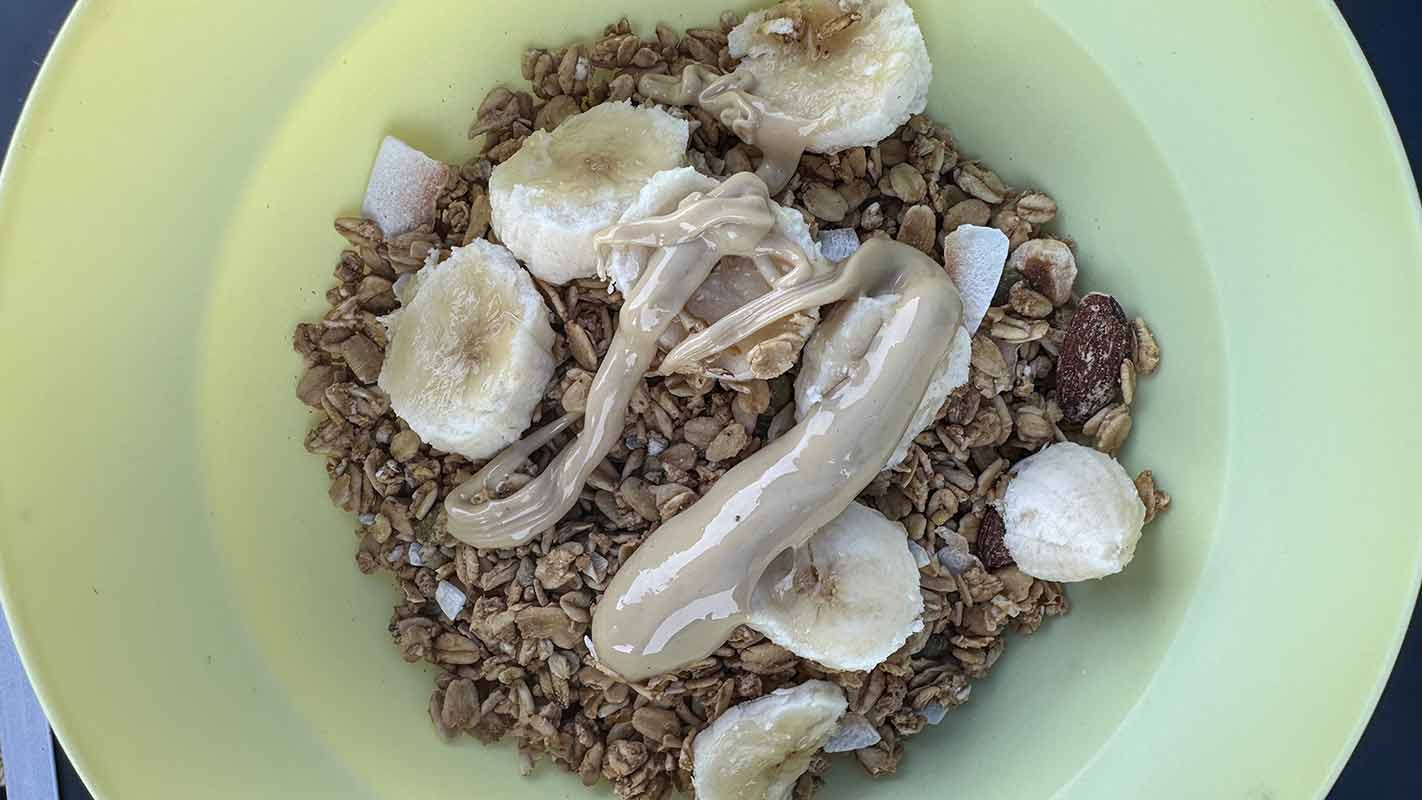
Homemade Granola
Take a jar or reusable bag of low-sugar granola and serve it with long-life milk, yogurt from the cool box or simply eat it dry.
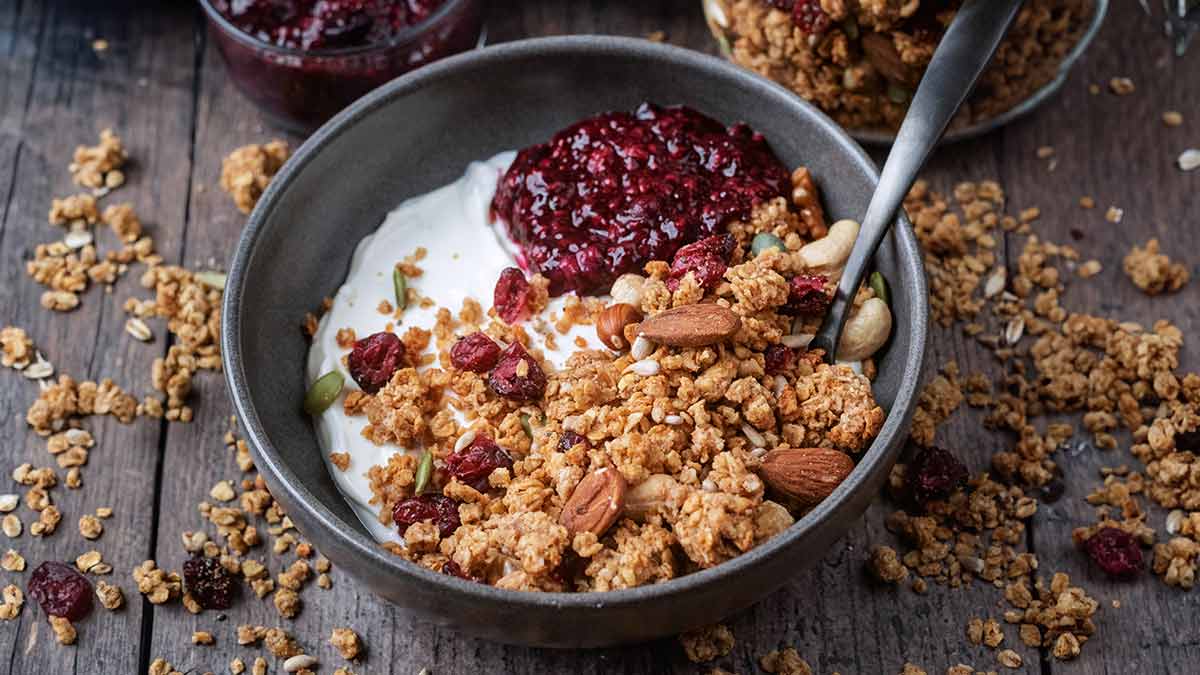
You could also make our air fryer granola before leaving. Add dried fruit, nuts, seeds or a few dark chocolate chips to make it more substantial.
Overnight Oats
Prepare overnight oats with frozen fruit in individual lidded jars. The frozen berries help to keep the jars cold while you travel, although they still need to be stored in a properly chilled cool box.
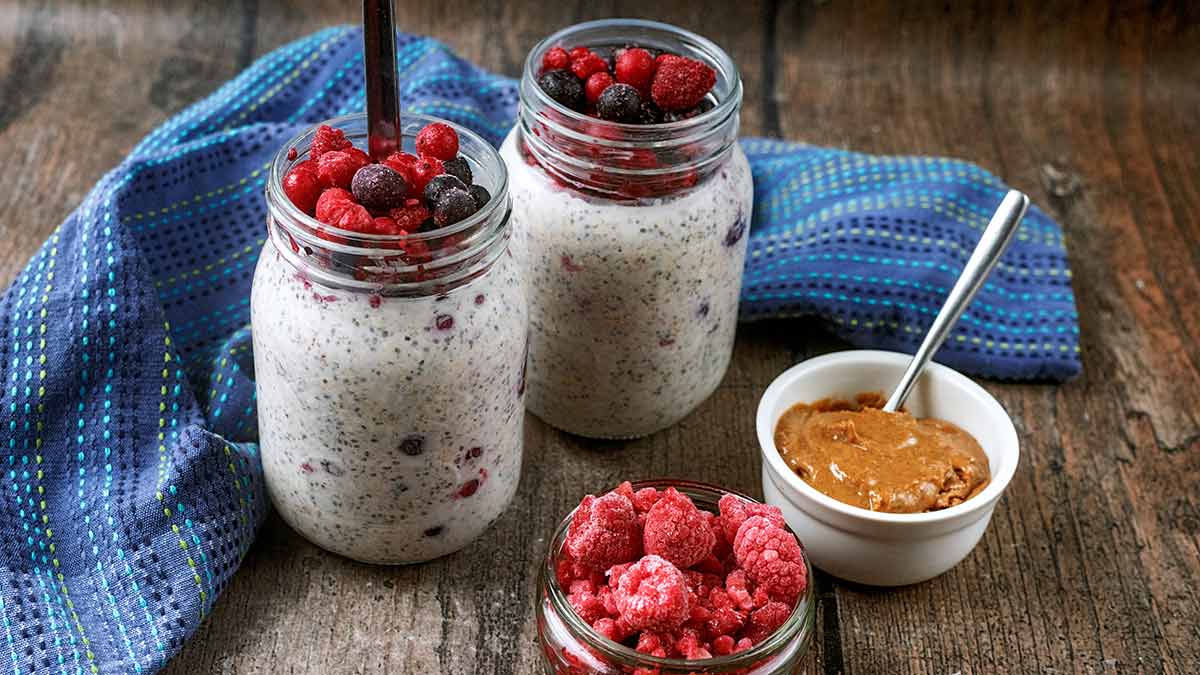
For a simpler version, combine oats, UHT milk, dried fruit, cinnamon and honey at the campsite and leave the mixture in the cool box overnight.
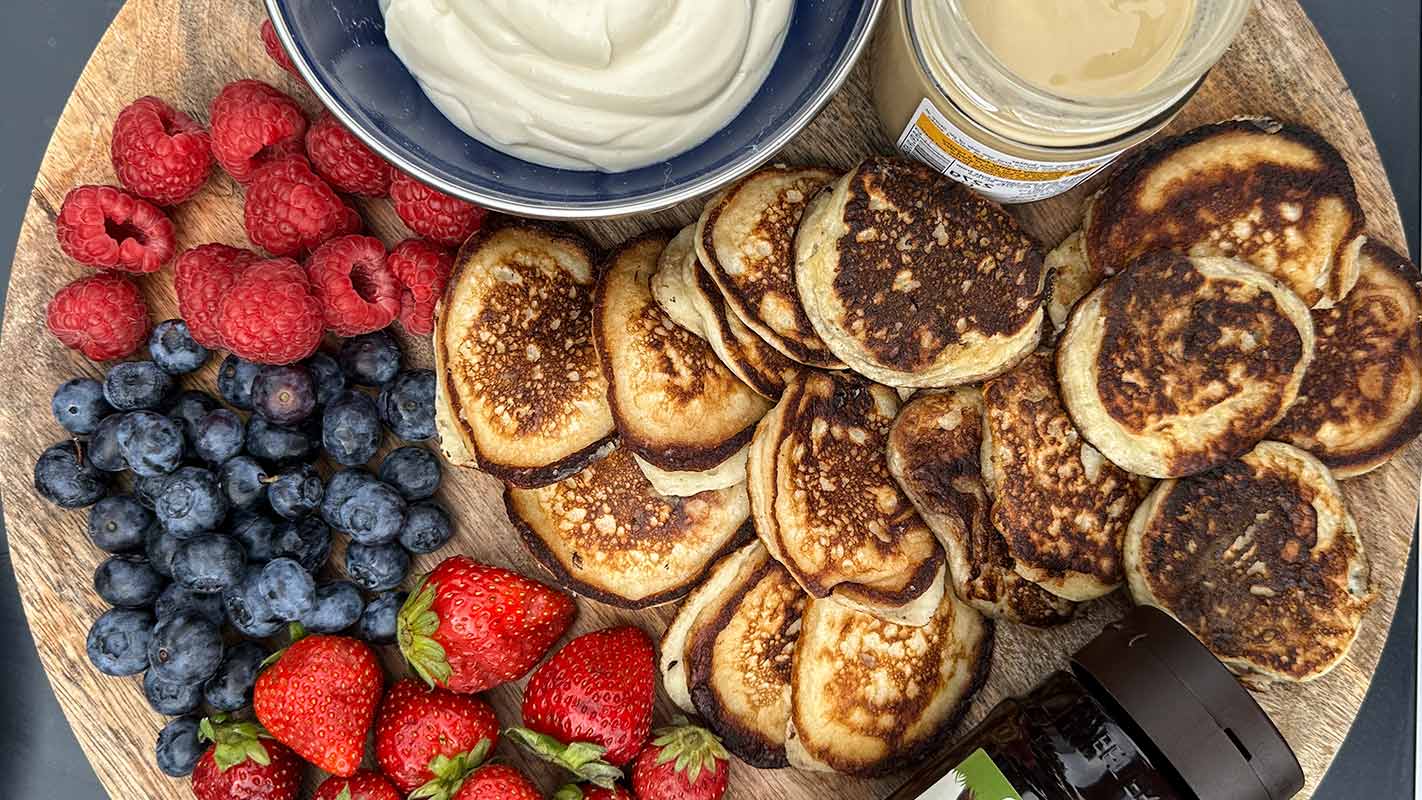
Camping Pancakes
Pancakes make camping mornings feel special without needing complicated equipment.
Use a just-add-water mix or portion the dry ingredients into a container before leaving.
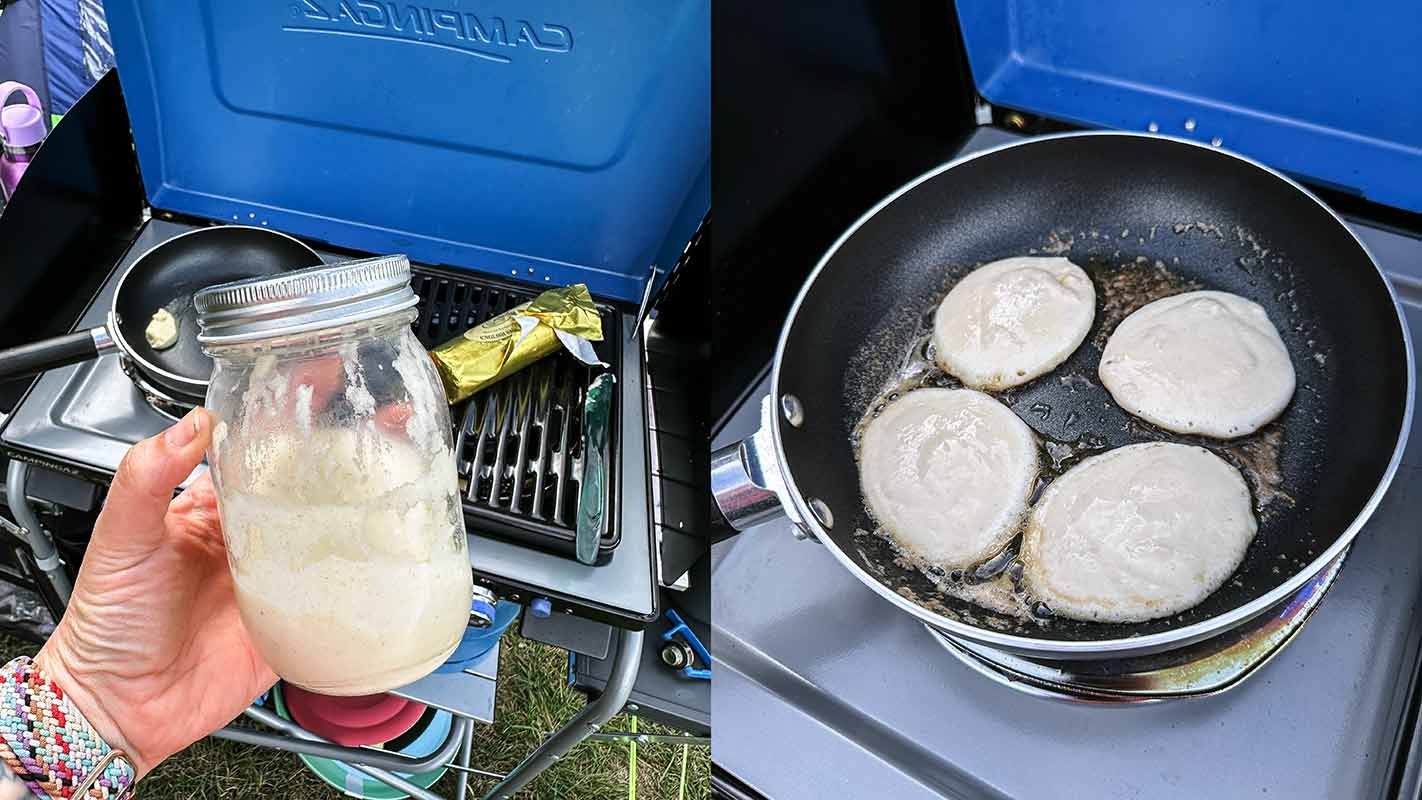
Serve with mini pots of jam, peanut butter, sliced banana, honey or syrup.
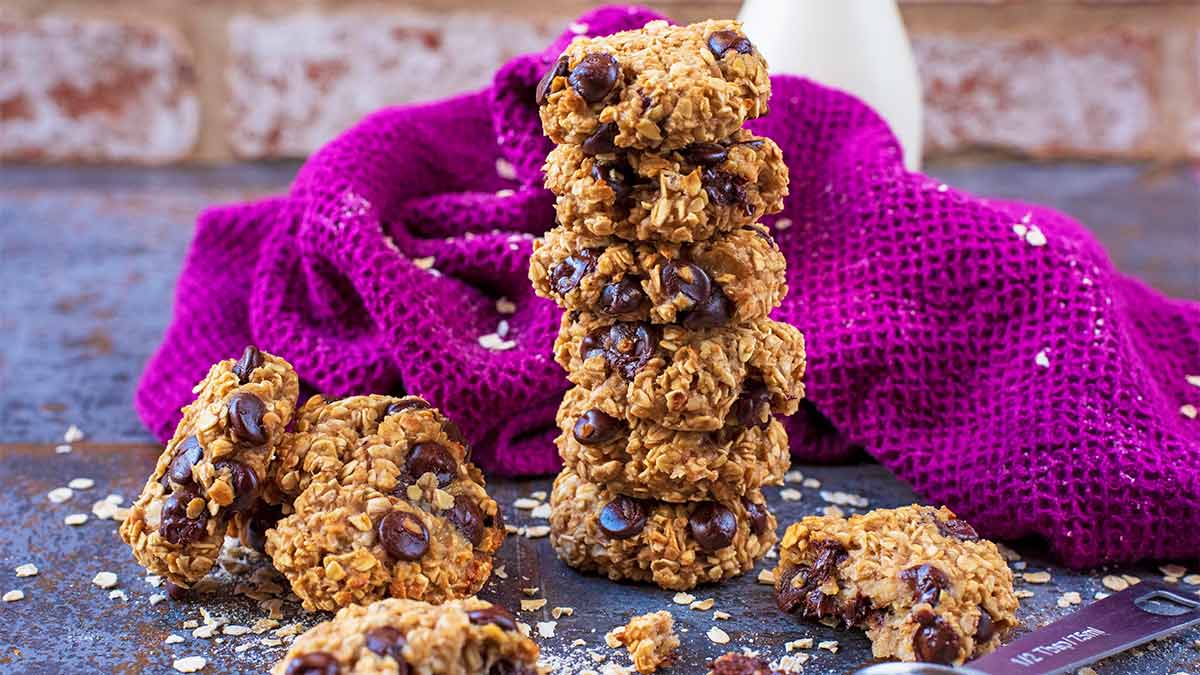
Banana Oat Cookies
These healthy banana oat cookies work as both a breakfast and a snack.
Breakfast Hash
A one-pan breakfast hash is ideal when you have a camping stove.
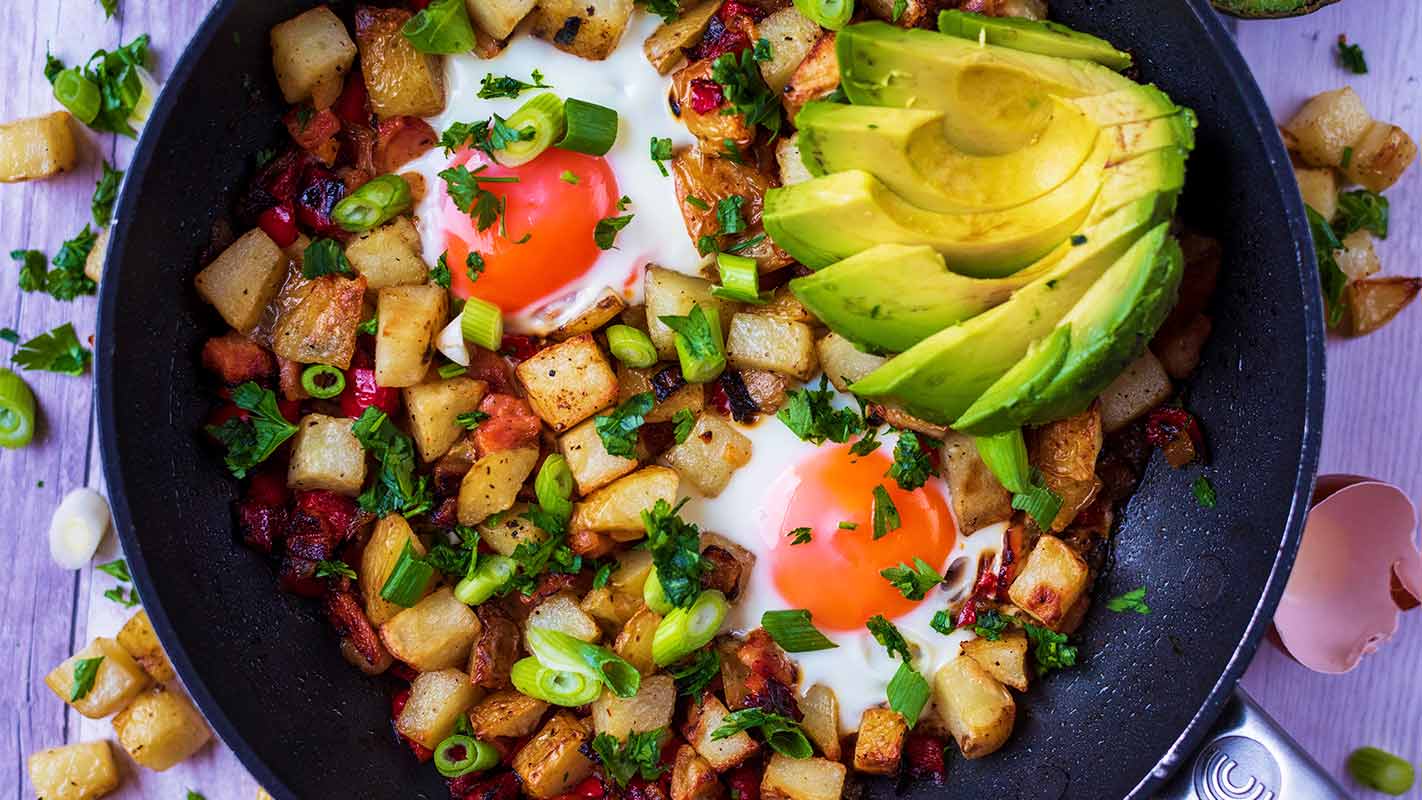
Use tinned potatoes or leftover cooked potatoes with onion, peppers, sweetcorn, chopped sausages or bacon.
Use our breakfast hash as inspiration, simplifying the ingredients to suit what you can safely transport.
More Easy Camping Breakfasts
- Instant porridge pots made with boiling water
- Oats with dried apple, cinnamon and honey
- Fruit and nut breakfast bars
- Peanut butter spread over rice cakes
- Peanut butter and banana tortilla wraps
- Peanut butter wraps made with dried banana chips
- Shelf-stable homemade or shop-bought muffins
- Granola with UHT milk
- Granola eaten dry as a trail mix
- Dry cereal packed into individual bags
- Overnight oats made with UHT milk or water
- Raisin bread or fruit loaf
- Breakfast biscuits
- Bagels with individual jam portions
- Toast rounds with jam or honey
- Dried fruit, nuts and seeds
- Toaster pastries
- Bagels with cream cheese from the cool box
- Bagels filled with cooked egg and bacon
- Yogurt with homemade muffins
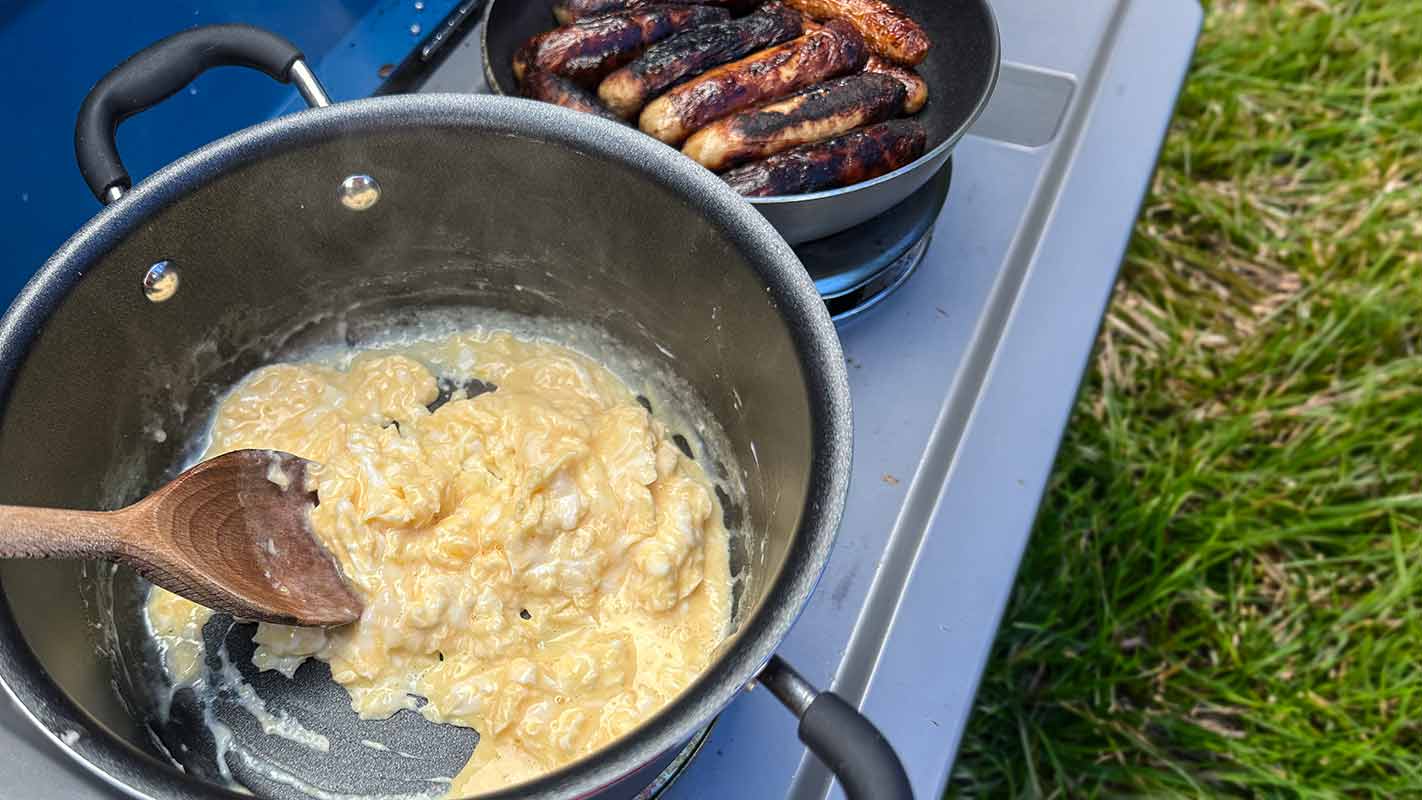
- Scrambled eggs with hash browns
- Scrambled eggs with leftover vegetables and cheese
- Breakfast quesadillas with egg and cheese
- French toast cooked in a frying pan
- Tinned potato, Spam and dried onion campfire hash
- Granola or cereal bars with a banana
Camping Lunch Ideas 🥗
Camping lunches should be quick enough that they do not interrupt the day, and maybe even things you can take out on day drips with you or to the beach too.
Make-ahead salads are ideal when you have a cool box, while wraps, crackers, tinned fish and instant couscous work well when refrigeration is limited.
Camping Lunchables
Our easy adult Lunchable ideas can easily be adapted for camping and for children.
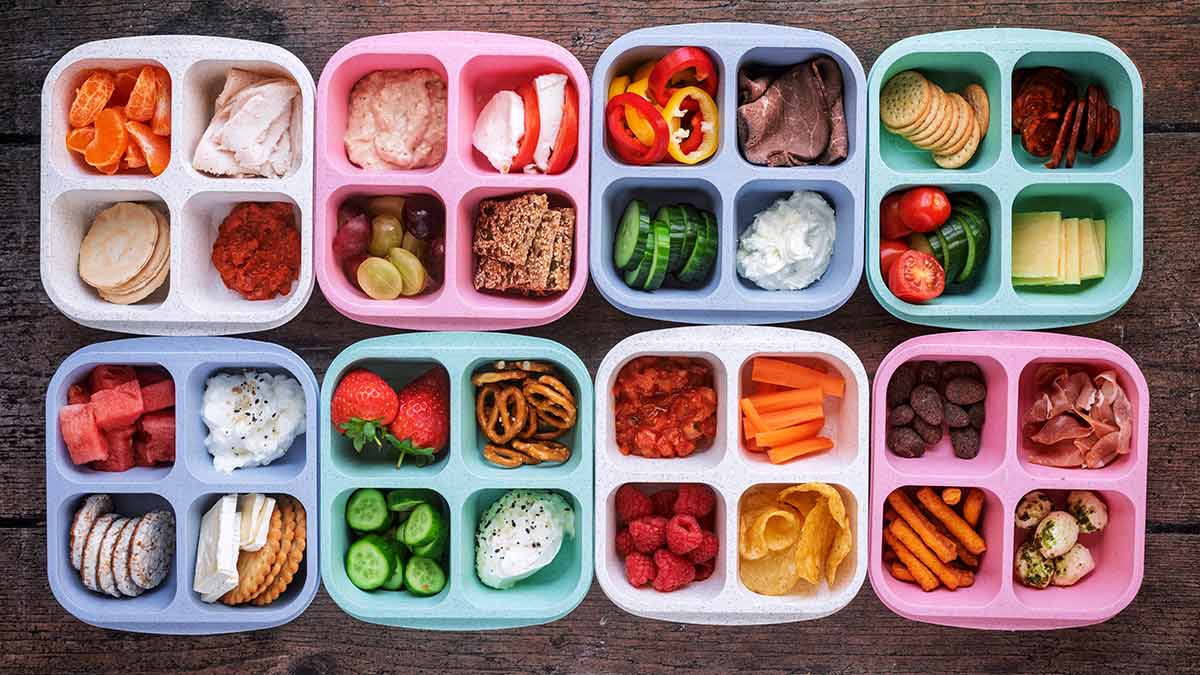
Pack crackers, cured meat, individual cheeses, dried fruit, olives, nuts and something sweet. Use a sectioned container or pack the ingredients separately so everything stays crisp.
Keep meat and cheese in the cool box. For a completely shelf-stable version, use crackers, nut butter, dried fruit, roasted nuts, pretzels and fruit pouches.
Greek Pasta Salad
This Greek pasta salad is filling, colourful and easy to make in a large batch before travelling.
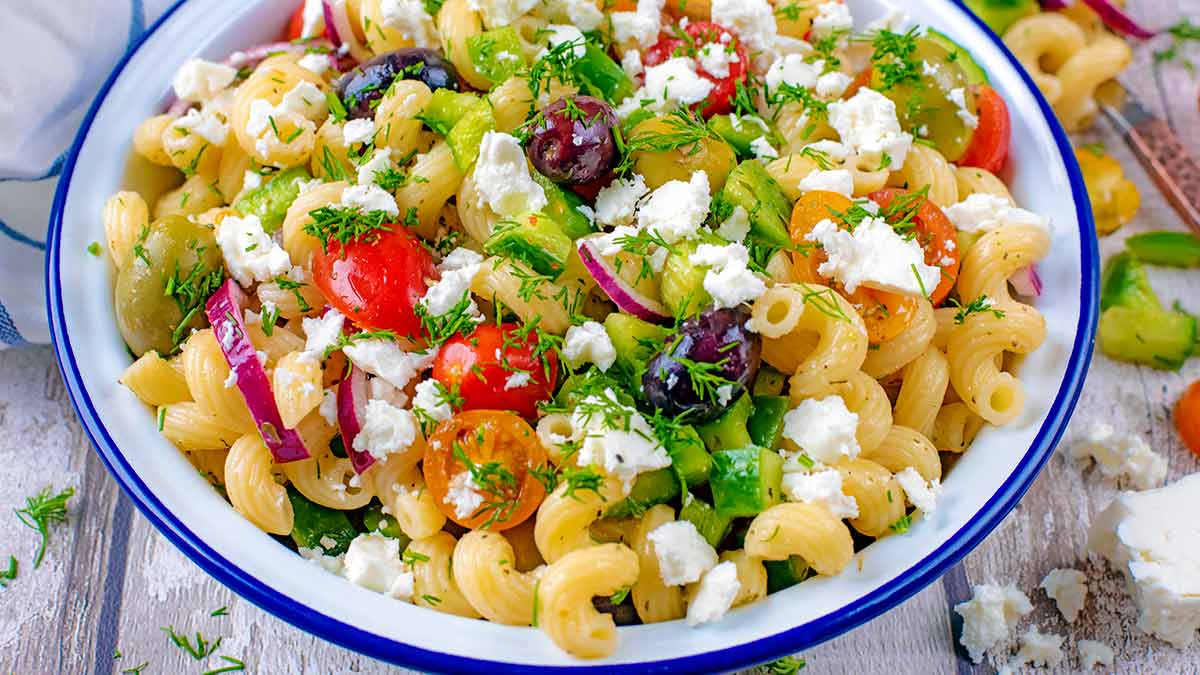
Portion it into sealed containers and keep it in the cool box.
Because it uses an oil-based dressing rather than a thick mayonnaise dressing, it travels well, although it must still be kept properly chilled because of the cooked pasta, vegetables and feta.
Mediterranean Rice Salad
Our Mediterranean rice salad combines rice, vegetables, beans, olives and feta.
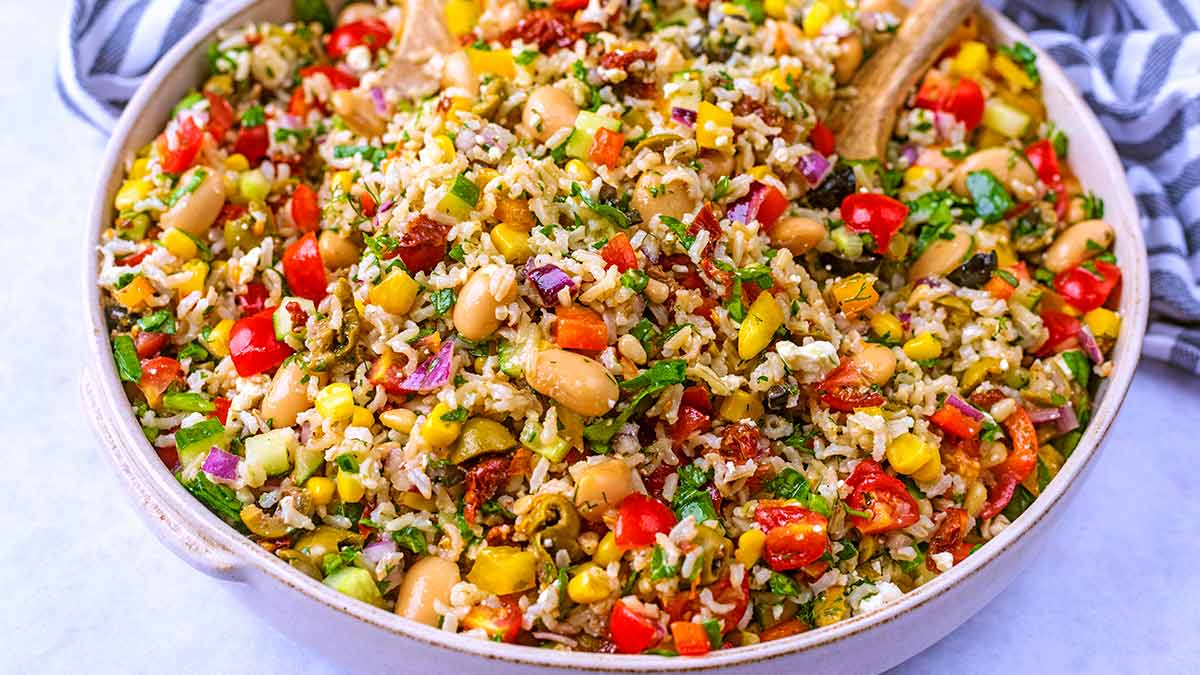
It works as a complete vegetarian lunch or as a side dish with cooked chicken or skewers.
Make it the day before travelling, cool the rice promptly and keep the finished salad cold.
Quinoa Greek Salad
For another substantial make-ahead option, try this quinoa Greek salad.
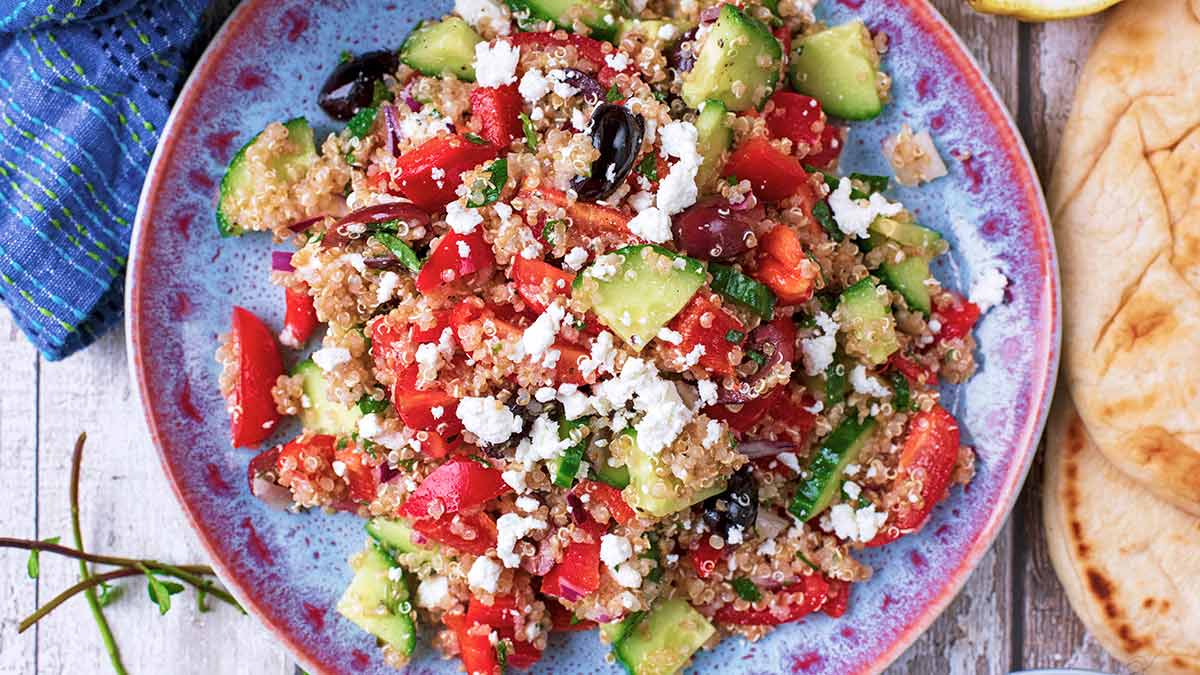
Pack it into lidded containers with the dressing already mixed through.
Roasted Vegetable Couscous Salad
Our roasted vegetable couscous salad is another excellent first-day lunch.
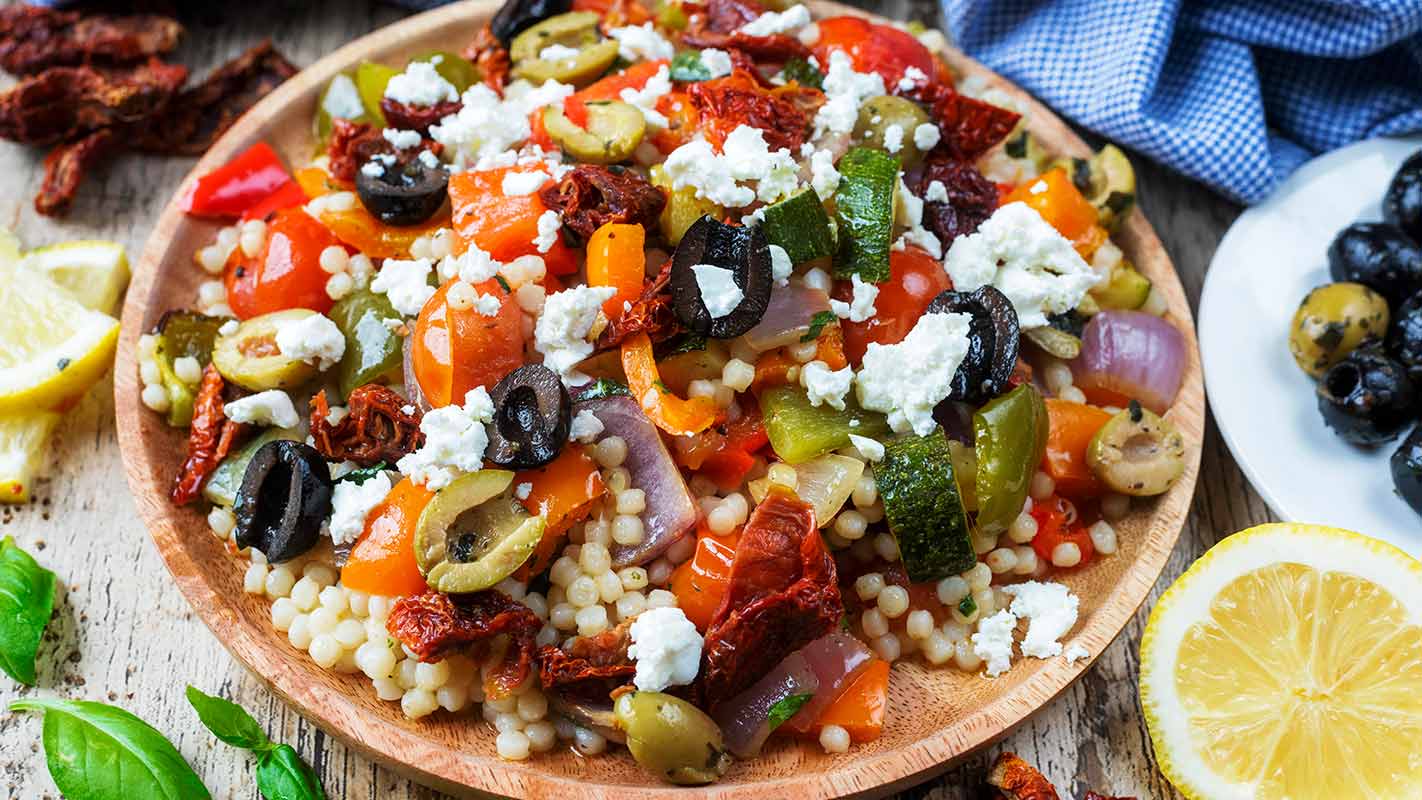
Prepare it at home and serve it cold from the cool box.
Pasta Salad Jars
These meal-prep pasta salad jars are easy to transport and already divided into individual servings.
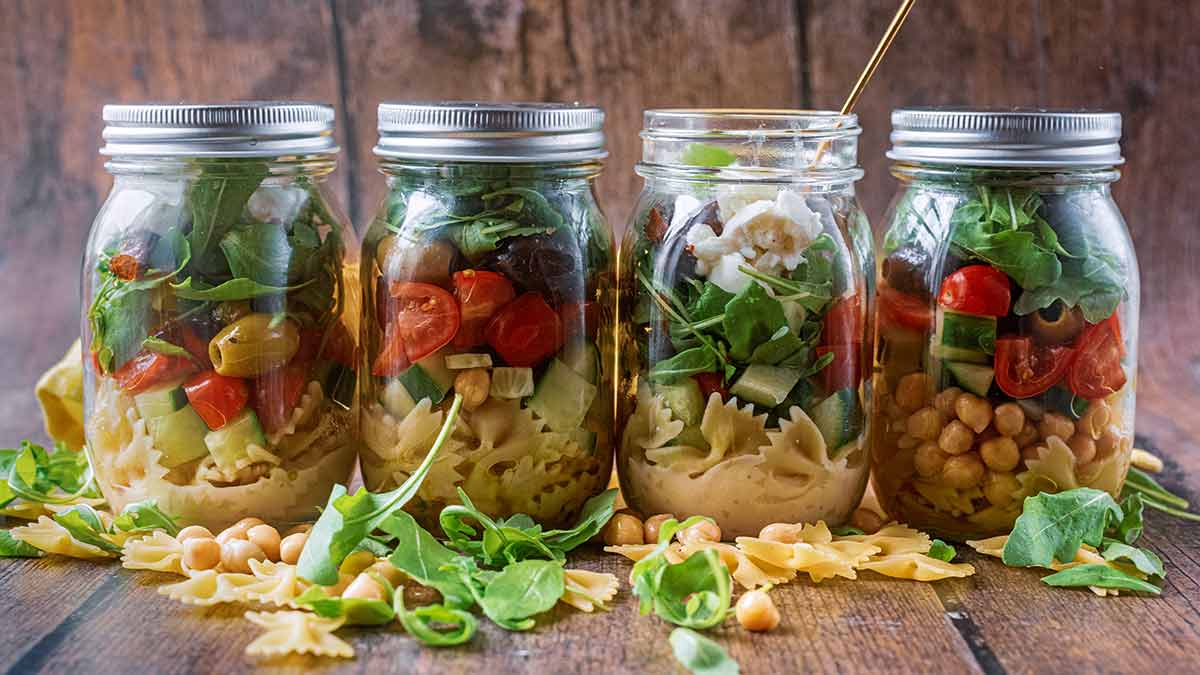
Keep the dressing at the bottom, sturdy vegetables and pasta in the middle and delicate ingredients at the top.
Tip everything into a bowl or shake the jar thoroughly before eating.
Homemade Flatbreads
Make a batch of our easy homemade flatbreads before travelling. They can be used for hummus wraps, falafel wraps, tuna wraps, breakfast wraps and quick pizzas.
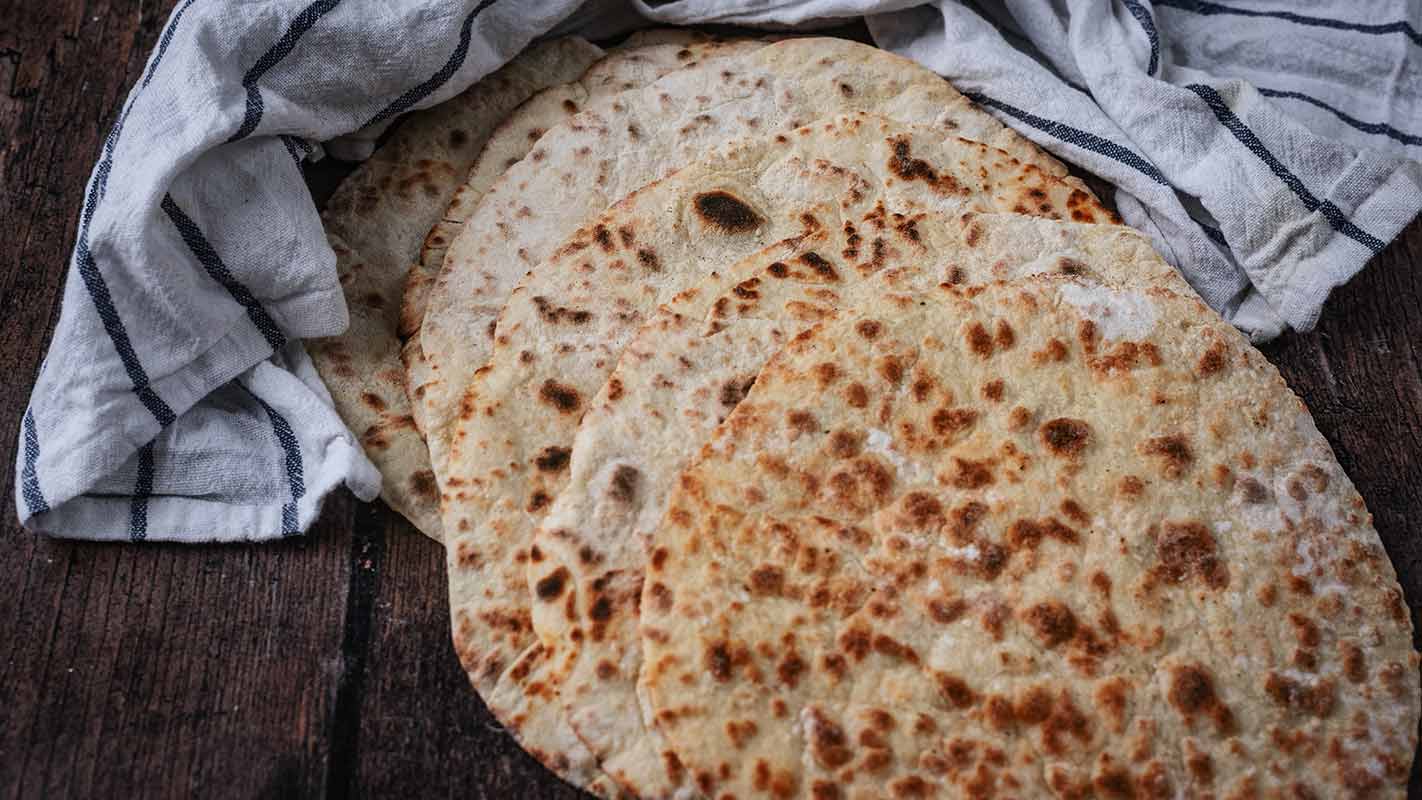
They can also be cooked in a dry frying pan at the campsite because the dough does not need yeast or proving.
Savoury Muffins
Our savoury muffins with cheese and vegetables are ideal for a first-day lunch, packed lunch or snack.

Serve them with fruit, vegetable sticks, crackers or soup. Keep them chilled in particularly warm weather, especially if they contain plenty of cheese.
More Easy Camping Lunches
- Peanut butter and jam tortilla wraps
- Nachos with cheese and salsa and then avocado on top
- Tinned tuna with crackers and mayonnaise sachets
- Tinned chicken with crackers
- Tuna and mayonnaise wraps
- Tinned chicken Caesar wraps
- Falafel and hummus wraps
- Instant couscous with tinned vegetables/fish and herbs
- Couscous with chickpeas, olive oil and seasoning
- Pasta salad with sun-dried tomatoes, olives and herbs
- Noodle pots made with boiling water
- Ramen noodles stir-fried with mixed vegetables and soy sauce
- DIY Lunchables with crackers, cured meat and cheese
- Baked bean sandwiches/on toast
- Baked bean and cheese wraps
- Tinned sardines or mackerel with bread
- Mackerel sandwiches with mustard or mayonnaise
- Rice cakes with nut butter or tahini
- Cup-a-soup with breadsticks
- Soup with crackers/bread
- Grilled cheese sandwiches with tomato soup
- Crackers with nut butter and dried fruit
- Cheese and bean quesadillas
- Chicken quesadillas
- Pita pizzas with tomato purée, herbs and cheese
- Hummus with pita bread or crackers
- Cheese, crackers, olives and fruit
Easy Camping Dinner Ideas 🥘
The easiest camping dinners use one pan and ingredients that cook quickly.
Instant rice, couscous, noodles, tinned beans, soup, pasta and jarred sauces all reduce the amount of washing up.
But, sometimes we get a little more fancy with our camping dinner creations.
Camping Chilli
Make our slow cooker chilli con carne at home, cool it and transport it in a sealed container.
Reheat it thoroughly in a pan and serve with instant rice, tortilla chips, wraps or campfire baked potatoes.
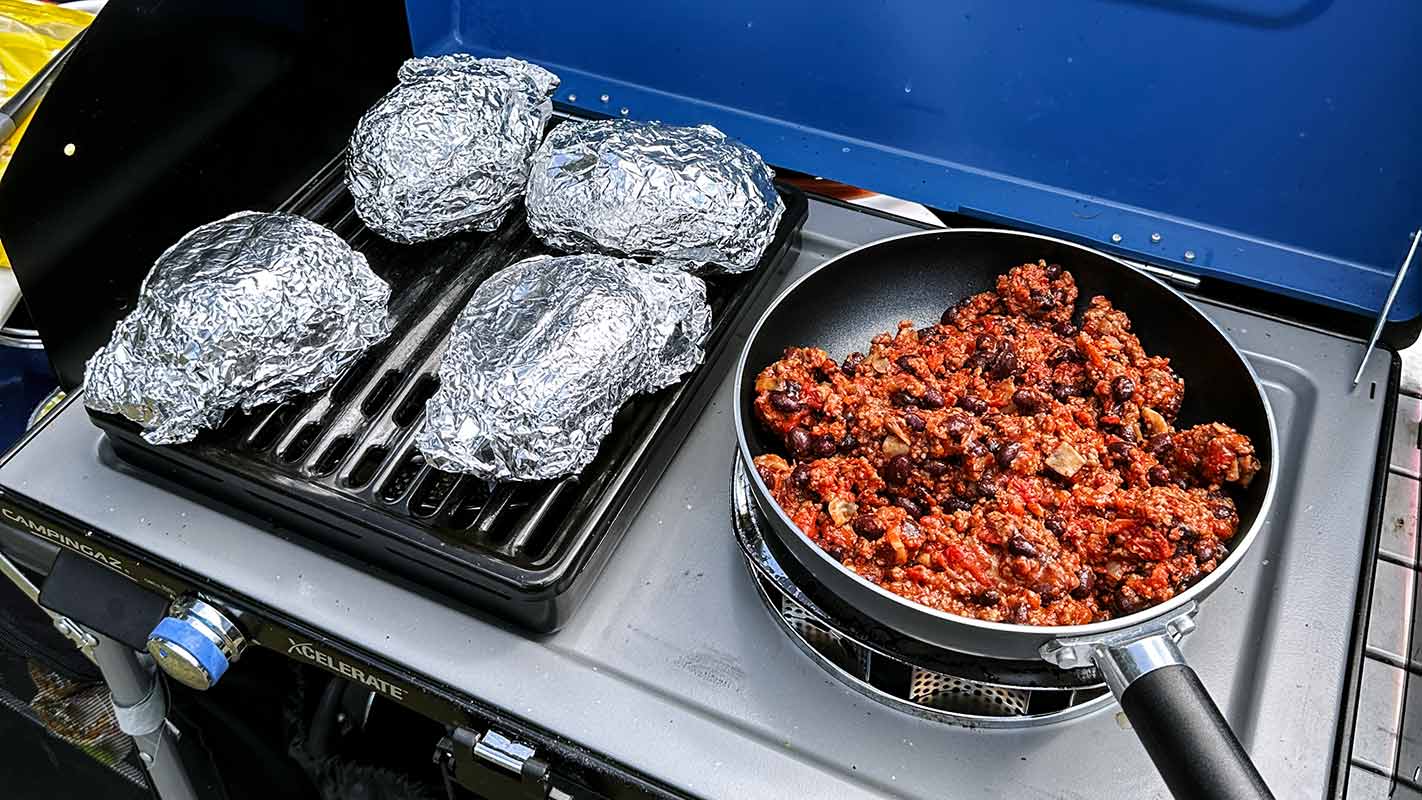
For later in the trip, use tinned chilli instead. It is not quite the same as homemade, but it is convenient and does not take up valuable cool-box space. You can get canned curry too.
You can also make turkey chilli in advance and use the leftovers for nachos or jacket potatoes.
Campfire Jacket Potatoes
Pre-cook some potatoes then tightly wrap in foil and cook them in the hot embers of a campfire or barbecue, turning them occasionally. Cooking time will depend on the size of the potatoes and the heat.
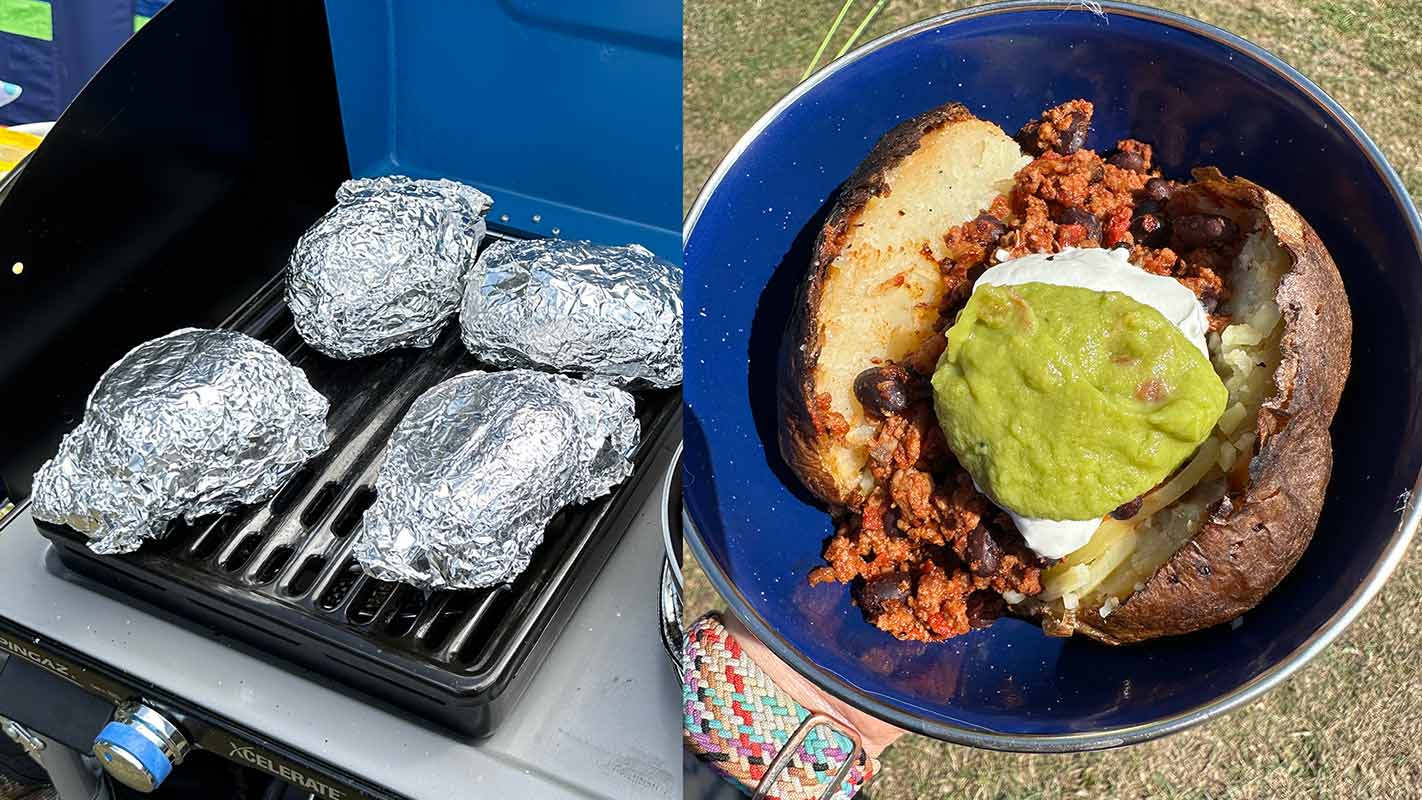
Use our jacket potato with beans and cheese for topping inspiration.
Tinned beans, grated cheese, tuna, sweetcorn, chilli and butter are all easy options.
⚠️ Check that your campsite allows fires before planning this meal. You can just reheat them in a pan too.
Flatbread or Pita Pizzas
Spread flatbreads, naan breads or pitas with tomato purée or pizza sauce. Add dried herbs, grated cheese and a few simple toppings.
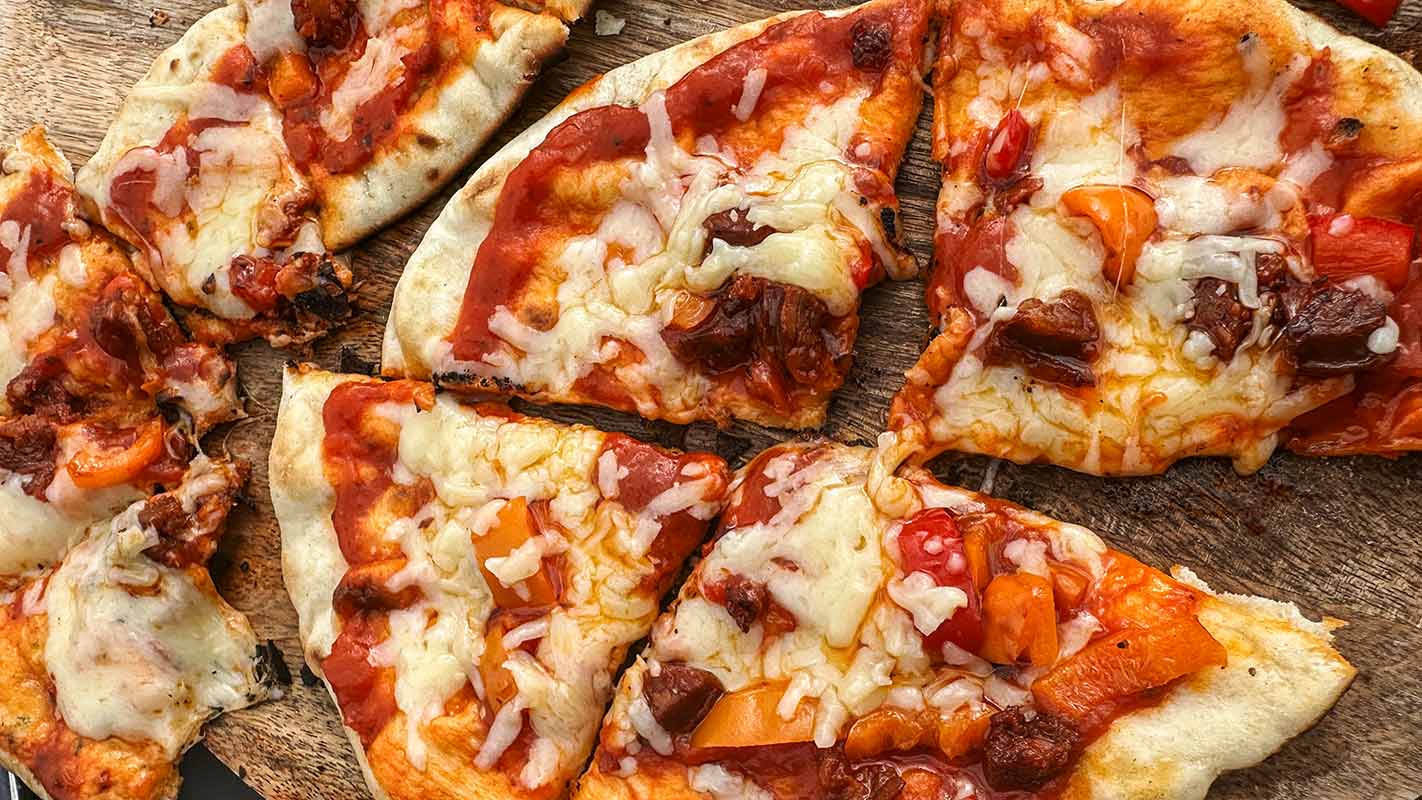
Use our easy naan pizza as a starting point. At the campsite, cook the pizzas in a covered frying pan or wrap them loosely in foil and heat them over a barbecue.
Campfire Nachos
Put tortilla chips into a foil tray and add beans, salsa, sweetcorn, jalapeños and grated cheese.
Cover the tray with foil and heat until the cheese has melted.
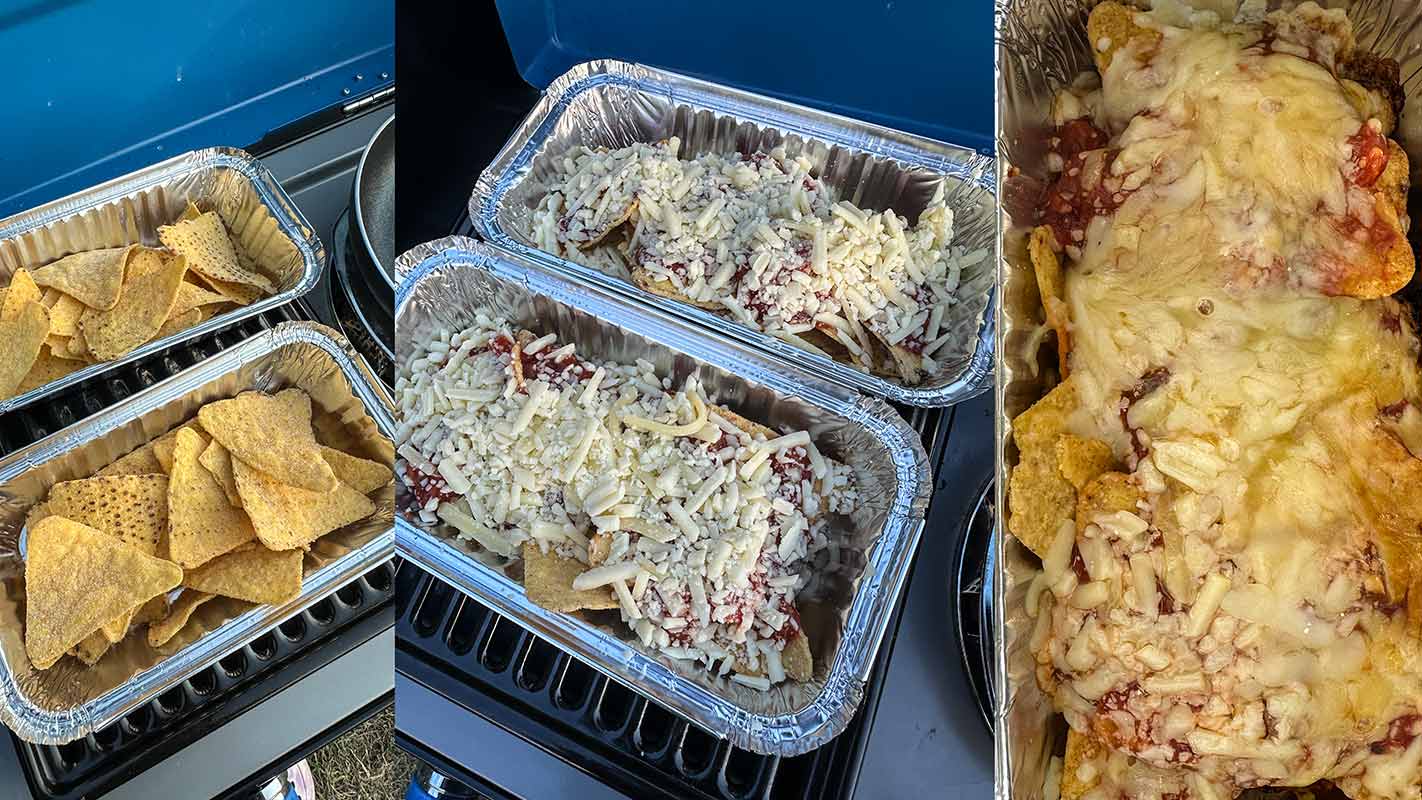
Our chipotle black bean nachos provide plenty of topping inspiration. You can also add reheated chilli or cooked shredded chicken.
Barbecue Chicken Skewers
Our marinated chicken skewers can be prepared at home and cooked on a barbecue at the campsite.
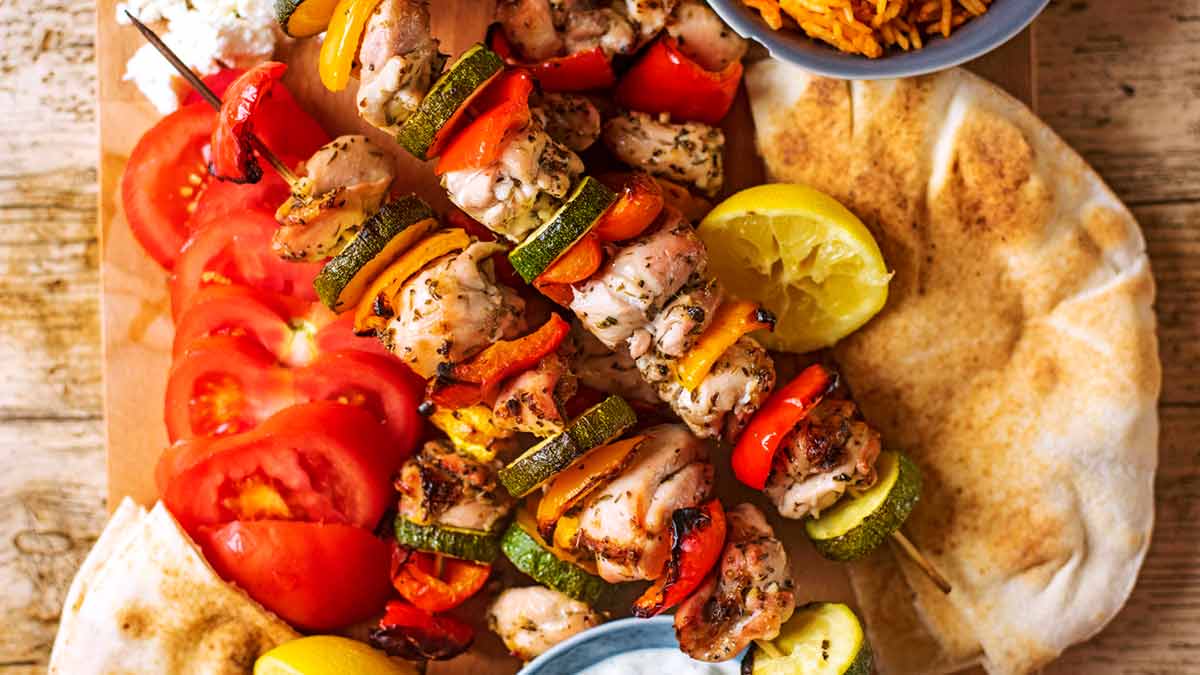
Raw chicken must be transported in a reliable cool box, stored separately from ready-to-eat food and cooked early in the trip.
For less risk and less mess, cook the skewers at home and reheat them thoroughly at camp.
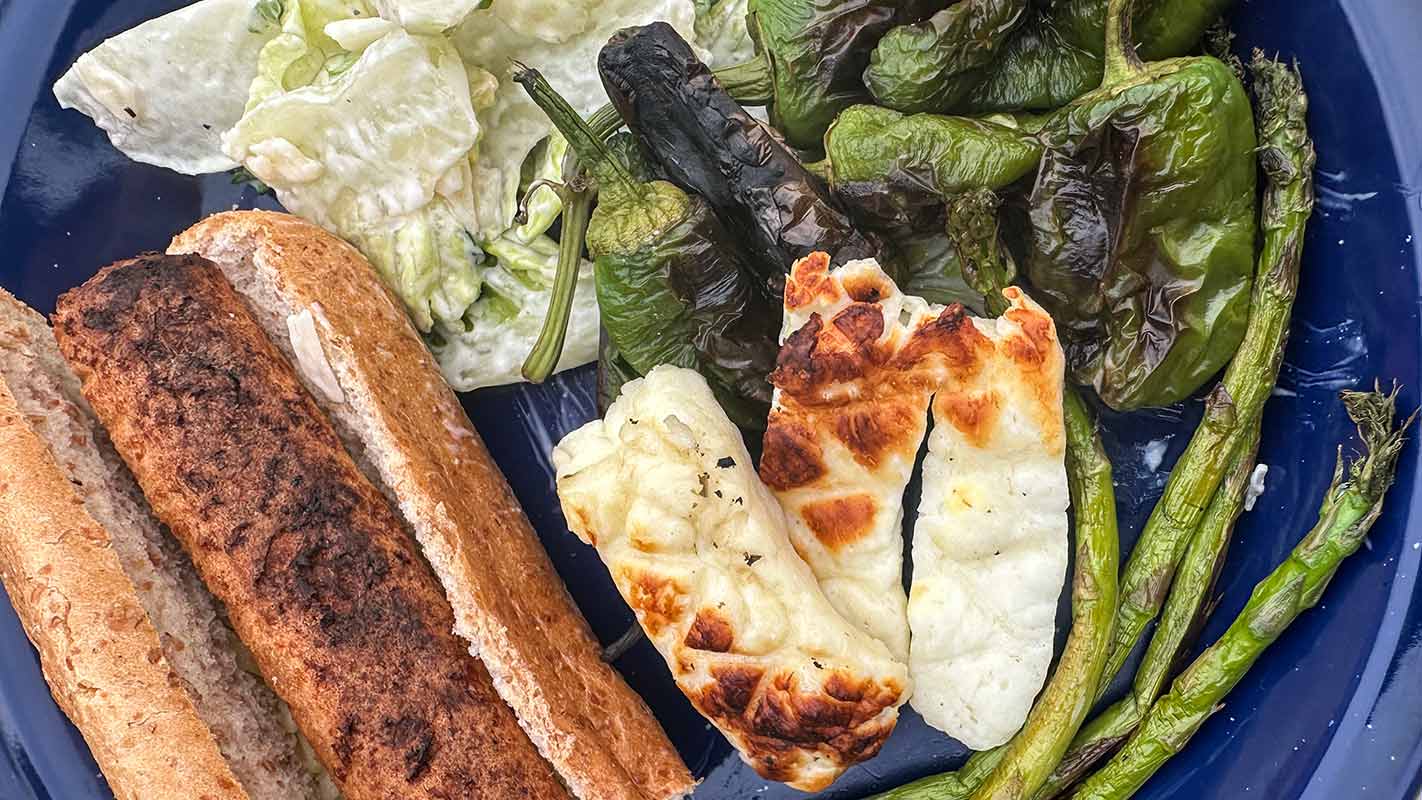
Halloumi and Vegetable Skewers
These halloumi and vegetable kebabs are a simple vegetarian barbecue dinner.
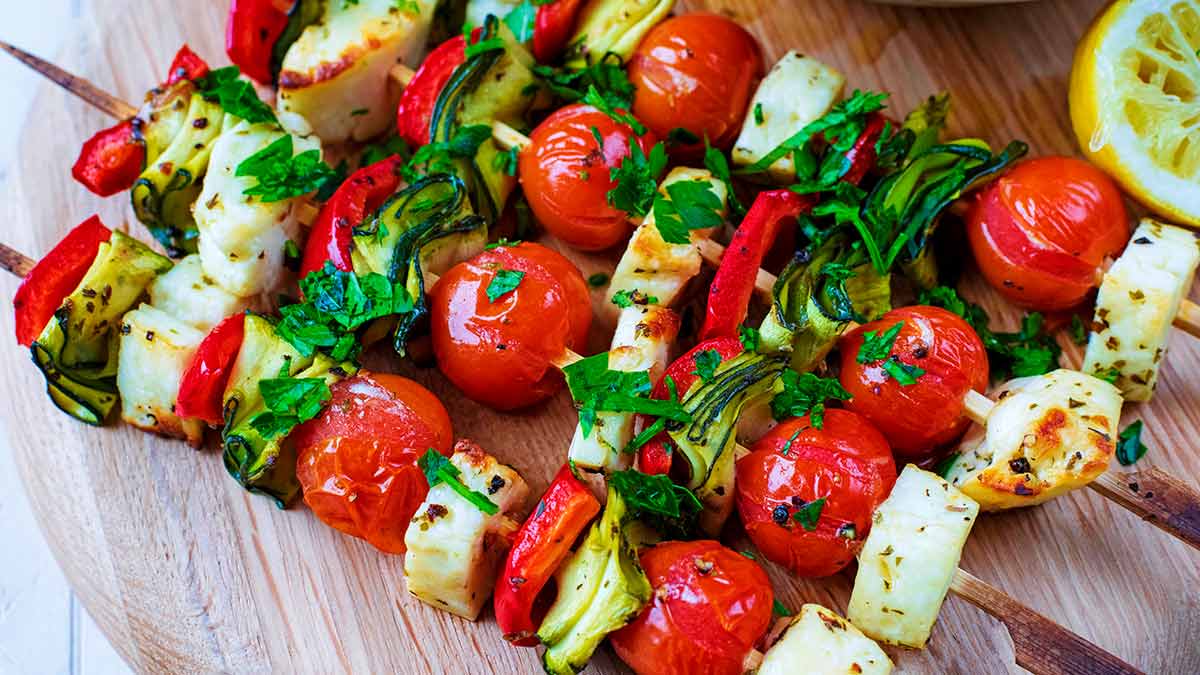
Prepare the vegetables at home so you only need to thread and cook the skewers at camp.
Serve with flatbreads, salad and individual sauce sachets.
Grilled Corn
Our grilled corn with herb butter is an easy camping side dish.
Wrap the corn in foil or place it directly on a barbecue, turning regularly.
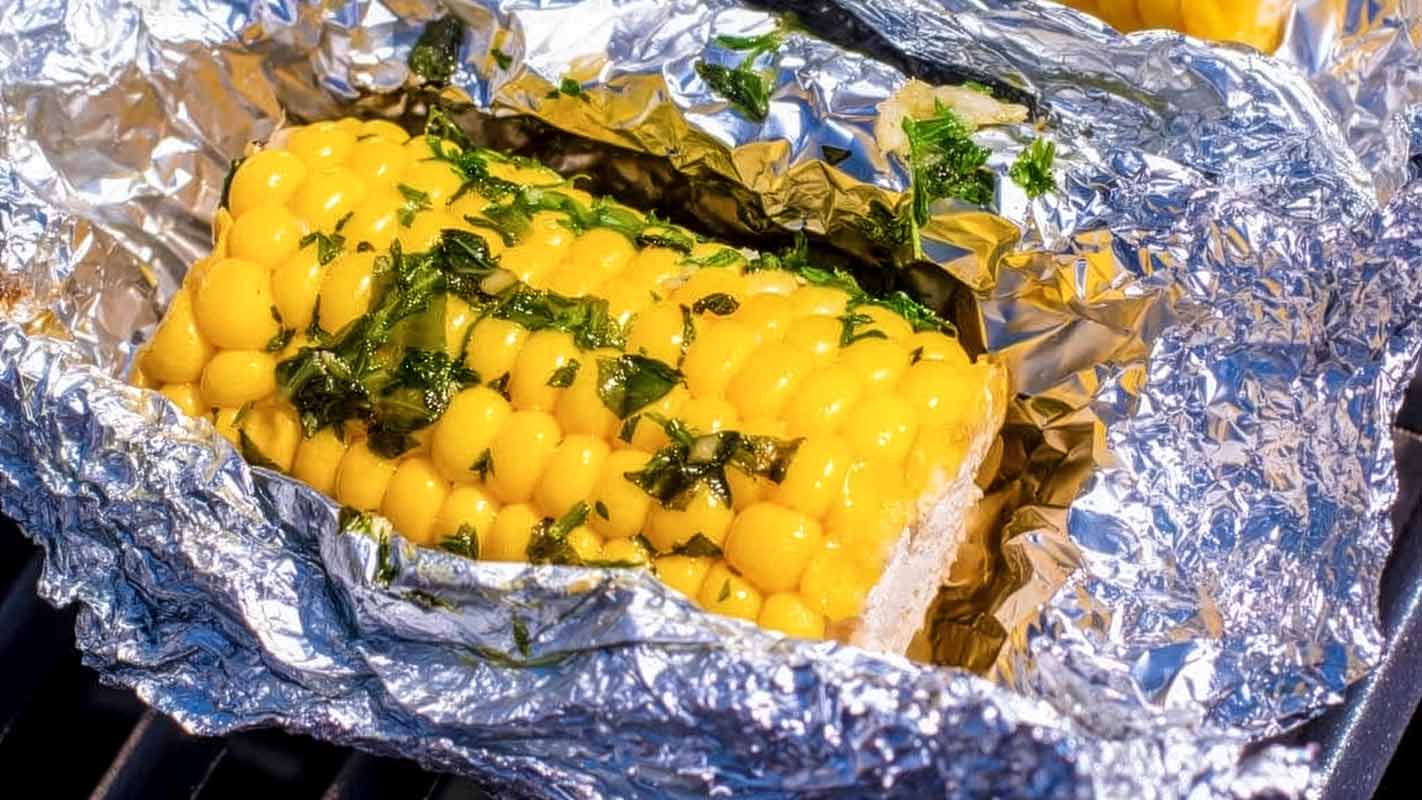
Plain butter, garlic butter, chilli sauce or a sprinkle of hard cheese can all be used as toppings.
More Camping Dinners
- Tinned/homemade curry with instant rice or curry naan/wrap (butter chicken is good)
- Tinned chilli with rice or tortilla wraps
- One-pot pasta with a jar of tomato sauce/pesto
- One-pot pasta primavera with mixed vegetables and Parmesan
- Tinned lentil stew
- Tinned vegetable stew with bread
- Ramen noodles with canned vegetables and soy sauce
- Couscous with tinned chickpeas and seasoning
- Instant polenta with herbs and olive oil
- Polenta topped with pesto, beans or tinned meat
- Shelf-stable gnocchi with pesto and chorizo
- Chilli con carne with rice
- Fried rice made with pre-cooked rice, tinned vegetables, egg and soy sauce
- Taco rice bowls with mince, cheese and salsa
- Bean and sweetcorn tacos
- Stove-top tuna pasta
- Veggie sausages on the BBQ
- Butterbean, chorizo and halloumi skillet
- Fajita skillet with chicken, peppers and seasoning
- Sausage and bean skillet with paprika
- Tinned lentil dal with quick-cook rice
- Rice pouches heated with beans and salsa
Sweet Camping Snacks 🍪
Camping snacks need to survive being carried around in backpacks, left in the car and passed between children.
A mixture of homemade snacks, fruit and a few familiar treats works best.
Healthy Flapjacks
These healthy flapjacks are easy to transport and useful for breakfast, snacks or taking on a long walk.
Cool them completely before cutting and pack sheets of baking paper between the layers.
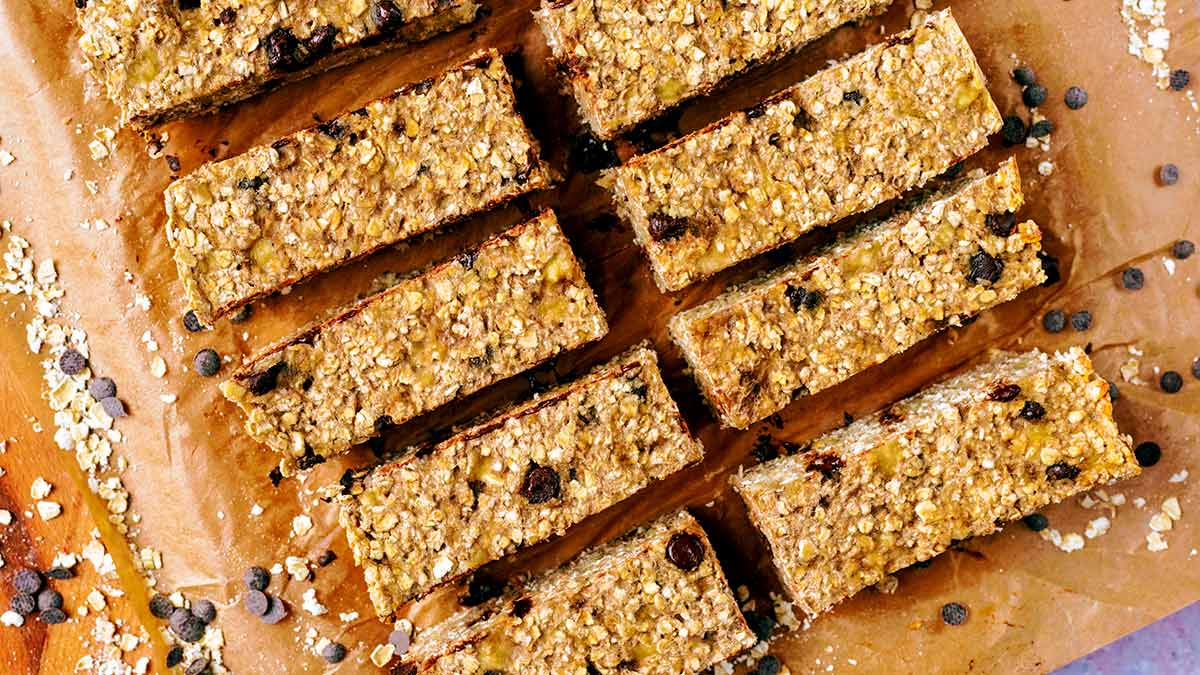
For a more traditional treat, try our chocolate flapjacks.
No-Bake Granola Bars
Our no-bake granola bars are packed with oats, fruit and nuts.
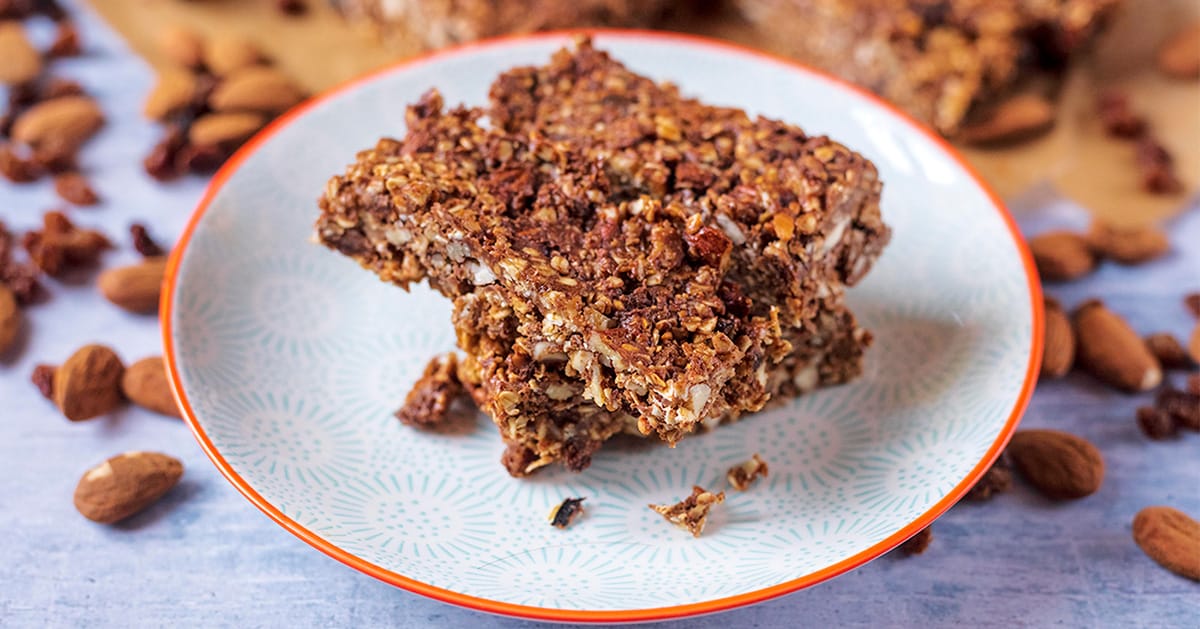
Because they are softer than baked cereal bars, keep them in a rigid container rather than a bag.
Store them in the cool box during hot weather so they remain firm.
Blueberry Oat Bars
These blueberry oat bars combine blueberry chia jam with a peanut butter oat crumble.
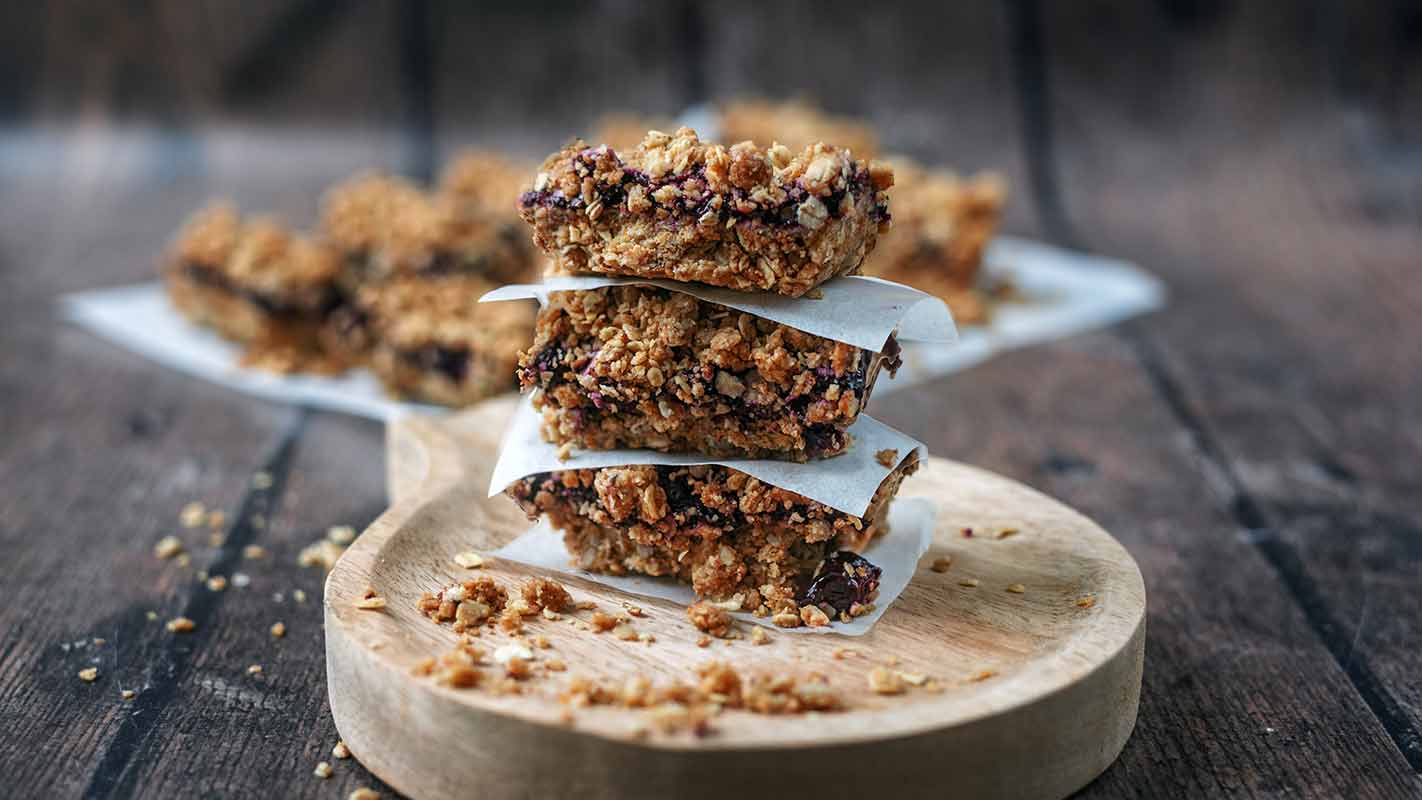
They need to be kept chilled, so they are best for the first day of a trip or for campsites where you have access to a reliable fridge.
Carrot Cake Oat Bars
Our carrot cake oat bars are baked, portable and suitable for breakfast or snacks.
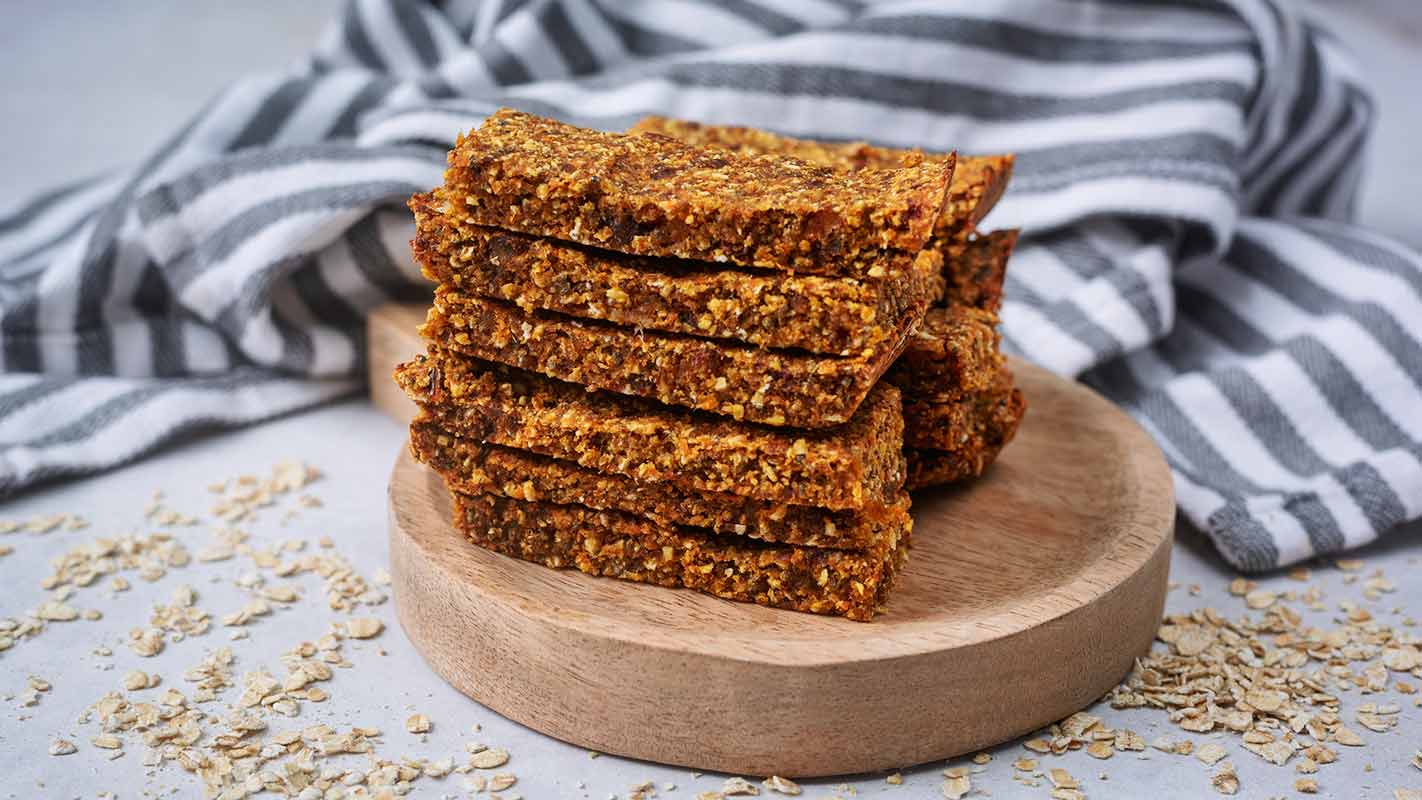
They are a good alternative to sticky cereal bars and can be made several days before travelling.
Camping Energy Balls
Make our dark chocolate chip energy balls before a walking or cycling holiday.
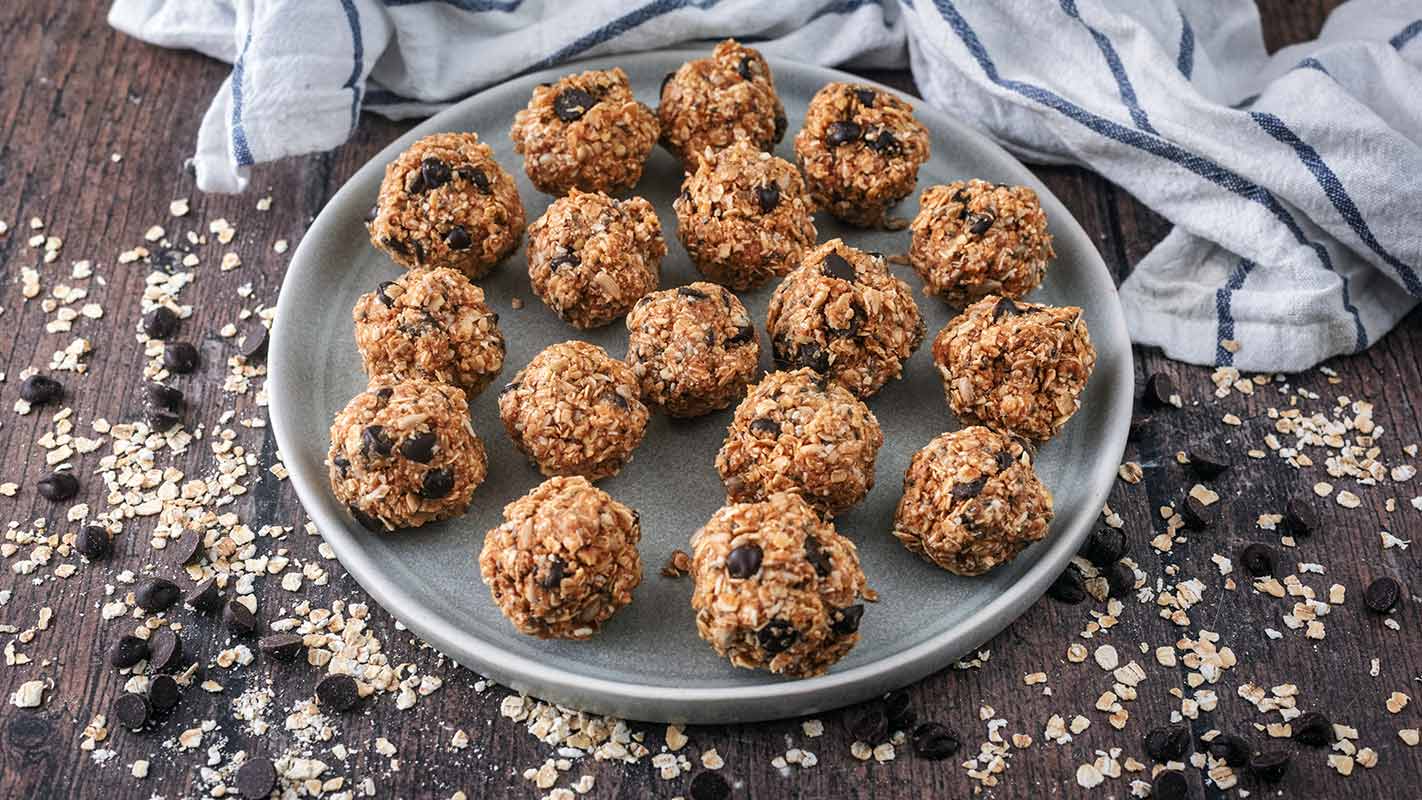
They contain oats, seeds, peanut butter, coconut and dark chocolate chips.
Our chocolate energy balls are another portable option.
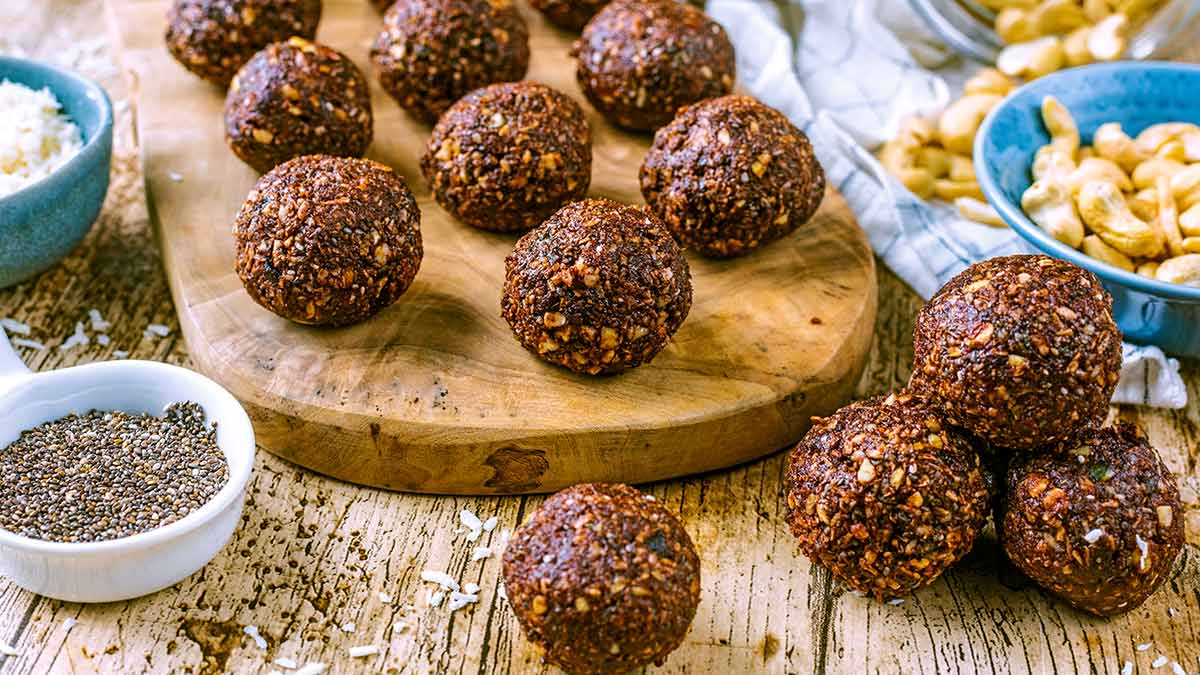
Keep either version chilled in hot weather and check your campsite's guidance about storing food where wildlife could reach it.
Homemade Nut Bars
These homemade Kind-style nut bars are sweet, salty and crunchy.
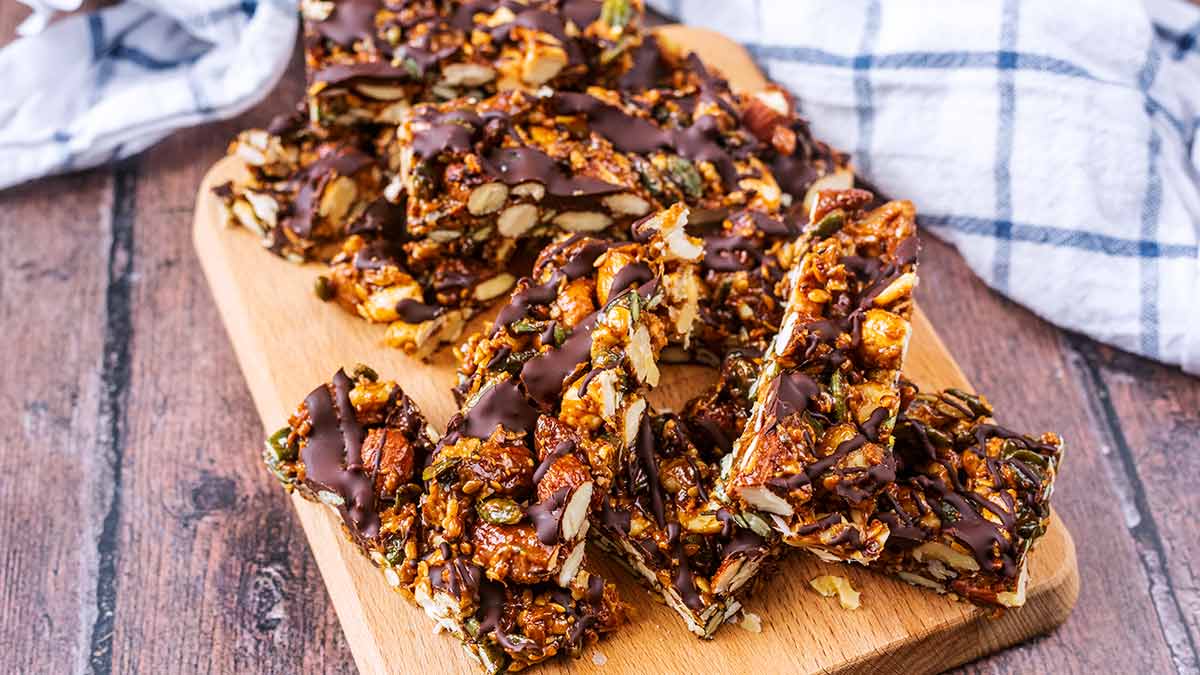
They are particularly useful for adults and older children on active days.
More Sweet Camping Snacks
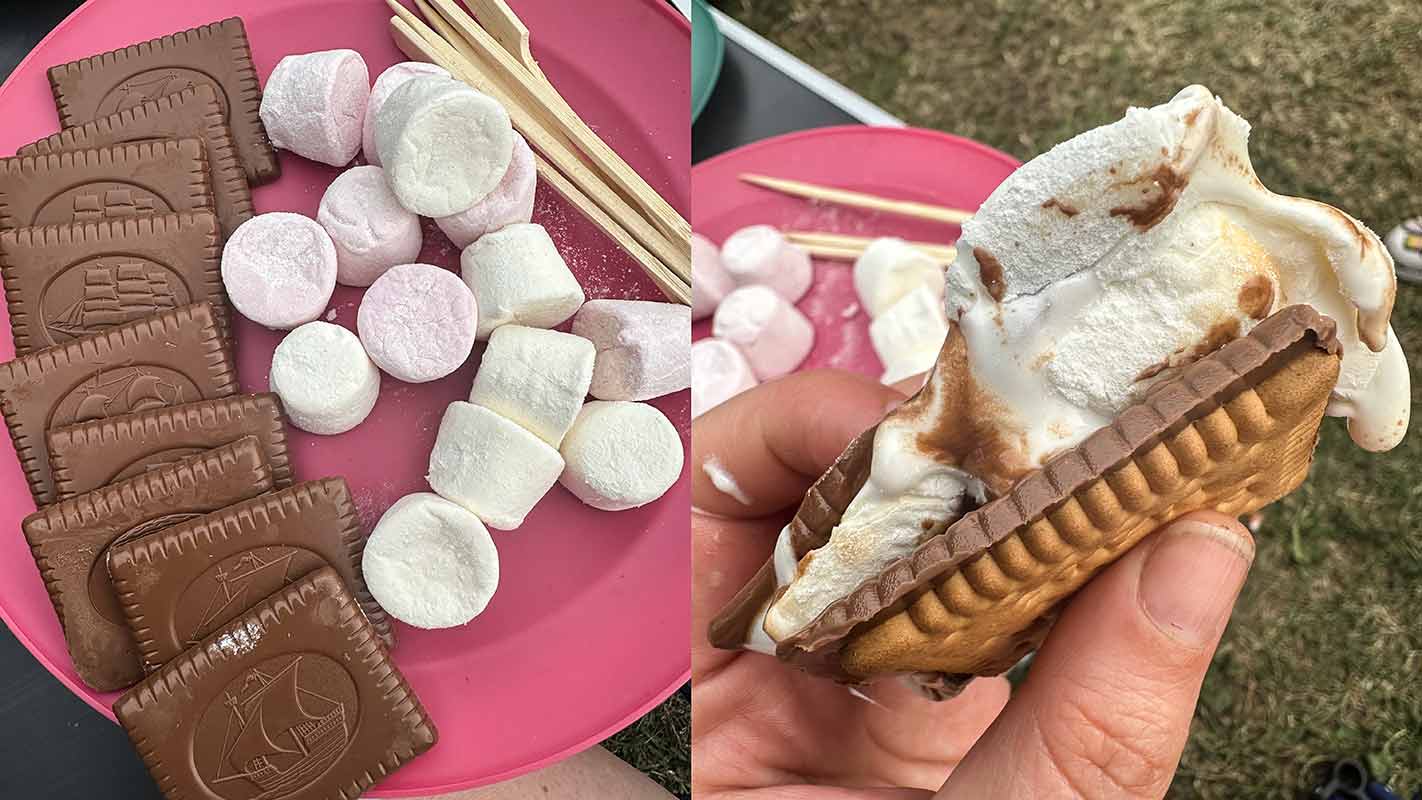
- S'mores - these are a camping MUST!
- Fruit leather or fruit strips
- Dried mango
- Dried apple rings
- Banana chips
- Cereal bars
- Homemade trail mix
- Digestive biscuits or graham crackers
- Rice cakes with honey
- Biscotti/shortbread
- Homemade or shop-bought oat bars
- Mini muffins
- Squeezy fruit pouches
- Honey-roasted peanuts
- Flapjacks
- Chocolate rice cakes
- Freeze-dried fruit
- Pre-popped popcorn
- Tinned or pouched fruit in juice
- Banana bread
- Breakfast biscuits
- Toaster waffles
- Raisin bread
- Fruit loaf
- Nut and dried fruit packs
Savoury Camping Snacks 🥨
Savoury snacks are useful after long walks and on hot days when nobody wants another sweet cereal bar.
Homemade Crackers
Our easy homemade crackers can be made before leaving and packed into a rigid airtight box.
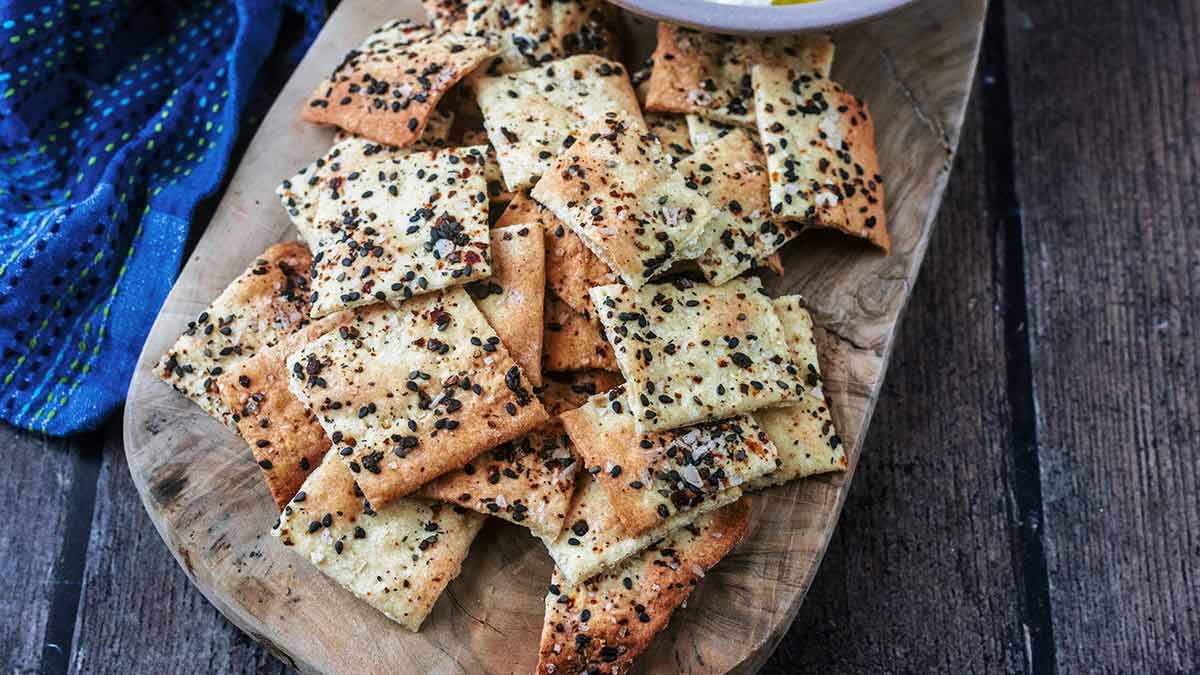
Serve them with cheese spread, nut butter, tinned fish, olives or individual dip pots.
Savoury Muffins
Pack savoury vegetable muffins for the first day.
Serve them with soup, salad or vegetable sticks.
More Savoury Camping Snacks
- Crackers with cheese spread
- Mini breadsticks
- Vegetable crisps
- Potato crisps
- Pretzels
- Roasted chickpeas
- Roasted broad beans
- Seaweed snacks
- Dry-roasted peanuts
- Dry-roasted cashews
- Tinned or pouched olives
- Cheese crackers
- Salted popcorn
- Beef jerky
- Biltong
- Cup-a-soup as a warm snack
- Cheese straws
- Tortilla chips and salsa
- Crackers with tinned mackerel
- Pita bread and hummus
- Cheese portions with breadsticks
Campfire Food Ideas 🔥
Always check the rules at your campsite before planning to light a fire or use a barbecue.
Some sites only permit raised fire pits, while others do not allow open fires at all.
Foil-Wrapped Jacket Potatoes
Pierce the potatoes, rub them with a little oil and salt and wrap them in two layers of foil.
Cook them in hot embers, turning occasionally, until completely tender. This does take a long while, so use pre-cooked potatoes to speed this up.
Serve with beans, cheese, chilli, tuna, sweetcorn or butter.
Foil-Packet Vegetables
Add sliced vegetables to a large sheet of foil with oil, dried herbs, salt and pepper.
Fold the foil into a secure parcel and cook until the vegetables are tender.
Peppers, courgettes (zucchini), mushrooms, sweetcorn, onions and small pieces of potato all work well, although potatoes will take longer than softer vegetables. You could also add chorizo and canned potatoes to this.
Campfire Quesadillas
Fill a tortilla with cheese, drained beans, sweetcorn and salsa. Fold it in half and cook it in a frying pan or wrap it in foil.
Avoid overfilling the tortilla, as the filling will escape when you turn it.
Bread on a Stick
Use ready-made bread dough or a simple flour-and-yogurt dough. Roll it into a long strip, wrap it around a clean suitable cooking stick and carefully cook it over the fire.
Turn it regularly so the outside does not burn before the middle has cooked.
Campfire Nachos
Layer tortilla chips, beans, salsa and cheese in a foil tray.
Cover and heat until the cheese melts.
Foil Pizza Pockets
Spread tomato purée over half a tortilla, add cheese and toppings, then fold it over.
Wrap it in foil and heat it on a barbecue or in a covered pan. You can also buy a whole small pizza, wrap it up and wrap it in foil and cook it until melted.
Grilled Sandwiches
Fill bread with cheese and a tinned filling such as tuna, beans or sweetcorn.
Cook in a frying pan or sandwich cage until the bread is toasted and the filling is piping hot.
Banana Boats
Slice through the skin of a banana without cutting all the way through.
Fill it with chocolate chips and marshmallows, wrap it in foil and warm it until soft and melted.
Fire-Roasted Apples
Remove the apple core and fill the centre with cinnamon, dried fruit and a little sugar or honey.
Wrap the apple in foil and cook until soft.
More Minimal-Cook Campfire Food Ideas
- Tinned stew heated in a pan
- Grilled corn on the cob
- Rice pouches heated with beans
- Campfire toast with jam
- Campfire toast with honey
- Beans warmed in a pan and served in wraps
- Sausage and bean skillet
- Pita pizzas
- Foil-wrapped vegetables
- Foil-wrapped fish
- Soup heated in one pan
Camping Desserts and Treats
- Toasted marshmallows
- S'mores made with marshmallows, chocolate and digestives
- Chocolate and marshmallow banana boats
- Tortilla triangles fried with cinnamon sugar
- Brownie mix cooked in a covered pan
- Marshmallows toasted over a permitted fire
- Tinned fruit with custard
- Biscotti dipped into hot chocolate
- Chocolate popcorn
- Fruit loaf toasted in a pan
Simple Weekend Camping Menu 📋
Friday Evening
Dinner: Homemade chilli reheated on the camping stove with instant rice and tortilla chips or pre-cooked baked potatoes.
Dessert: Banana boats with chocolate and marshmallows.
Saturday
Breakfast: Reheated breakfast burritos with fruit.
Lunch: Greek pasta salad or DIY Lunchables.
Snack: Flapjacks, oat bars or energy balls.
Dinner: Campfire jacket potatoes with beans and cheese, plus grilled corn. Or chicken fajitas.
Dessert: S'mores or cinnamon apples.
Sunday
Breakfast: Granola with UHT milk, banana and dried fruit.
Lunch: Flatbread wraps with tuna, hummus or leftover chilli.
Journey-home snack: Banana oat muffins, fruit and pretzels.
Camping Menu Without a Cool Box 📋
Breakfast: Instant cinnamon and apple porridge, or granola with UHT milk.
Lunch: Tinned tuna and crackers, peanut butter wraps or instant couscous with tinned vegetables.
Dinner: Tinned curry with instant rice, one-pot tomato pasta or beans and sweetcorn quesadillas.
Snacks: Fruit, dried fruit, nuts, popcorn, cereal bars, crackers and pretzels.
Dessert: Toasted marshmallows, tinned fruit or cinnamon tortillas.
Camping Food Packing Tips 🧳
Plan the first meal carefully: After travelling and putting up the tent, you probably will not want to cook anything complicated. Take a homemade meal that only needs reheating or plan something very simple such as hot dogs or soup. You can also freeze this in ziplock bags and it will act as an ice pack as it defrosts.
Use chilled food first: Eat meals containing raw meat, cooked rice, dairy products and prepared salads early in the trip.
Freeze what you can: Frozen bottles of water, breakfast burritos and containers of homemade chilli can help keep the cool box cold while slowly defrosting.
Portion ingredients at home: Measure oats, pancake mix, couscous, rice, herbs and spices into labelled containers or reusable bags.
Avoid taking full-size packaging: Small containers of oil, seasoning, sauces and toppings save space and reduce waste.
Choose multipurpose ingredients: Tortilla wraps can become breakfast burritos, lunch wraps, quesadillas, pizzas and cinnamon tortilla desserts.
Take one emergency meal: Keep a tin of soup, chilli or curry with instant rice in reserve in case the weather prevents you from cooking as planned. Nobody wants to eat soggy fajitas that you have made in the rain - learn from my experience!
Pack plenty of snacks: Camping, walking and outdoor activities can make everyone hungrier than expected.
Remember a tin opener: Check whether your tins have ring pulls before leaving.
Keep washing up simple: One-pot meals, foil parcels and foods that can be eaten from their containers reduce the amount of water and equipment you need.
How to Pack a Cool Box
A well-packed cool box can make a huge difference to what you can eat when camping. It means you can take homemade meals, dairy, salads, cooked meats and more substantial breakfasts, rather than relying only on tins and packets.
Start with everything as cold as possible. Chill the cool box before packing if you can, and make sure all the food going into it has already been refrigerated. Frozen water bottles, frozen juice cartons (we love frozen Capri Sun as it goes really slushy) and frozen meals can all work as extra ice packs while slowly defrosting.
Pack the foods you will eat last at the bottom, and the foods you will need first at the top. Raw meat should always be sealed well and kept away from ready-to-eat food. If you are taking raw meat, it is best to cook it early in the trip while the cool box is still at its coldest.
Use plenty of ice blocks and fill empty spaces, as a full cool box stays colder for longer than one with lots of air gaps. Keep it closed as much as possible and store it in the shade, not in the car or in direct sunlight.
If possible, take two cool boxes: one for food and one for drinks. Drinks tend to be opened far more often, which lets warm air in each time. Keeping food separate helps it stay cold for longer.
Foods that are best kept in a cool box include cooked rice and pasta salads, cooked meats, dairy products, dips, prepared sandwiches, cut fruit, salads, raw meat, fish, cheese, yogurt and anything with a use-by date.
We try to eat vegetarian meals as much as possible when camping, as it makes food safety easier.
Camping Food Checklist ✅
Use this camping food checklist to help plan what to take. You do not need everything on the list, but it is a useful starting point when you are working out breakfasts, lunches, dinners and snacks.
Breakfast foods
- Oats or instant porridge sachets
- Granola or cereal
- UHT milk
- Long-life yoghurt or chilled yoghurt in a cool box
- Bagels, wraps or bread
- Peanut butter
- Jam or honey
- Bananas and apples
- Dried fruit
- Muffins, flapjacks or breakfast bars
- Eggs, if you have a cool box
- Bacon or cooked sausages, if eating early in the trip
- Pancake mix
- Syrup or mini jam pots
Lunch foods
- Tortilla wraps
- Flatbreads or pitta breads
- Crackers or oatcakes
- Tinned tuna, sardines or mackerel
- Tinned chicken
- Individual mayonnaise or sauce sachets
- Hummus or dip pots, if chilled
- Cheese portions or grated cheese
- Pasta salad or rice salad
- Couscous
- Tinned sweetcorn
- Olives
- Cucumber, tomatoes and peppers
- Soup sachets or cup-a-soup
- Breadsticks
Dinner foods
- Tinned chilli, curry, stew or soup
- Homemade chilli or curry, chilled or frozen
- Pasta
- Jarred pasta sauce
- Instant rice or rice pouches
- Noodles
- Couscous
- Tinned beans
- Baked beans
- Tinned hot dogs
- Potatoes for campfire jacket potatoes
- Tortilla chips
- Salsa
- Grated cheese
- Pitta breads, wraps or naan breads for pizzas
- Tinned vegetables
- Stock cubes or seasoning sachets
- Oil
- Salt and pepper
- Dried herbs and spices
Camping Snacks
- Cereal bars
- Flapjacks
- Energy balls
- Dried fruit
- Nuts and seeds
- Trail mix
- Pretzels
- Popcorn
- Rice cakes
- Crackers
- Mini muffins
- Fruit pouches
- Chocolate
- Marshmallows
- Crisps
- Breadsticks
- Nut butter sachets
- Boiled sweets
- Tinned fruit
Extras
- Tea, coffee and hot chocolate
- Sugar or sweetener
- Squash or juice
- Water bottles
- Electrolyte tablets or drinks for hot days
- Sauce sachets
- Kitchen roll
- Foil
- Food bags or reusable containers
- Washing-up liquid
- Sponge or cloth
- Bin bags
- Matches or lighter
- Tin opener
- Bottle opener
- Sharp knife
- Chopping board
No-Fridge Camping Food Ideas 🥪
Camping without a fridge or cool box is still possible, but it helps to plan meals around foods that are shelf-stable before opening. These are especially useful for longer trips, festivals, basic campsites or backup meals when your cool box is full.
Good no-fridge breakfast foods include oats, instant porridge pots, granola, dry cereal, UHT milk, bread, bagels, wraps, peanut butter, jam, honey, dried fruit, nuts, seeds and whole fruit such as bananas, apples and oranges.
For lunches, take crackers, oatcakes, tortilla wraps, flatbreads, tinned tuna, tinned sardines, tinned mackerel, tinned chicken, nut butter, tahini, individual sauce sachets, couscous, olives, breadsticks and soup sachets.
For dinners, useful no-fridge options include dried pasta, noodles, instant rice, couscous, jarred pasta sauce, tinned tomatoes, baked beans, tinned chilli, tinned curry, tinned stew, tinned ravioli, tinned hot dogs, tinned vegetables, tinned beans and instant mash.
Snacks that do not need chilling include cereal bars, flapjacks, dried fruit, trail mix, pretzels, popcorn, rice cakes, crackers, crisps, fruit pouches, boiled sweets, marshmallows, chocolate, nut bars and tinned fruit.
Once opened, many foods that were shelf-stable may need to be eaten straight away or kept chilled. Smaller tins, sachets and individual portions are much easier when camping because you do not have to store leftovers safely.
Useful no-fridge camping foods include:
- Oats
- Granola and dry cereal
- UHT milk
- Bread, wraps, bagels and flatbreads
- Peanut butter and other nut butters
- Jam and honey
- Whole fruit
- Dried fruit
- Nuts and seeds
- Cereal bars and flapjacks
- Tinned tuna, sardines and mackerel
- Tinned beans
- Tinned chilli, curry, soup and stew
- Instant rice
- Couscous
- Pasta and noodles
- Jarred pasta sauce
- Tomato purée
- Olives
- Roasted peppers in jars
- Crackers and breadsticks
- Individual sauce sachets
- Herbs and spice blends
- Popcorn
- Tortilla chips
- Marshmallows
- Tinned fruit
- Choose smaller tins and jars where possible so you do not have to store leftovers without refrigeration.
What Equipment You'll Need 🎛️
You do not need a lot of equipment to make good camping food, but a few basics will make mealtimes much easier. The exact list depends on whether you are cooking over a camping stove, barbecue, fire pit or not cooking at all.
Food prep: A sharp knife and chopping board are useful even if you are only slicing bread, fruit and vegetables.
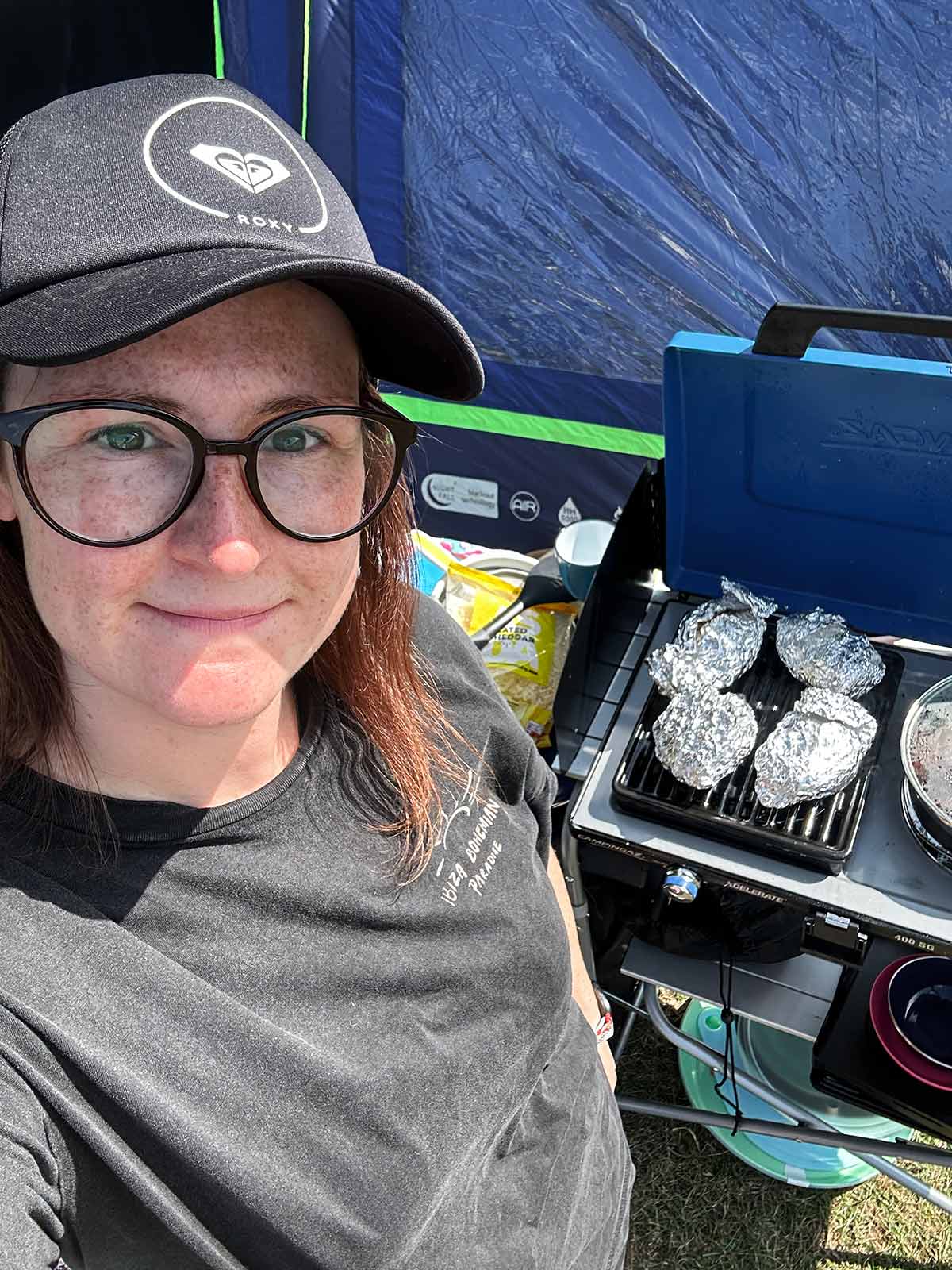
Cooking: For basic camping cooking, pack a camping stove, gas canister or approved fuel, matches or a lighter, a frying pan, a saucepan and a kettle or small pan for boiling water. A heatproof spatula, wooden spoon, tongs and serving spoon will cover most meals. I always take a meat thermometer too.
If you are planning campfire or barbecue meals, take heavy-duty foil, skewers, heatproof gloves and long-handled tongs. Check the campsite rules before packing firewood, disposable barbecues or fire pits, as not all campsites allow them.
Eating: You will also need plates, bowls, mugs and cutlery for everyone. Reusable camping plates are usually easier than paper plates, especially for hot food or anything with sauce.
Storing: For food storage, take reusable containers, food bags, clips for open packets, foil and a cool box with plenty of ice blocks. A separate bag or box for dry food makes it much easier to find things and keeps packets from getting crushed.
Clean up: For washing up, pack a bowl, sponge, tea towel, washing-up liquid, kitchen roll and bin bags. Some campsites have good washing-up facilities, but it is still helpful to have your own basics.
What We Actually Take Camping
When we camp without electric hook-up, I plan the first night around something homemade that only needs reheating, like chilli or curry.
For the first breakfast, we usually take something from the cool box, such as pancake batter, breakfast burritos or muffins.
After that, we rely more on oats, wraps, tins, couscous, pasta and snack boxes so we are not depending on chilled food for the whole trip.
Common Mistakes to Avoid 🤦
The biggest camping food mistake is taking too much chilled food and not enough shelf-stable food. Cool boxes only stay cold for a limited time, so it is better to use chilled meals early in the trip and rely more on tins, packets, wraps, pasta, rice and couscous later on.
Another common mistake is planning meals that need too many pans. Campsite cooking is easier when you focus on one-pan dinners, foil meals, wraps, salads and food that can be eaten straight from a bowl. If a meal needs three pans, lots of chopping and several toppings, it probably is not the best option for camping.
Do not forget the small but essential items. A tin opener, sharp knife, chopping board, lighter, foil, kitchen roll, bin bags and washing-up sponge can make the difference between an easy meal and a stressful one.
Avoid relying on campfire meals unless you know fires are allowed. Many campsites have strict rules about open flames, disposable barbecues and fire pits. Always check before you travel and have a camping-stove or no-cook backup meal.
Do not pack all your food in one huge bag. It is much easier to organise meals by day or by type: breakfasts together, snacks together, dry dinner ingredients together and chilled foods in the cool box. This also stops you opening the cool box constantly while searching for things.
Be careful with raw meat, cooked rice, dairy, prepared salads and leftovers. These need to stay properly cold and should not be left sitting out in warm weather. When in doubt, keep meals simple and choose ingredients that are easier to store safely.
Finally, do not underestimate snacks. Camping, walking, swimming and being outdoors all day can make everyone much hungrier than usual, especially children. Pack more snacks than you think you will need, and keep a few easy options aside for the journey home.
Frequently Asked Camping Questions
The easiest foods are wraps, bread, peanut butter, cereal, granola, fruit, crackers, muffins, flapjacks, tinned meals, instant rice and couscous. They are easy to pack and can be combined into several different meals.
Oats, UHT milk, cereal, bread, wraps, nut butter, whole fruit, dried fruit, nuts, crackers, tinned fish, tinned beans, soup, pasta, noodles, rice and unopened jars of sauce can usually be stored without refrigeration. Always follow the storage instructions on the packaging.
A camping stove can be used for porridge, pancakes, eggs, soup, noodles, one-pot pasta, chilli, curry, quesadillas, fried rice, sausages, hot dogs and toasted sandwiches.
Take a meal prepared at home that only needs reheating. Chilli, curry, stew or soup are all good choices. Hot dogs, nachos and quesadillas are useful alternatives when you need something even quicker.
Breakfast burritos, pancakes, muffins, Lunchables, pasta salad, baked bean wraps, pizza flatbreads, hot dogs, jacket potatoes, nachos and banana boats are all easy to adapt for children.
Keep some plain components separate so children can assemble their own plates rather than having every ingredient mixed together.
Use a well-insulated cool box packed with frozen blocks or frozen bottles. Chill all the food before packing it, fill empty spaces and keep the box closed and shaded. Consider using one cool box for frequently accessed drinks and another for food.
Plan each breakfast, lunch and dinner, then add at least two snacks per person per day. Take one spare shelf-stable meal in case your plans change or everyone is hungrier than expected.
Yes. Muffins, flapjacks, granola, oat bars, breakfast burritos, chilli, pasta salads, rice salads, couscous salads and chopped vegetables can all be prepared before travelling. Cool chilled dishes properly and transport them in a cold cool box.
More Camping Food Inspiration
Camping food really can be as simple or as creative as you want it to be. Some trips might just need porridge pots, wraps, tins and plenty of snacks, while others are perfect for make-ahead breakfasts, pasta salads, campfire potatoes and fun desserts like banana boats or s'mores.
The easiest way to plan is to choose a few meals you can make ahead, a few no-cook options and at least one easy backup dinner that does not need a fridge. That way, you are covered if the weather changes, the campfire is not allowed or everyone is too tired to cook properly after a busy day outdoors.
Whether you are camping for one night, heading off on a family holiday or planning a weekend of outdoor adventures, a little food prep makes the whole trip feel much easier.
Keep it simple, pack plenty of snacks and choose meals that are filling, flexible and easy to clean up afterwards.
If you've tried any of these camping meals, let us know how you got on in the comments below.
Tag us in your creations on Instagram @hungryhealthyhappy - Use the hashtag #hungryhealthyhappy too.
Comments
No Comments