




This easy Honey Roast Ham is made with just 3 ingredients and no boiling needed! The gammon is roasted in the oven until tender and juicy, then finished with a sticky honey and mustard glaze. It's the perfect centrepiece for Christmas dinner, Boxing Day or a festive buffet.

I love recipes that look impressive but don't involve hours of preparation, especially at Christmas when the kitchen is already busy enough. This honey roasted ham is exactly that.
There's very little hands-on time, it makes plenty to feed a crowd, and the leftovers are just as good the next day.
It's also a great alternative to turkey at Christmas, especially if you've got children who aren't keen on a traditional roast turkey dinner.
Recipe update: This recipe was originally published on 2 December 2024 and was fully retested in October 2026 to check the cooking time and ingredient quantities. The original recipe still worked well, but I've expanded the instructions, tips and FAQs.
If you would prefer to use your slow cooker, try our slow cooker gammon instead or for an air fryer method, use our air fryer gammon.
Would you like to save this post?
Jump to:
- Why You'll Love It
- Recipe Overview
- Ingredients and Substitutions
- How To Make Honey Roast Ham
- Do You Need to Boil the Gammon Before Roasting?
- How Long Does it Take to Roast a Ham Joint?
- Honey Roast Ham Variations
- Serving Suggestions
- What to do With Leftover Honey Roast Ham
- Storage
- Dannii's Top Tips
- Troubleshooting Guide
- Frequently Asked Questions
- More Ham Recipes
- Recipe
- Feedback
Why You'll Love It
- Just 3 ingredients - All you need is a gammon joint, honey and mustard.
- No boiling needed - This honey roast ham is cooked entirely in the oven, saving you an extra pan to wash up.
- Perfect for Christmas - An easy festive centrepiece that can be served hot or cold.
- Great for leftovers - Use any leftover ham for sandwiches, pies, pasta and quick family meals.
Recipe Overview
- Prep time: 5 minutes
- Cook time: 2 hours 45 minutes
- Resting time: 10 minutes
- Servings: 10
- Ingredients: Just 3 - gammon, honey and mustard.
- Method: Oven-roasted, with no boiling required.
- Perfect for: Christmas dinner, Boxing Day and festive buffets.
Ingredients and Substitutions

A full ingredients list, along with US Customary and Metric measurements, can be found in the recipe card at the end of this post.
- Ham joint - We use a 1.3kg (3lb) boneless, uncooked gammon joint with the rind and fat still on. Unsmoked gammon gives a more traditional flavour, but smoked works too if you prefer. Look for a joint labelled as needing cooking, rather than a ready-cooked ham.
- Honey - Runny honey makes the best sticky glaze and balances out the saltiness of the gammon. You don't need anything expensive.
- Mustard - Dijon mustard gives the glaze a lovely tangy flavour without being too overpowering. You could use wholegrain mustard instead, or leave it out completely if you want honey roast ham without mustard.
How To Make Honey Roast Ham
- Prep: Preheat your oven to 180°C/160°C(fan)/350°F/Gas 4.

- Put the gammon in a tin: Place the 1.3kg gammon joint in a large roasting tin.

- Cover the meat: Cover the ham and roasting tin tightly with foil. Roast in the oven for 2 hours 15 minutes.

- Remove from the oven: Carefully remove the foil and take off the rind and most of the fat, leaving a thin layer of fat on top.
- Score the fat: Using a sharp knife, score the remaining fat in a diamond pattern.

- Add the glaze: Mix together the honey and Dijon mustard, then pour the glaze over the ham, making sure the top is well covered.

- Return to the oven: Return the ham to the oven, uncovered, for another 30 minutes, until the glaze is sticky and caramelised.
- Check for doneness: Check that the centre of the gammon has reached 70°C for 2 minutes, or 75°C for 30 seconds, using a meat thermometer.
- Rest the meat: Rest for 10 minutes before slicing.
Do You Need to Boil the Gammon Before Roasting?
No, you don't need to boil the gammon first for this recipe. We use a smaller 1.3kg joint and roast it in the oven, covered with foil for most of the cooking time to help keep it moist.
Some honey glazed ham recipes recommend boiling or simmering the joint before roasting. This can help reduce saltiness and is another good way to cook gammon, particularly for larger joints.
However, I love how simple this oven-only method is. There's no large saucepan to find and no transferring the ham from boiling water into a roasting tin.
How Long Does it Take to Roast a Ham Joint?
Our 1.3kg boneless gammon takes approximately 2 hours 45 minutes in the oven, plus 10 minutes resting time.
The first 2 hours 15 minutes are spent roasting under foil, followed by 30 minutes uncovered to caramelise the honey mustard glaze.
Cooking times will vary depending on the size, shape and type of joint, so check the instructions on your gammon packaging. A larger joint will need a different cooking time, and you shouldn't use the timings above for every size.
For reassurance, use a meat thermometer to check the thickest part of the joint. For raw gammon, the centre should reach 70°C for 2 minutes, or an equivalent safe temperature and time combination such as 75°C for 30 seconds.
Honey Roast Ham Variations
This simple honey mustard glaze is delicious as it is, but there are a few easy ways to change the flavour.
- Maple syrup - Swap the honey for maple syrup for a slightly different sweetness.
- Brown sugar - Add a little soft brown sugar or demerara sugar to the honey mustard glaze for an extra sweet, caramelised finish.
- Cloves - For a traditional Christmas ham, stud the scored fat with a few whole cloves before adding the glaze. Remember to remove them before serving.
- Without mustard - You can make this honey roasted ham using just the gammon joint and honey. The result will be sweeter, without the tang of mustard.
Serving Suggestions
Honey roast ham is one of my favourite meats to serve at Christmas. It goes with all the traditional roast dinner trimmings, and you can serve it warm with your Christmas dinner or cold as part of a Boxing Day buffet.
We served ours with some slow cooker roast potatoes, creamed cabbage and air fryer stuffing balls. It's a delicious combination, and using the slow cooker and air fryer for the side dishes frees up oven space.
For a bigger Christmas spread, add honey roasted parsnips, roasted Brussels sprouts with garlic or our easy cauliflower cheese.
I also love serving it with slow cooker red cabbage, as the slightly sweet and tangy cabbage goes really well with the salty ham. Our make ahead mashed potatoes are another great option if you want to get some of the Christmas preparation done in advance.

What to do With Leftover Honey Roast Ham
One of the best things about making a whole ham joint is having leftovers for another meal. Use the leftovers in our leftover gammon pasta or chicken and ham pie.
Cold ham is also delicious in sandwiches, or you can serve thick slices with oven egg and chips for a really easy dinner.
You could even use the leftover ham instead of bacon in our healthy carbonara.
Storage
Store: Allow any leftover honey roast ham to cool, then transfer it to an airtight container or wrap it tightly and put it in the fridge within 2 hours of cooking. Eat within 48 hours or freeze it.
Freeze: Honey roast ham freezes really well. Slice the cooked ham and divide it into portions before putting it into freezer-safe bags or containers. Freeze for up to 3 months for the best quality. This is especially useful if you've made a big joint for Christmas.
Defrost: Defrost overnight in the fridge, then use within 24 hours of defrosting.
Reheat: You can enjoy the leftover ham cold or reheat it. Cover slices with foil and warm them in the oven with a splash of water to stop them drying out. Alternatively, reheat in the microwave. Make sure the ham is steaming hot all the way through and only reheat it once.
Dannii's Top Tips
- Use the right joint - This recipe is for an uncooked gammon joint, not a ready-cooked ham. We use a 1.3kg boneless joint, so if yours is a different size, you'll need to adjust the cooking time.
- Reduce the saltiness - If your gammon is particularly salty, you can soak it in cold water in the fridge for 2 hours before cooking. Drain, rinse and pat it dry. Always check the packaging, as some joints don't need soaking.
- Keep the ham covered - Covering the joint with foil for the first part of cooking helps prevent it from drying out. Only remove the foil when it's time to add the glaze.
- Leave a little fat - When you remove the rind, leave a thin layer of fat on top. This is what you score and glaze to create that delicious caramelised topping. Be careful not to cut deeply into the meat.
- Watch the glaze - Honey can burn quite quickly, so keep an eye on the ham during the final 30 minutes. If the glaze is getting too dark, loosely cover it with foil.
- Make washing up easier - The honey and mustard left in the roasting tin can be difficult to clean off. For Christmas, when there's already enough washing up, you could use a sturdy disposable foil roasting tray. For everyday cooking, lining a reusable roasting tin with foil is another option.
- Check it's cooked - Cooking times are a guide, especially with different ovens and joint sizes. A meat thermometer is the easiest way to make sure the ham is properly cooked.
- Remove the netting - If your gammon comes with butcher's string or oven-safe netting, follow the packaging instructions. Remove it before scoring the fat and glazing the cooked joint.
- Let it rest - Leave the ham to rest for 10 minutes before carving. This helps the juices redistribute and makes it easier to slice. For neat slices, use a sharp carving knife and cut across the grain.

Troubleshooting Guide
| Problem | Likely cause | Fix |
|---|---|---|
| Ham is dry or tough | Overcooked or not covered tightly enough. | Slice thinly and serve with gravy. Next time, seal the foil tightly and use a meat thermometer to avoid overcooking. |
| Ham tastes too salty | Some gammon joints are more heavily cured than others. | Serve with vegetables that haven't been heavily salted. Next time, follow the packaging advice on soaking the joint before cooking. |
| Honey glaze is burning | The honey is caramelising too quickly in the oven. | Loosely cover with foil to protect the glaze. Trim any bitter burnt areas before serving. Next time, watch it closely during the final 30 minutes. |
| Ham isn't cooked through | The joint may be larger or thicker than the one used in this recipe. | Return to the oven, covered with foil, and continue cooking until the centre reaches a safe temperature. Check with a meat thermometer. |
| Ham is difficult to slice | The meat is too hot or the carving knife isn't sharp enough. | Rest for at least 10 minutes and slice across the grain with a sharp knife. For very thin, neat slices, allow the cooked ham to cool and chill it first. |
Frequently Asked Questions
Yes! This is a great recipe to prepare ahead. You can cook the ham on Christmas Eve, cool it and store it covered in the fridge within 2 hours. Serve it cold on Christmas Day or gently reheat it until steaming hot throughout.
I particularly like the idea of getting the ham out of the way the day before, so there's one less thing taking up oven space on Christmas Day.
Yes, but the cooking time will need to change. The timings in this recipe are for a 1.3kg boneless joint. For larger joints, follow the cooking guidance on the packaging and use a meat thermometer rather than relying on time alone.
If you're cooking a much larger joint, you might prefer to simmer it before glazing and roasting.
Absolutely. You can leave the mustard out and glaze the ham with just runny honey. It will still give you a lovely sweet, sticky topping, although the mustard does help balance the sweetness.
Make sure you remove the foil for the final 30 minutes of roasting. The uncovered cooking time allows the honey glaze to become sticky and caramelised. If the glaze is still pale, check that the oven is at the correct temperature and continue watching it carefully, as honey can go from golden to burnt quite quickly.
More Ham Recipes

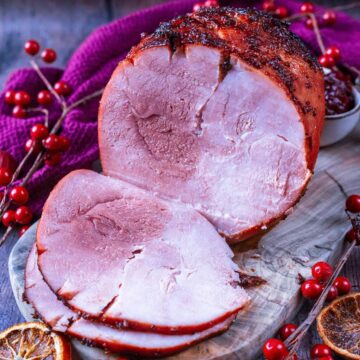


If you've tried this honey glazed ham recipe, let us know how you got on in the comments below.
Tag us in your creations on Instagram @hungryhealthyhappy and use the hashtag #hungryhealthyhappy too.
Recipe

Honey Roast Ham


Recipe Video
Ingredients
- 1.3 kg (3 lb) of Boneless gammon joint - uncooked; with rind
- 3 ½ tablespoons of Honey
- 3 tablespoons of Dijon mustard
Instructions
- Prep: Preheat your oven to 180°C/160°C(fan)/350°F/Gas 4.
- Put the gammon in a tin: Place 1.3 kg of Boneless gammon joint in a large roasting tin.
- Cover the meat: Cover the ham and roasting tin tightly with foil. Roast in the oven for 2 hours 15 minutes.
- Remove the rind: Carefully remove the foil and take off the rind and most of the fat, leaving a thin layer of fat on top.
- Score the fat: Using a sharp knife, score the remaining fat in a diamond pattern.
- Add the glaze: Mix together 3 ½ tablespoons of Honey and 3 tablespoons of Dijon mustard, then pour the glaze over the ham, making sure the top is well covered.
- Return to the oven: Return the ham to the oven, uncovered, for another 30 minutes, until the glaze is sticky and caramelised.
- Check for doneness: Check that the centre of the gammon has reached 70°C for 2 minutes, or 75°C for 30 seconds, using a meat thermometer.Rest for 10 minutes before slicing.
Recipe Notes
- Use the right joint - This recipe is for an uncooked gammon joint, not a ready-cooked ham. We use a 1.3kg boneless joint, so if yours is a different size, you'll need to adjust the cooking time.
- Keep the ham covered - Covering the joint with foil for the first part of cooking helps prevent it from drying out. Only remove the foil when it's time to add the glaze.
- Leave a little fat - When you remove the rind, leave a thin layer of fat on top. This is what you score and glaze to create that delicious caramelised topping. Be careful not to cut deeply into the meat.
- Watch the glaze - Honey can burn quite quickly, so keep an eye on the ham during the final 30 minutes. If the glaze is getting too dark, loosely cover it with foil.
- Check it's cooked - Cooking times are a guide, especially with different ovens and joint sizes. A meat thermometer is the easiest way to make sure the ham is properly cooked.
Nutritional Information
Where nutritional information is provided, it is approximate and calculated using online tools. Values can vary depending on the ingredients and brands used, but we endeavour to be as accurate as possible.
All timings are a guide and may vary depending on the ingredients, equipment and, where relevant, the appliance used. Changing the serving size may also affect the time needed.



Comments
No Comments