




This easy roast chicken recipe gives you juicy, tender meat, crispy golden skin and plenty of delicious cooking juices for making gravy. With just a few simple ingredients and minimal preparation, this lemon and thyme roast chicken is perfect for a Sunday roast, a smaller Christmas dinner or meal prep for the week ahead.

A roast chicken is one of those meals that always feels like a bit of a treat, but it really doesn't need to be complicated. I love that I can get it in the oven and then get on with making all the sides, rather than spending the whole afternoon in the kitchen.
The combination of butter, fresh thyme and lemon gives the chicken so much flavour, without needing lots of different ingredients or complicated techniques.
And one of the best things about roasting a whole chicken? The leftovers! I often think they are just as useful as the roast dinner itself, especially when it means having chicken ready for quick lunches and easy dinners.
Recipe update: This recipe was originally published on 29 November 2020 and was fully retested in October 2026 to check the cooking time and ingredient quantities. The original recipe still worked well, but I've expanded the instructions, tips and FAQs.
If you are looking for other roast dinner ideas, try our juicy slow cooker roast beef, easy roast turkey breast or our festive Christmas roast chicken.
Would you like to save this post?
Jump to:
- Why You'll Love It
- Recipe Overview
- Ingredients and Substitutions
- Optional Extras
- How To Make Easy Roast Chicken
- How Long to Roast a Chicken
- How to Get Crispy Roast Chicken Skin
- How to Make Gravy from Roast Chicken Juices
- What to Serve with Roast Chicken
- Roast Chicken for Christmas Dinner
- What to Do with Leftover Roast Chicken
- How to Carve a Roast Chicken
- Storage
- Dannii's Top Tips
- Troubleshooting Guide
- Frequently Asked Questions
- More Chicken Recipes
- Recipe
- Feedback
Why You'll Love It
- Easy to make - Just a few simple ingredients and around 5 minutes of preparation before the oven does most of the work.
- Juicy chicken with crispy skin - Butter helps the skin turn beautifully golden, whilst the lemon and thyme add a lovely fresh flavour.
- Perfect for a Sunday roast - Serve with crispy roast potatoes, vegetables and homemade gravy for a comforting family dinner.
- Great for Christmas - A delicious alternative to turkey if you are having a smaller Christmas dinner or don't want lots of leftovers.
- Brilliant for meal prep - Roast a chicken once and use the extra meat in sandwiches, salads, pasta and pies.
- Makes delicious gravy - The buttery chicken juices left in the roasting tin are full of flavour and shouldn't go to waste.
Recipe Overview
- Chicken: A 1.5kg (3lb 5oz) whole chicken, serving approximately 4-6 people.
- Flavour: A simple combination of melted butter, fresh thyme, lemon, salt and pepper for juicy meat and crispy, golden skin.
- Cooking time: Approximately 1 hour 20 minutes at 200°C/180°C fan/400°F/Gas 6, plus 15 minutes resting time. Always check the internal temperature before serving.
- Best for: A traditional Sunday roast, a smaller Christmas dinner or meal prep, with leftover chicken for sandwiches, salads and easy family meals.
- My top tip: Pat the skin dry before adding the butter and use a meat thermometer to check that the chicken is fully cooked without drying it out.
Ingredients and Substitutions

A full ingredients list, along with US Customary and Metric measurements, can be found in the recipe card at the end of this post.
- Whole chicken - We used a 1.5kg (3lb 5oz) whole chicken. Try to buy the best quality chicken your budget allows. A free-range chicken is a great option, but a good-quality, high-welfare supermarket chicken will work well too. You can use a larger or smaller chicken, but you'll need to adjust the cooking time.
- Butter - Melted butter is poured over the chicken to give the skin a delicious buttery flavour and help it turn golden and crispy. You can use olive oil instead if you prefer, although the flavour will be slightly different.
- Lemon - This adds a lovely freshness and a subtle citrus flavour. We cut the lemon in half, pierce the skin and place it inside the chicken with the herbs.
- Thyme - Fresh thyme goes perfectly with roast chicken. You could use rosemary instead, or a combination of the two. If you only have dried thyme, use around 1-2 teaspoons instead.
- Salt and pepper - Good seasoning makes a difference to a simple recipe like this. Season the outside of the chicken evenly and add a little inside the cavity too.
Optional Extras
You can keep this recipe really simple, but there are a few ways to add extra flavour.
A couple of garlic cloves in the roasting tin work well, as does a splash of white wine or chicken stock in the bottom of the tray.
You could also roughly chop an onion, carrot and celery and sit the chicken on top of them. This adds flavour to the cooking juices and makes an excellent base for gravy.
How To Make Easy Roast Chicken
- Prep: Preheat your oven to 200°C/180°C fan/400°F/Gas 6.

- Prepare the bird: Remove the chicken from its packaging, check the cavity for any giblets and pat the skin dry with kitchen paper. Place the chicken breast-side up in a roasting tin.
- Coat the chicken: Melt the butter and pour it evenly over the chicken, making sure the skin is covered. Season with sea salt and black pepper.
- Add the lemon: Cut the lemon in half and pierce the skin of each half a few times with a sharp knife. Put the lemon halves and fresh thyme inside the cavity of the chicken.

- Roast the chicken: Roast in the oven for approximately 1 hour 20 minutes for a 1.5kg chicken, basting twice with the buttery pan juices. Start checking the temperature a little before the expected finishing time.
- Check for doneness: Check that the chicken is fully cooked using a meat thermometer. The thickest part of the thigh and breast should reach 75°C/165°F, without the probe touching the bone.
- Rest the chicken: Remove the chicken from the oven and transfer it to a carving board. Leave it to rest for 15 minutes before carving.
- Whilst the chicken is resting, you can finish cooking the vegetables and make your gravy from all those delicious juices in the tray.
How Long to Roast a Chicken
One of the most common questions about cooking a whole chicken is how long it needs in the oven. The cooking time depends on the weight of your chicken, the temperature of your oven and whether you are using a fan oven.
We used a 1.5kg chicken, which took approximately 1 hour 20 minutes at 200°C/180°C fan/Gas 6.
Roast chicken cooking times by weight
The following are approximate cooking windows at 200°C/180°C fan/Gas 6, intended as a guide rather than a guarantee.
| Chicken weight | Approximate cooking time |
|---|---|
| 1.2kg / 2lb 10oz | 1 hour 5 minutes - 1 hour 15 minutes |
| 1.5kg / 3lb 5oz | 1 hour 15 minutes - 1 hour 30 minutes |
| 1.8 kg / 4lb | 1 hour 25 minutes - 1 hour 40 minutes |
| 2kg / 4lb 6oz | 1 hour 35 minutes - 1 hour 55 minutes |
These times are estimates. Check the temperature towards the earlier end of the range and continue cooking if needed.
The most reliable way to know that roast chicken is cooked is to use a meat thermometer. The thickest part of the meat should reach 75°C/165°F. Make sure you check both the thigh and breast, avoiding the bone.
If you don't have a thermometer, check that the chicken is steaming hot and cooked all the way through, with no pink meat and clear juices. However, a thermometer is the most reliable option.
How to Get Crispy Roast Chicken Skin
There are a few simple things you can do to get beautifully crispy roast chicken skin without drying out the meat. Firstly, make sure the chicken skin is dry before adding the butter. Excess moisture can cause the skin to steam rather than roast.
Roast the chicken uncovered so the heat can circulate around it. If you are using a bed of vegetables underneath the chicken, this also helps lift the bird away from the liquid in the bottom of the tray.
Basting adds flavour, but you don't need to do it constantly. We baste twice during cooking and then leave the skin alone towards the end so it has a chance to crisp up.
If the skin is still pale towards the end of cooking, you can increase the oven temperature to 220°C/200°C fan/425°F/Gas 7 for the final 5-10 minutes, provided the chicken is not yet fully cooked. Keep a close eye on it and check the internal temperature.
Once the chicken is cooked, allow it to rest uncovered if you want to keep the skin as crispy as possible. Covering it tightly with foil traps steam, which can soften the skin.
How to Make Gravy from Roast Chicken Juices
One of my favourite things about roasting a whole chicken is all the delicious juices left in the tray.
Don't throw these away! They make the most amazing gravy and add so much flavour to your roast dinner.
Easy roast chicken gravy with granules
Our favourite quick method is to use good-quality gravy granules and add the chicken juices to them.
Carefully pour the juices from the roasting tin into a jug, leaving behind any excess fat if there is a lot.
Make up your gravy granules according to the packet instructions, but replace some of the water with the chicken juices.
We also like to use some of the water from the vegetables we've cooked for the roast dinner.
Stir everything together until the gravy is smooth and has reached your preferred consistency. We love a nice thick gravy!
Taste before adding extra salt, as the juices and gravy granules may already be well seasoned.
To keep the recipe gluten free, ensure you use gluten-fee gravy.
How to make chicken gravy without granules
You can also make homemade gravy with the roasting juices. Add a tablespoon of butter and a tablespoon of plain flour to a saucepan over a medium heat. Stir for around a minute to cook the flour.
Gradually whisk in approximately 250-300ml of chicken stock and any juices from the roasting tin.
Simmer for a few minutes until the gravy has thickened. Add more stock if needed and season to taste.
For even more flavour, sit the chicken on some chopped onions, carrots and celery whilst roasting and use the juices from those vegetables in the gravy.
You can also serve this chicken with our easy onion gravy if you want to get ahead with some of the cooking.

What to Serve with Roast Chicken
This easy roast chicken is perfect for a traditional Sunday roast, but it also goes well with lighter side dishes if you want something a little different.
Potatoes
For a proper roast dinner, you can't beat our easy roast potatoes. They're crispy on the outside, fluffy on the inside and perfect for soaking up the gravy.
If you prefer mash, try some of our creamy mashed potatoes. You could also make Instant Pot mashed potatoes to keep things simple.
Vegetables
We like to have plenty of vegetables with a roast dinner, and these all go really well with chicken.
Our honey roasted parsnips and garlic and parsley roasted carrots are always good additions.
For something a little different, try vegetable mash or balsamic and garlic roasted cauliflower.
And if you love sprouts, our roasted Brussels sprouts with garlic are a delicious way to cook them.
Comforting roast dinner sides
If you're making a big Sunday roast, then our easy cauliflower cheese is a must.
We also love serving roast chicken with homemade sage and onion stuffing. If the oven is full, air fryer stuffing balls are a really convenient alternative.
For Christmas dinner, add our slow cooker red cabbage. It's full of festive flavour and can be prepared ahead, saving some space in the oven.
Roast Chicken for Christmas Dinner
If you are cooking Christmas dinner for a smaller group, a whole roast chicken is a great alternative to a large turkey.
It's generally more affordable, easier to manage and doesn't take quite as long to cook as a whole turkey.
This lemon and thyme version is lovely for Christmas because it has all those classic roast dinner flavours without needing lots of additional ingredients.
Serve it with crispy roast potatoes, sage and onion stuffing, honey roasted parsnips, red cabbage and plenty of gravy.
A few of the side dishes can be made ahead, which makes Christmas Day cooking so much easier.
If you want something a little more festive, with extra herbs and citrus flavours, then try our Christmas chicken. We also have a Christmas Dinner Meal Plan to help with all the planning.
What to Do with Leftover Roast Chicken
One of the biggest advantages of roasting a whole chicken is that you can use the leftovers in so many different ways.
Sometimes I roast a chicken specifically to have cooked chicken ready for easy meals. It saves so much time when there's already some in the fridge or freezer.
The leftover chicken is delicious cold in sandwiches, wraps and salads, and it's also great for adding protein to lots of different meals.
Here are some of our favourite ways to use it.
Leftover chicken pasta
Our leftover chicken pasta is ideal for using up some of the cooked chicken and makes a quick, comforting dinner.

Chicken pie
Use shredded roast chicken in our easy chicken and leek pie. This is a great way to turn leftovers into another family dinner.
Chicken curry
You can swap the turkey for cooked chicken in our 15 minute leftover turkey curry.
Chicken salads
For a lighter meal, add the meat to our BBQ chicken salad or chicken pasta salad.
Chicken pizza
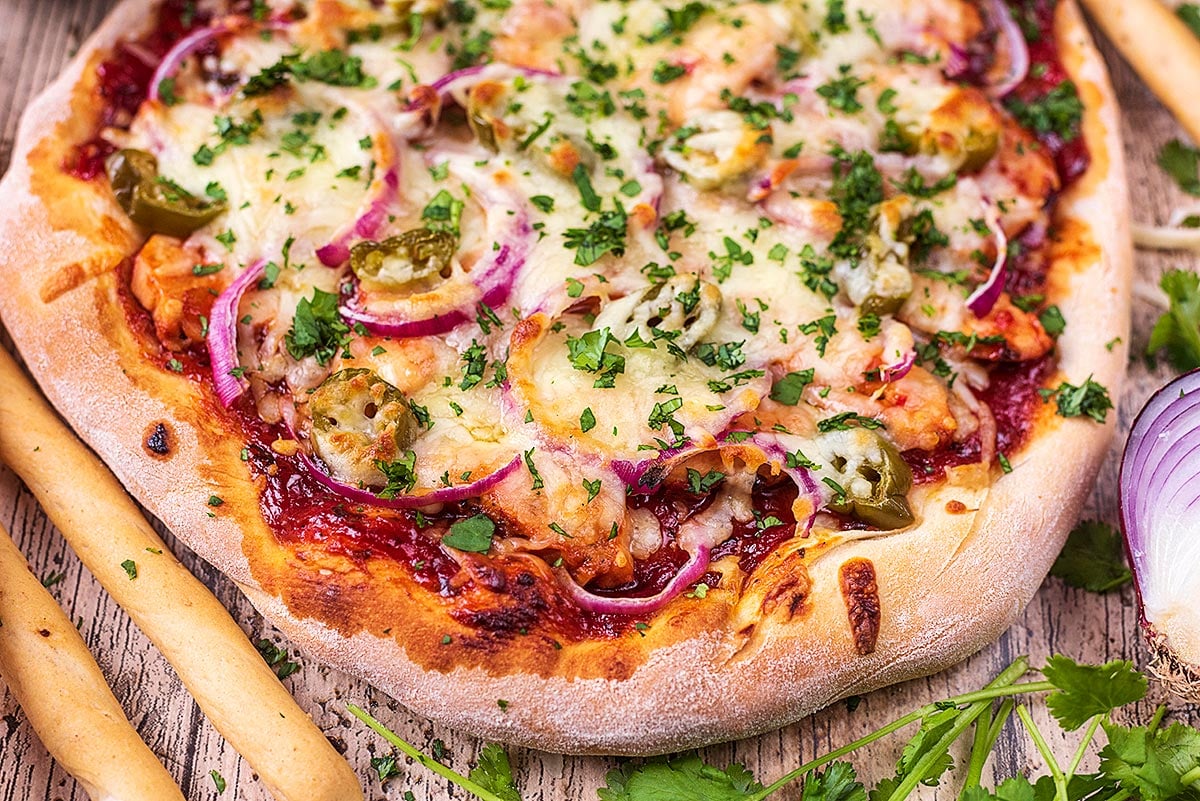
Leftover roast chicken is delicious on our BBQ chicken pizza.
Chicken risotto
Use the chicken in our chicken and pea risotto for a comforting meal with plenty of protein.
Chicken stock
Once you've removed all the meat, the bones are perfect for making homemade chicken stock.
It's a brilliant way to reduce food waste, and the homemade stock can be used in soups, casseroles and sauces.
💡 Meal prep tip: If you are roasting a chicken for meals later in the week, divide it into portions once cooked and cooled. Keep what you'll use within 48 hours in the fridge and freeze the rest straight away.
How to Carve a Roast Chicken
Once the chicken has rested for 15 minutes, place it on a chopping board. Use a sharp knife to cut between the legs and breast, then pull the legs away and cut through the joints.
Remove the wings, then cut down either side of the breastbone to remove the breast meat. Slice the breasts and serve with the legs, wings and all those delicious roasting juices.
Don't forget to remove any smaller pieces of meat left on the carcass - they're perfect for sandwiches or adding to soups.
Storage
Store: Allow the leftover chicken to cool quickly, remove the meat from the bones and transfer it to an airtight container. Refrigerate within 2 hours of cooking and eat within 48 hours.
Freeze: Shredded or sliced roast chicken freezes really well. Divide it into meal-sized portions, transfer to freezer-safe containers or bags and freeze. For best quality, use within 3 months.
Defrost: Defrost frozen roast chicken thoroughly in the fridge overnight. Once defrosted, use promptly and don't refreeze it unless it has been safely cooked again as part of another dish.
Reheat: Reheat leftover chicken in a frying pan with a little stock or water, or cover it in an ovenproof dish with a splash of stock and heat in the oven. You can also reheat it in the microwave. Make sure it's steaming hot all the way through and only reheat it once.
Eat cold: Properly cooked and chilled roast chicken can be eaten cold in sandwiches and salads, as long as it has been stored correctly and eaten within 48 hours.
Dannii's Top Tips
- Dry the chicken skin - Pat the skin dry with kitchen paper before adding the butter. This helps it brown and crisp up in the oven.
- Use a meat thermometer - This is the best way to check whether the chicken is cooked. Aim for 75°C/165°F in the thickest part, without touching the bone.
- Try butter under the skin - For extra flavour, carefully loosen the skin using the back of a spoon and add a little butter underneath. Be gentle so you don't tear the skin.
- Add white wine - A small splash of white wine in the bottom of the roasting tin can add extra flavour to the cooking juices and gravy. Chicken stock works well too.
- Make a vegetable trivet - Put chopped onion, carrot and celery in the bottom of the roasting tin and sit the chicken on top. This adds flavour to the juices and keeps the chicken slightly raised.
- Don't overcrowd the tray - Use a roasting tin with enough room around the chicken so the hot air can circulate.
- Baste during cooking - We baste the chicken twice with the buttery juices. Avoid repeatedly opening the oven towards the end of cooking, as this can affect the temperature and soften the skin.
- Rest before carving - Leave the chicken for around 15 minutes after cooking. This makes the meat easier to carve and helps keep it juicy.
- Keep the skin crispy whilst resting - If you want crispy skin, don't tightly wrap the cooked chicken in foil. You can cover it loosely if necessary to keep it warm, but the trapped steam may soften the skin.

Troubleshooting Guide
| Problem | Likely cause | Fix |
|---|---|---|
| The skin isn't crispy | The skin was too wet before roasting, the chicken was covered or it was basted too close to the end of cooking. | Pat the skin dry before roasting and cook uncovered. If the chicken isn't fully cooked yet, increase the oven temperature to 220°C/200°C fan for the final 5-10 minutes, keeping a close eye on it. |
| The chicken is dry | It has been cooked for too long or carved without resting. | Use a meat thermometer to avoid overcooking and rest for 15 minutes before carving. If it is already dry, serve the sliced meat with plenty of gravy or pan juices. |
| The skin is browning too quickly | The oven is too hot or the chicken is too close to the heating element. | Loosely cover the browned areas with foil and continue roasting until the chicken is properly cooked. Check the internal temperature before removing it from the oven. |
| The chicken isn't cooked after the suggested time | The chicken is larger than expected, the oven runs cooler or the heat hasn't circulated evenly. | Continue roasting and check the internal temperature every 10 minutes. Both the thickest part of the breast and thigh need to reach a safe temperature. |
| The pan juices are burning | The roasting tin is too small, the oven is too hot or there isn't enough liquid in the bottom of the tin. | Add a splash of hot water or chicken stock around the chicken, without pouring it over the skin. Check regularly and avoid using any burnt juices in your gravy. |
| The gravy is too greasy | Too much fat from the chicken and butter has mixed into the cooking juices. | Let the juices stand for a minute so the fat rises to the top, then spoon off the excess before making your gravy. Add a little extra stock if needed. |
Frequently Asked Questions
The most important thing is not to overcook it. Use a meat thermometer rather than relying only on the cooking time, and allow the chicken to rest before carving.
Adding butter to the skin also gives it a lovely rich flavour. You can put some underneath the skin too if you prefer.
We recommend roasting this chicken uncovered to get golden, crispy skin.
If the chicken starts browning too quickly, you can loosely cover the browned parts with foil towards the end of cooking.
You don't have to baste a roast chicken, but we like to baste it twice with the buttery cooking juices.
This adds flavour, although basting too frequently can soften the skin and cause the oven temperature to drop every time you open the door.
The skin may have been too wet before roasting, the roasting tray may have contained too much liquid, or the chicken may have been covered tightly with foil.
Pat the skin dry before cooking and roast uncovered. Avoid basting during the final stages of cooking.
Yes. Replace the melted butter with a little olive oil. The chicken will still roast well, although it won't have quite the same buttery flavour.
A 1.5kg whole chicken generally provides around 4-6 main-course portions, depending on appetites and how much meat is on the bird.
If you're serving lots of side dishes, you may be able to stretch it a little further.
For a larger gathering, choose a bigger chicken or roast two birds, making sure to check that each one is properly cooked.
Roast chicken can be a great source of protein and fits well into a balanced diet.
You can serve it with plenty of vegetables and potatoes for a filling meal. If you want to reduce the saturated fat, you can remove the skin when eating or swap the butter for a little olive oil.
For meal prep, the cooked chicken is useful for adding protein to salads, soups, rice dishes and pasta.
More Chicken Recipes


If you've tried this roast chicken recipe, let us know how you got on in the comments below.
Tag us in your creations on Instagram @hungryhealthyhappy and use the hashtag #hungryhealthyhappy too.
Recipe

Easy Roast Chicken (Lemon and Thyme)


Recipe Video
Ingredients
- 1.5 kg (3 ⅓ lb) of Whole chicken
- 3 ½ tablespoons of Butter
- ½ teaspoon of Fine sea salt
- 1 teaspoon of Ground black pepper
- 10 g (¼ cup) of Thyme
- 1 Lemon - halved and pierced all over
Instructions
- Prep: Preheat your oven to 200°C/180°C fan/400°F/Gas 6.
- Prepare the bird: Remove 1.5 kg of Whole chicken from its packaging, check the cavity for any giblets and pat the skin dry with kitchen paper. Place the chicken breast-side up in a roasting tin.
- Coat the chicken: Melt 3 ½ tablespoons of Butter and pour it evenly over the chicken, making sure the skin is covered. Season with ½ teaspoon of Fine sea salt and 1 teaspoon of Ground black pepper.
- Add the lemon: Cut 1 Lemon in half and pierce the skin of each half a few times with a sharp knife. Put the lemon halves and 10 g of Thyme inside the cavity of the chicken.
- Roast the chicken: Roast in the oven for approximately 1 hour 20 minutes for a 1.5kg chicken, basting twice with the buttery pan juices. Start checking the temperature a little before the expected finishing time.
- Check for doneness Check that the chicken is fully cooked using a meat thermometer. The thickest part of the thigh and breast should reach 75°C/165°F, without the probe touching the bone.
- Rest the chicken: Remove the chicken from the oven and transfer it to a carving board. Leave it to rest for 15 minutes before carving.
Recipe Notes
- Cooking time will vary depending on the size of your chicken and your oven.
- For extra flavour, carefully loosen the skin and add some of the butter underneath.
- A chopped onion, carrot and celery in the bottom of the roasting tray will add flavour to the cooking juices.
- Pat the chicken dry before roasting for crispier skin.
- Use a thermometer for the most reliable cooking check.
- Allow the chicken to rest for 15 minutes before carving.
- Refrigerate leftovers within 2 hours and eat within 48 hours, or freeze promptly.
Nutritional Information
Where nutritional information is provided, it is approximate and calculated using online tools. Values can vary depending on the ingredients and brands used, but we endeavour to be as accurate as possible.
All timings are a guide and may vary depending on the ingredients, equipment and, where relevant, the appliance used. Changing the serving size may also affect the time needed.



Elizabeth says
That has got to be the best roast chicken ever! Look at the colour of that browned skin - I'm salivating looking at the photos! We love roast chicken leftovers in our house too. :)
Danielle Wolter says
Love how perfect and juicy this came out! There is nothing better than a perfect roasted chicken.
Helen says
I love how easy this recipe is. Great flavours from the lemon and herbs. Yum!
Anjali says
Thank you for such a simple and easy recipe for making roast chicken at home! This is perfect for the holidays!!
Eileen Kelly says
What a wonderful tool to use for roasting chicken. the butter gives the perfect coating to the skin and the meat is super moist and tender.
Shruthi Baskaran says
My boyfriend will love this recipe! Thank you so much for the detailed instructions and simplicity of ingredients! Much appreciated.
Denay DeGuzman says
My daughter made this delicious recipe! Our family enjoyed it with mashed potatoes, corn bread and green beans.
Toni says
This recipe includes everything I'd ever want to know to roast a chicken! I love these flavors and the chicken is so juicy!
Cathleen says
I have always wanted to try roasting my own chicken, but then I compare the price of the pre-cooked one and always end up buying that instead. I am sure making this is so much better! You've convinced me. Next time I go to the grocery store I am not going to get a pre-cooked one