




If you want an easy snack that contains both protein and fibre, this creamy edamame hummus is a great one to keep in the fridge. Each serving has approximately 8 grams of protein and 3 grams of fibre, and it is made from just a handful of simple ingredients.

Instead of chickpeas, this hummus-style dip uses shelled edamame, which are young green soybeans. Blend them with tahini, fresh lemon juice, garlic and olive oil and you get a fresh, vibrant dip that is creamy, slightly nutty and really versatile.
Using frozen shelled edamame makes this an especially easy recipe to make from freezer and pantry staples. It takes around 10 minutes from start to finish when the edamame needs cooking, and you can use it as a dip, sandwich spread, wrap filling or spoon it onto grain bowls.
It is also naturally vegan and gluten-free using the ingredients listed below.
Looking for more ways to use edamame? Try our easy Cucumber Edamame Salad, delicious Cold Noodle Salad or our quick 15 Minute Noodle Bowl.
Would you like to save this post?
Jump to:
- Recipe Overview
- Why You'll Love It
- What Is Edamame Hummus?
- Ingredients and Substitutions
- Variations
- How To Make Edamame Hummus
- How To Make Edamame Hummus Really Smooth
- What To Serve with Edamame Hummus
- Meal Prep and Storage
- Dannii's Top Tips
- Troubleshooting Guide
- Frequently Asked Questions
- More Hummus Recipes
- Recipe
- Feedback
Recipe Overview
- Taste: Fresh, lemony and slightly nutty, with gentle sweetness from the edamame and savoury garlic.
- Texture: Thick and creamy with a little more body than traditional chickpea hummus.
- Difficulty: Very easy.
- Time: Around 10 minutes from start to finish.
- Nutrition: Approximately 8 grams of protein and 3 grams of fibre per serving, making this an easy way to add both protein and fibre to snacks and lunches.
- Best for: Dipping, meal prep, packed lunches, wraps, sandwiches, toast and grain bowls.
Why You'll Love It
- Protein and fibre in one easy snack - Each serving contains approximately 8 grams of protein and 3 grams of fibre.
- Ready in around 10 minutes - Cook the edamame, then blend everything together.
- Made from freezer staples - Frozen shelled edamame are ideal and mean you can make this whenever you need a quick dip.
- Great for meal prep - Make a batch ahead and keep it in the fridge for snacks, lunches and wraps.
- Chickpea-free - A useful alternative if you are specifically looking for hummus without chickpeas.
- Easy to adapt - Make it spicy, add fresh herbs or leave out the oil if you prefer.
What Is Edamame Hummus?
Traditional hummus is made with chickpeas, tahini, lemon, garlic and olive oil. Edamame hummus swaps the chickpeas for edamame while keeping many of those familiar hummus flavours.
Edamame are young soybeans, which is why you might also see recipes like this described as soybean hummus, green hummus or edamame dip.
It isn't traditional hummus, but the combination of tahini, lemon and garlic makes it familiar enough to use in exactly the same ways: as a dip, spread or addition to bowls and salads.
The flavour is a little fresher and greener than chickpea hummus, with a gentle sweetness from the edamame.
Ingredients and Substitutions
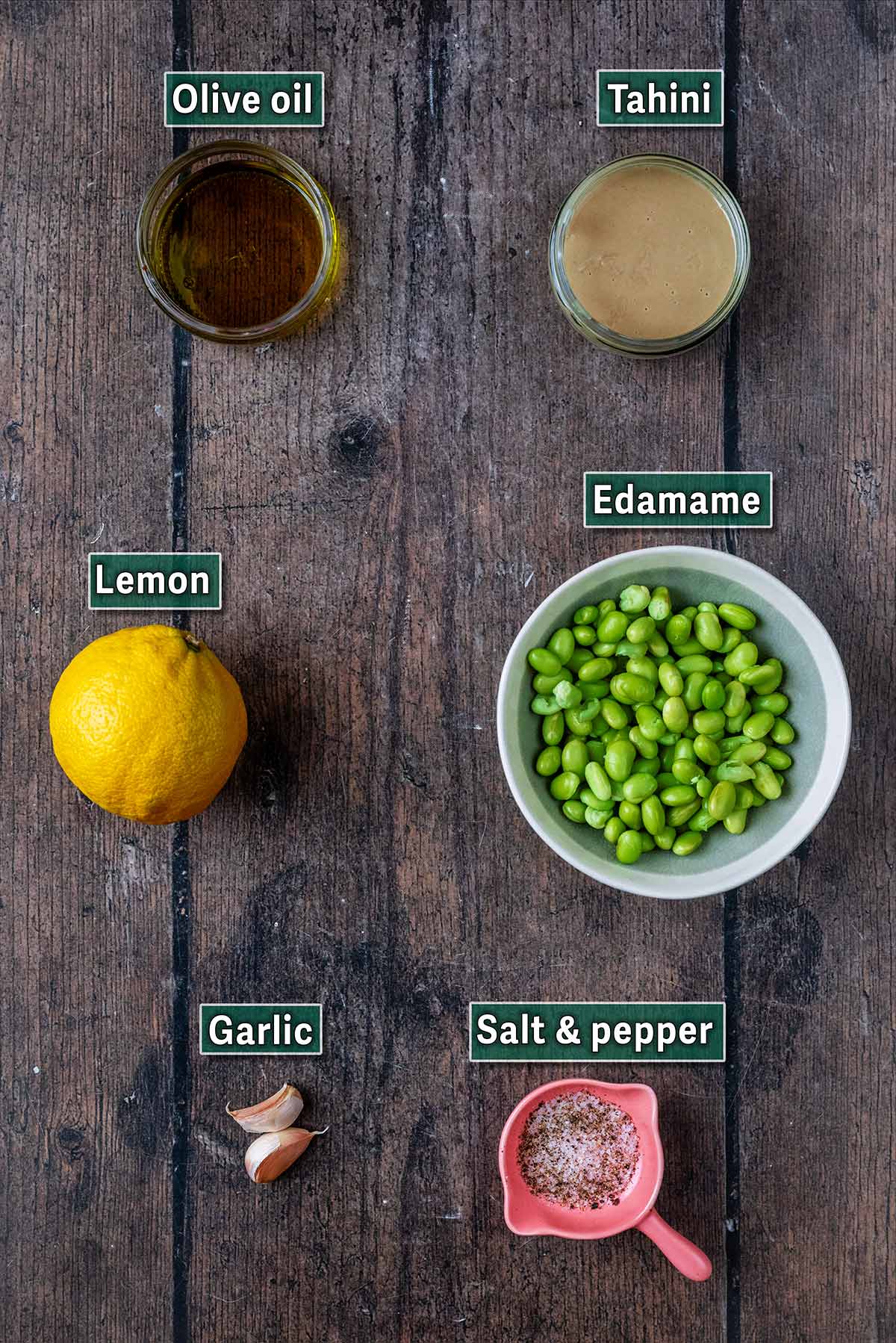
A full ingredients list, along with US Customary and Metric measurements, can be found in the recipe card at the end of this post.
- Edamame - Shelled edamame are what you need, rather than pods. Fresh or frozen both work. I usually use frozen shelled edamame because they are easy to keep on hand. Prepare them according to the packet instructions, then drain them really well before blending.
- Tahini - Adds the familiar nutty, slightly bitter flavour associated with hummus and helps make the dip creamy. Tahini is made from sesame, so bear that in mind if cooking for somebody with an allergy.
- Lemon - Fresh lemon lifts the flavour and balances the richness of the tahini and olive oil. Add a little lemon zest too if you want a stronger citrus flavour.
- Extra virgin olive oil - Adds flavour and gives the hummus a richer, smoother texture. You can replace some or all of it with extra cold water for a lighter version, although the texture and flavour will be slightly different.
- Garlic - Two cloves give this plenty of garlic flavour. Use one clove for a milder hummus, or try roasted garlic for something sweeter and softer.
- Seasoning - Season to taste after blending. Edamame needs enough seasoning to bring out its flavour.
- Cold water - This is the easiest way to adjust the consistency without adding lots of extra oil. Add it gradually because a small amount makes a surprisingly big difference.
Variations
Spicy Edamame Hummus - add 1-2 teaspoons sriracha or a pinch of cayenne pepper.
Herb-Loaded - blend in fresh herbs like cilantro (coriander), parsley, or basil for a bright green, herby dip.
Avocado Twist - add ½ an avocado for an extra creamy texture.
Sesame-Soy Edamame Hummus - swap lemon juice for lime and add a dash of soy sauce and sesame oil.
Oil free edamame hummus - Leave out the olive oil and add additional cold water a tablespoon at a time until the consistency is right. The flavour will be a little less rich.
How To Make Edamame Hummus
- Prep: If using frozen edamame, cook them according to the packet instructions until tender. Drain well and allow them to cool slightly.
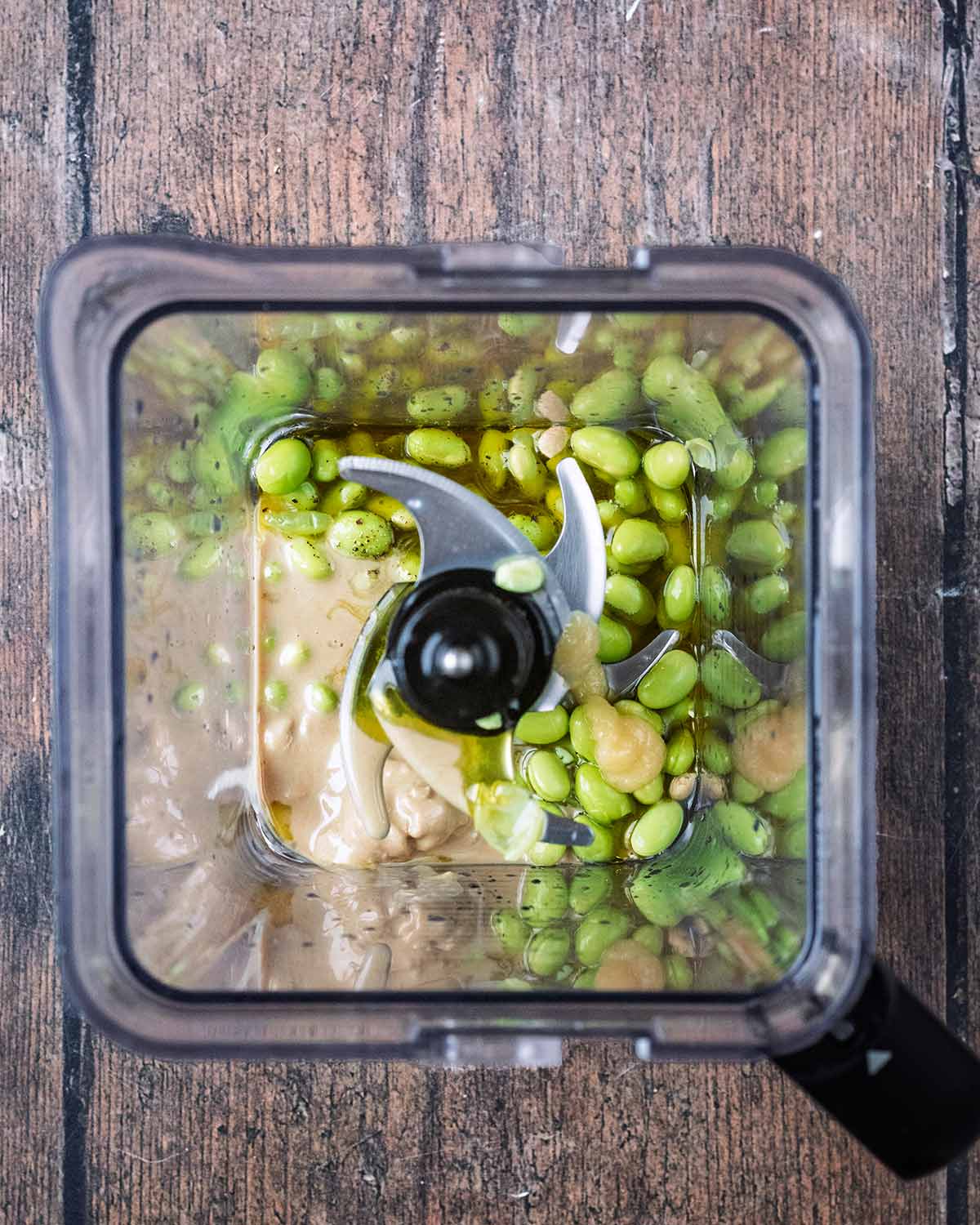
- Blend: Add the cooked edamame, tahini, lemon juice, olive oil, garlic, salt and pepper to a food processor.
Blend until everything has broken down, then scrape down the sides of the bowl.
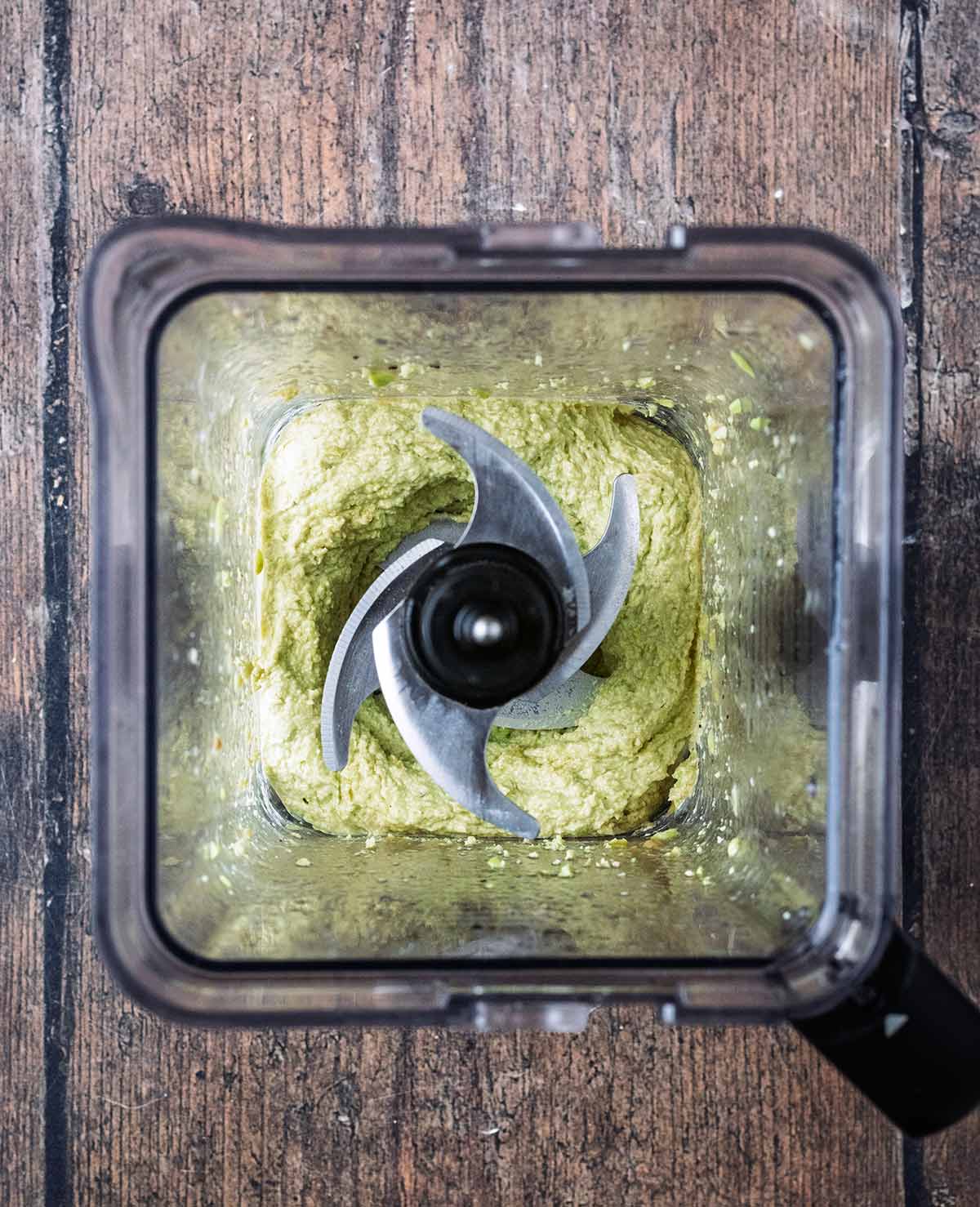
- Adjust: With the food processor running, add cold water one tablespoon at a time until the edamame hummus reaches the consistency you want.
Keep processing for 2-3 minutes for a smoother texture, stopping once or twice to scrape down the sides.
- Taste: Taste before serving. Add more lemon juice, salt, black pepper or garlic if needed.
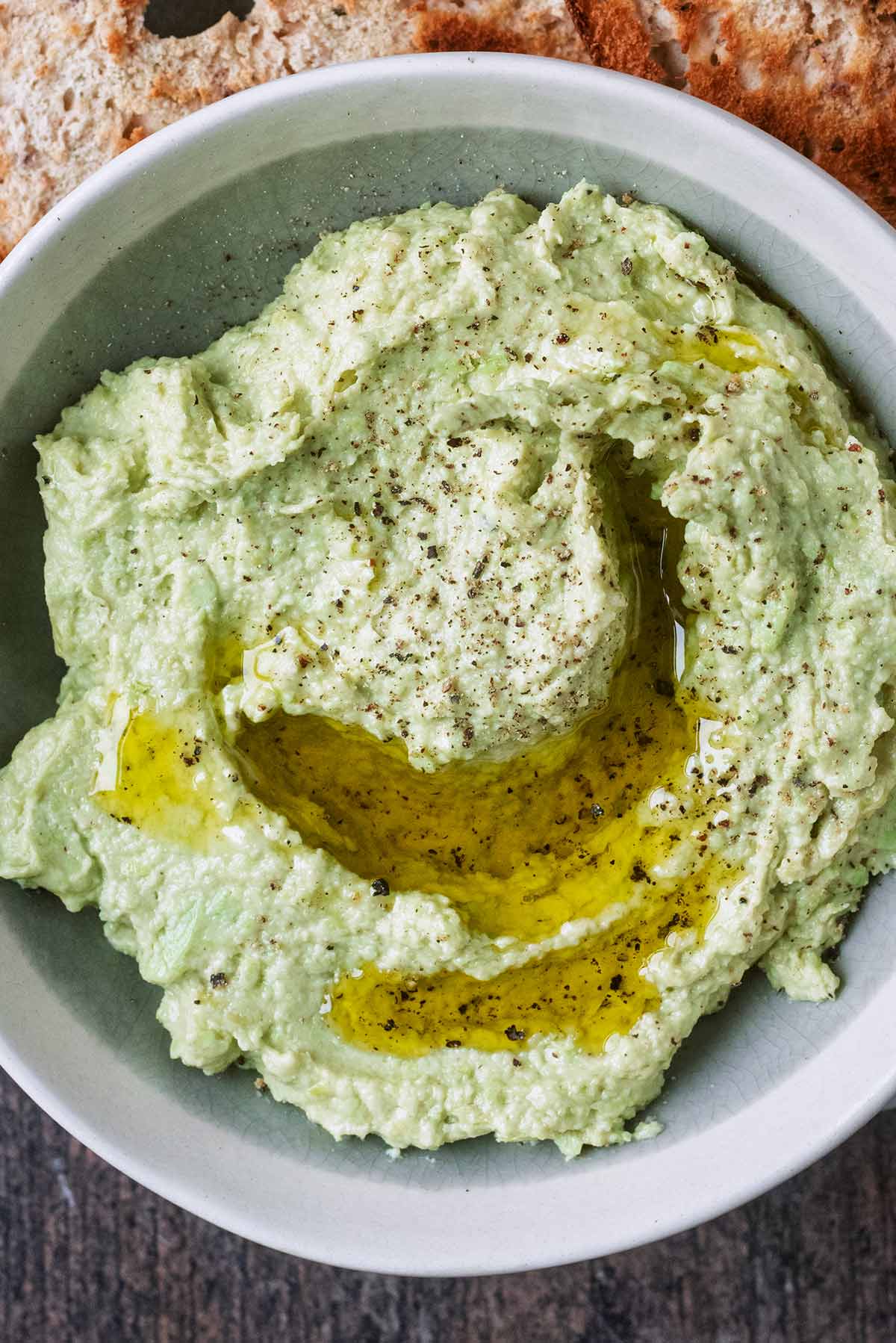
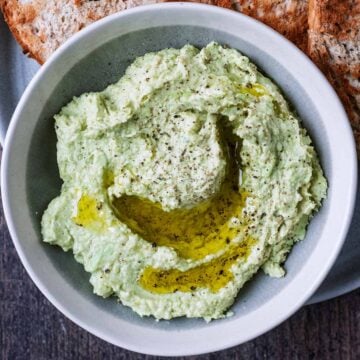
- Serve: Transfer to a bowl and finish with a drizzle of olive oil, a few whole edamame or some sesame seeds if you like.
How To Make Edamame Hummus Really Smooth
Edamame naturally has a little more texture than a completely silky chickpea hummus, but there are a few things that help.
Make sure the edamame is properly tender before blending and drain it well. Then give your food processor enough time to do its job - a quick 20-second blend won't give you the same creamy result as processing for a couple of minutes.
Add the water gradually while the processor is running rather than tipping it all in at once. This makes it much easier to stop when the consistency is right.
If the hummus has been in the fridge and has thickened, simply stir in a teaspoon or two of cold water before serving.
What To Serve with Edamame Hummus
For a quick snack, serve it with:
- Cucumber sticks
- Carrot sticks
- Peppers
- Sugar snap peas
- Pitta bread or pitta chips
- Homemade crackers
- Wholegrain crackers
But don't limit it to dipping.
Spread it in sandwiches and wraps instead of butter or mayonnaise.
Add it to a grain bowl with brown rice and quinoa, plenty of crunchy vegetables and your favourite protein.
Spoon it onto toast and top with sliced tomato, cucumber, seeds or an egg.
Use it on a snack board with vegetables, crackers, olives and bread. Try our Hummus Platter and Homemade Crackers.
You can also thin it with a little additional water and lemon juice to turn it into a creamy dressing for salads and bowls.
Meal Prep and Storage
Fridge: Store edamame hummus in an airtight container in the fridge for up to 5 days.
It may thicken slightly as it sits. Stir it well before serving and add a teaspoon of cold water if necessary.
Freezer: Portion the hummus into freezer-safe containers and freeze for up to 3 months. Defrost overnight in the fridge, then stir well before serving. You may need to add a splash of water to bring the creamy texture back.
Packed lunches: Portion the hummus into a leakproof container and keep it properly chilled with an ice pack until you are ready to eat it. See our school lunchbox guide for more ideas like this.
Dannii's Top Tips
- Tahini contains sesame. If you are making this for a school or someone with an allergy, follow their specific allergen guidance rather than assuming a nut-free policy also covers sesame. You can leave the tahini out.
- Roast the garlic if you prefer a sweeter, mellow flavor.
- Save the cooking water from boiling edamame - it works perfectly to thin the hummus instead of plain water.
- For ultra-smooth hummus - process for at least 2-3 minutes, pausing to scrape down the sides.
Troubleshooting Guide
| Problem | Likely cause | Fix |
|---|---|---|
| Hummus is too thick | It needs more liquid, or it has thickened after chilling | Add cold water 1 tablespoon at a time while blending until it reaches the consistency you want. For refrigerated hummus, start with just a teaspoon or two. |
| Hummus is grainy | The edamame wasn't tender enough or hasn't been blended for long enough | Make sure the edamame is fully tender, then process for 2-3 minutes, stopping to scrape down the sides. Add a small splash of cold water if needed. |
| Hummus is too thin | Too much water was added | Blend in a little more cooked and cooled edamame. You can also chill the hummus for 20-30 minutes, as it will firm slightly in the fridge. |
| Hummus tastes bland | It needs more seasoning or acidity | Add a little more salt and fresh lemon juice, taste, then adjust again if necessary. Lemon usually makes the biggest difference to a flat-tasting batch. |
| Garlic flavour is too strong | Raw garlic can become very dominant | Use one clove instead of two next time. For a batch already made, blend in a little extra edamame. Roasted garlic gives a much milder, sweeter flavour. |
| Hummus isn't bright green | The exact colour varies between edamame, and overcooking can dull it | Cook the edamame only until tender. Remember that tahini and olive oil naturally soften the bright green colour once blended. |
Frequently Asked Questions
Yes. If you don't have tahini, leave it out and add a little extra olive oil or cold water as needed for the texture.
It won't have quite the same classic hummus flavour, because tahini provides much of that distinctive sesame taste, but it will still make a delicious edamame dip.
Yes. Frozen shelled edamame are ideal for this recipe and are what I usually use. Prepare them according to the packet instructions until tender, then drain them well before blending.
Follow the instructions on the packet you are using, as products can differ. If your edamame requires cooking, cook it until tender before adding it to the food processor.
Yes. A high-powered blender works well, although you may need to stop and scrape down the sides or add a little more cold water to keep everything moving.
It has the familiar lemon, tahini and garlic flavours of traditional hummus, but edamame gives it a fresher, greener flavour with a gentle sweetness. The texture also has slightly more body than chickpea hummus.
More Hummus Recipes
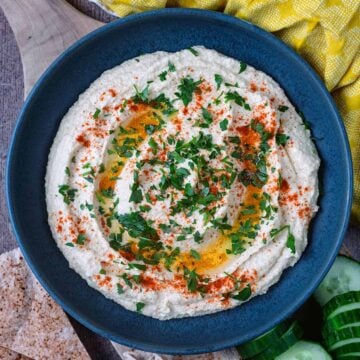
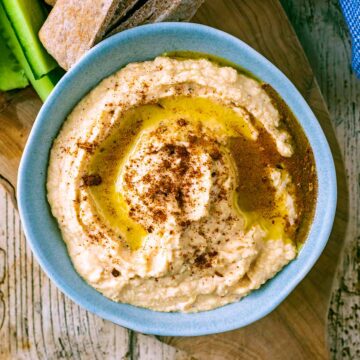


If you've tried this edamame hummus recipe, let us know how you got on in the comments below.
Tag us in your creations on Instagram @hungryhealthyhappy and use the hashtag #hungryhealthyhappy too.
Recipe
Edamame Hummus




Ingredients
- 300 g (2 cups) of Edamame
- 1 tablespoon of Tahini
- 2 tablespoons of Lemon juice
- 2 tablespoons of Olive oil - extra virgin
- 2 Garlic cloves
- ¼ teaspoon of Fine sea salt
- ½ teaspoon of Ground black pepper
- 2-4 tablespoons of Cold water - (as needed)
Instructions
- Prep: If using frozen, cook 300 g of Edamame according to the packet instructions until tender. Drain well and allow them to cool slightly.
- Blend: Add the cooked edamame, 1 tablespoon of Tahini, 2 tablespoons of Lemon juice, 2 tablespoons of Olive oil, 2 Garlic cloves, ¼ teaspoon of Fine sea salt and ½ teaspoon of Ground black pepper to a food processor.Blend until everything has broken down, then scrape down the sides of the bowl.
- Adjust: With the food processor running, add 2-4 tablespoons of Cold water one tablespoon at a time until the edamame hummus reaches the consistency you want.Keep processing for 2-3 minutes for a smoother texture, stopping once or twice to scrape down the sides.
- Taste: Taste before serving. Add more lemon juice, salt, black pepper or garlic if needed.
- Serve: Transfer to a bowl and finish with a drizzle of olive oil, a few whole edamame or some sesame seeds if you like.
Recipe Notes
- Tahini contains sesame. If you are making this for a school or someone with an allergy, follow their specific allergen guidance rather than assuming a nut-free policy also covers sesame. You can leave the tahini out. To replace some creaminess, add a little Greek yogurt - about tablespoon. This will, of course, mean the hummus is no longer vegan.
- Roast the garlic if you prefer a sweeter, mellow flavor.
- Save the cooking water from boiling edamame - it works perfectly to thin the hummus instead of plain water.
- For ultra-smooth hummus - process for at least 2-3 minutes, pausing to scrape down the sides.
Nutritional Information
Where nutritional information is provided, it is approximate and calculated using online tools. Values can vary depending on the ingredients and brands used, but we endeavour to be as accurate as possible.
All timings are a guide and may vary depending on the ingredients, equipment and, where relevant, the appliance used. Changing the serving size may also affect the time needed.



Eli says
Just reacting to the Notes, there are no nuts in tahini as it is made from sesame seeds , not nuts so this would be ok for kids lunchboxes :)
Dannii Martin says
You are correct, there are no nuts in tahini, however, the vast majority of nut-free schools (including ours) don't allow sesame due to it sharing similar proteins to nuts, which can cause a mistaken immune response in sensitive individuals. Children with nut allergies can often be triggered by sesame seeds.
Your school my still allow sesame though, but you should check first. We just like to be on the safe side and use a tahini-free version for our kids to take to school.
Eli says
Oh I see! Ours is fine with sesame, only nuts not allowed.