




These freezer-friendly Egg and Cheese Bagels make a quick, filling breakfast that can be prepared in advance and reheated whenever you need one. Each bagel is filled with a fluffy two-egg omelette and a slice of melted Gouda, with endless ways to add extra vegetables, meat or seasoning. The basic recipe packs 26 grams of protein too!

Would you like to save this post?
Any breakfast that we can make ahead of time and stash in the freezer gets a big thumbs up from us! We get these out for busy Sunday mornings to eat on the way to one of the kid's matches.
The best thing is, you can adapt them to add so many different fillings. You can keep them simple with egg and cheese or add bacon, sausage, vegetables and sauces.
We make four at a time, wrap them individually and keep them in the freezer. Simply move one to the fridge the night before, then heat it in the air fryer in the morning until the bagel is warm and the cheese has melted.
Using a high-protein bagel makes these bagel breakfast sandwiches even more satisfying, but any bagel will work. They are ideal for busy mornings, post-workout breakfasts or those days when you need something substantial without cooking from scratch.
They are also much cheaper than buying a breakfast bagel or sandwich on the way to work - making it part of our "You Can Make That At Home" series. We love showing how you can make all your favourite meals at home.
Looking for more make in advance breakfasts? Why not try our amazing Overnight Weetabix, delicious Tiramisu Overnight Oats or our Starbucks inspired Cottage Cheese Egg Bites?
Jump to:
Why You Will Love It
- Prepped in advance and stashed in the freezer.
- Almost endlessly customisable.
- Much cheaper than buying from a fast food place/cafe.
Ingredients and Substitutions
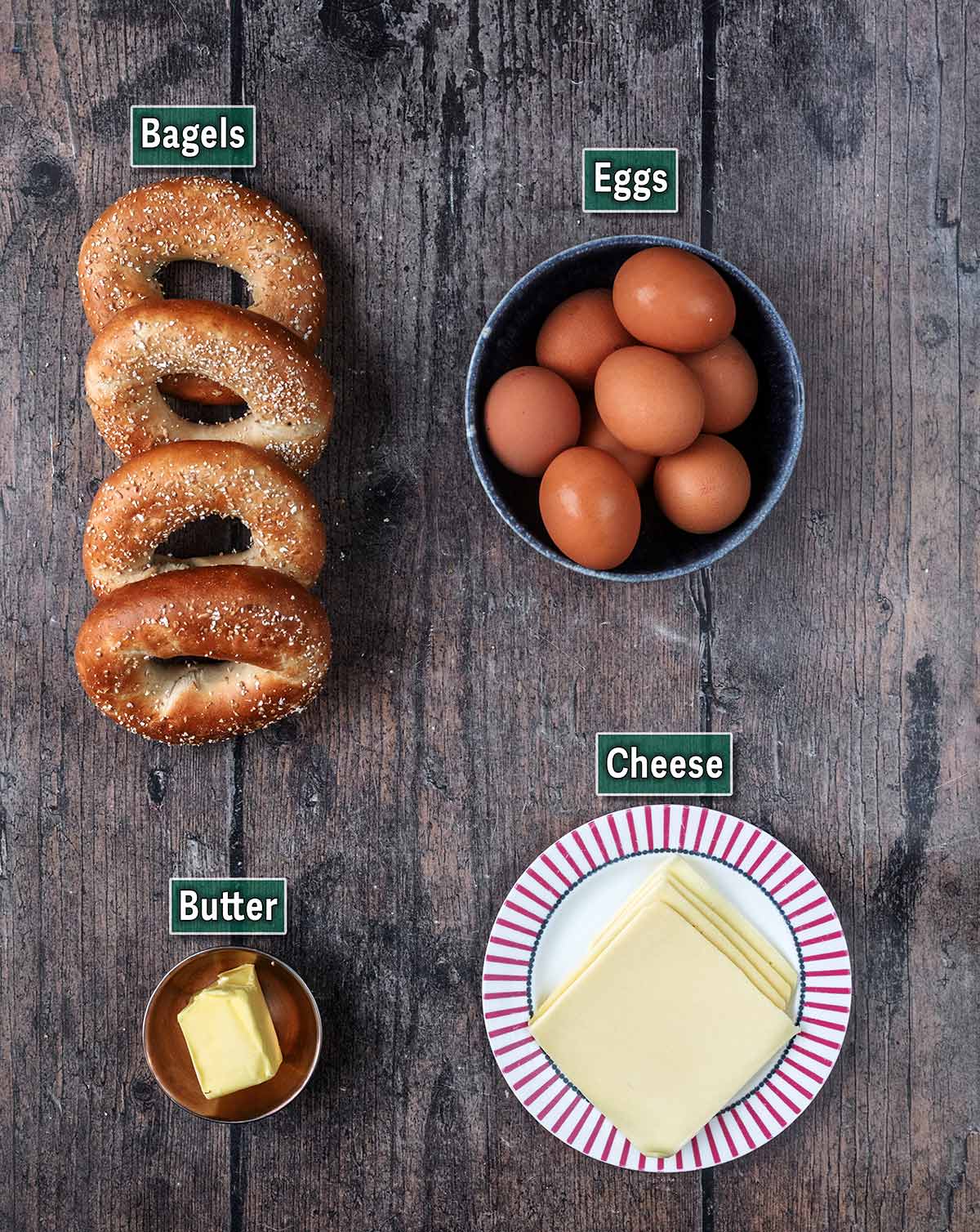
A full ingredients list, along with US Customary and Metric measurements, can be found in the recipe card at the end of this post.
- Bagels - High-protein bagels are a great choice because they make the finished breakfast more filling. Wholemeal, seeded, plain or thin bagels can also be used. Choose bagels that are not overly chewy or dense, as they will firm up slightly once frozen and reheated.
- Eggs - We use two eggs for each bagel, giving you a generous omelette layer that fits neatly inside the bread. You can add a splash of milk to the eggs for a softer texture, although this is optional.
- Cheese - Gouda melts beautifully and has a mild, creamy flavour that works particularly well with eggs. Cheddar cheese, mozzarella, Monterey Jack, Emmental or a cheese slice can all be used instead.
- Butter - You will only need a small amount to stop the omelette from sticking to the pan. A non-stick frying pan makes the process much easier.
Egg and Cheese Bagel Variations
Eggs - We made a fluffy omelette for each bagel, but if that is too time consuming for you, then you could just make a big batch of scrambled eggs and divide between the bagels. Or, why not try making our Sheet Pan Eggs and adding a slice to each?
Bacon and Egg - Add one or two rashers of Air Fryer Bacon or Oven Cooked Bacon on top of the omelette before adding the cheese. Make sure the bacon is cooked and cooled before assembling the bagel. Crispy bacon tends to hold its texture better after freezing and reheating.
Sausage and Egg Bagel - Add a cooked sausage patty or sliced sausage (try Air Fryer Sausage or Oven Cooked Sausages). Flattening sausage meat into thin patties helps it fit inside the bagel and makes the finished breakfast easier to eat. Chicken or turkey sausages can be used for a lighter option.
Vegetables - Cook chopped spinach and finely diced tomatoes in the pan before adding the eggs. Cook until most of the moisture from the tomatoes and spinach has evaporated. This prevents the bagel from becoming soggy once it has been frozen and reheated.
Sauce - A thin layer of Homemade Healthy Tomato Ketchup, brown sauce, mustard, pesto or chilli sauce can be added before freezing. Alternatively, add the sauce after reheating for the best texture.
Cream cheese also works well, especially with spinach, smoked salmon or cooked peppers, but it is usually better spread onto the bagel once it has been heated.
How To Make an Egg and Cheese Bagel

- Step 1: Heat a small amount of butter in a pan and add the whisked eggs two at a time.

- Step 2: Cook for 2-3 minutes to make an omelette.
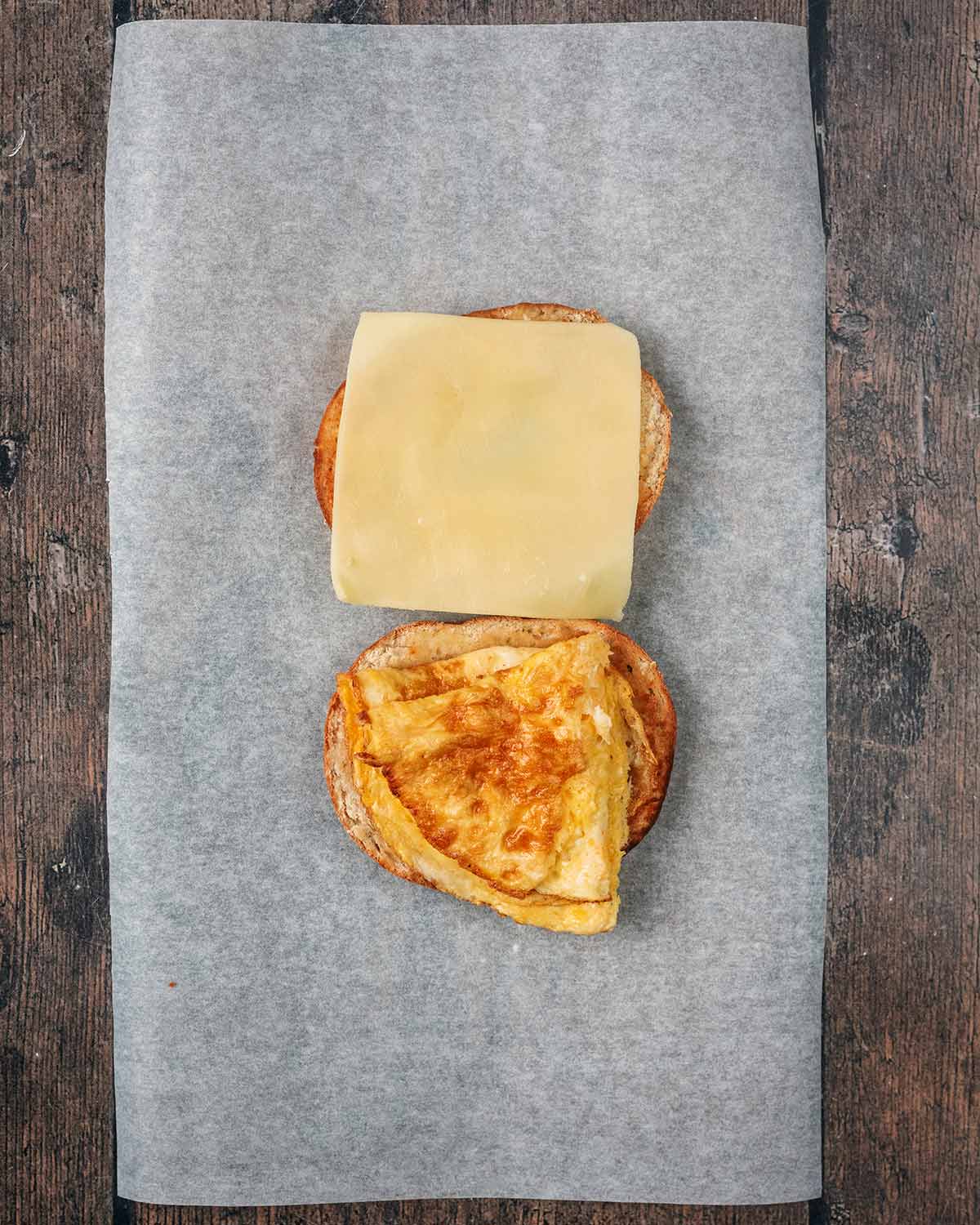
- Step 3: Slice the bagels in half and add the omelette to one side and a cheese slice to the other.
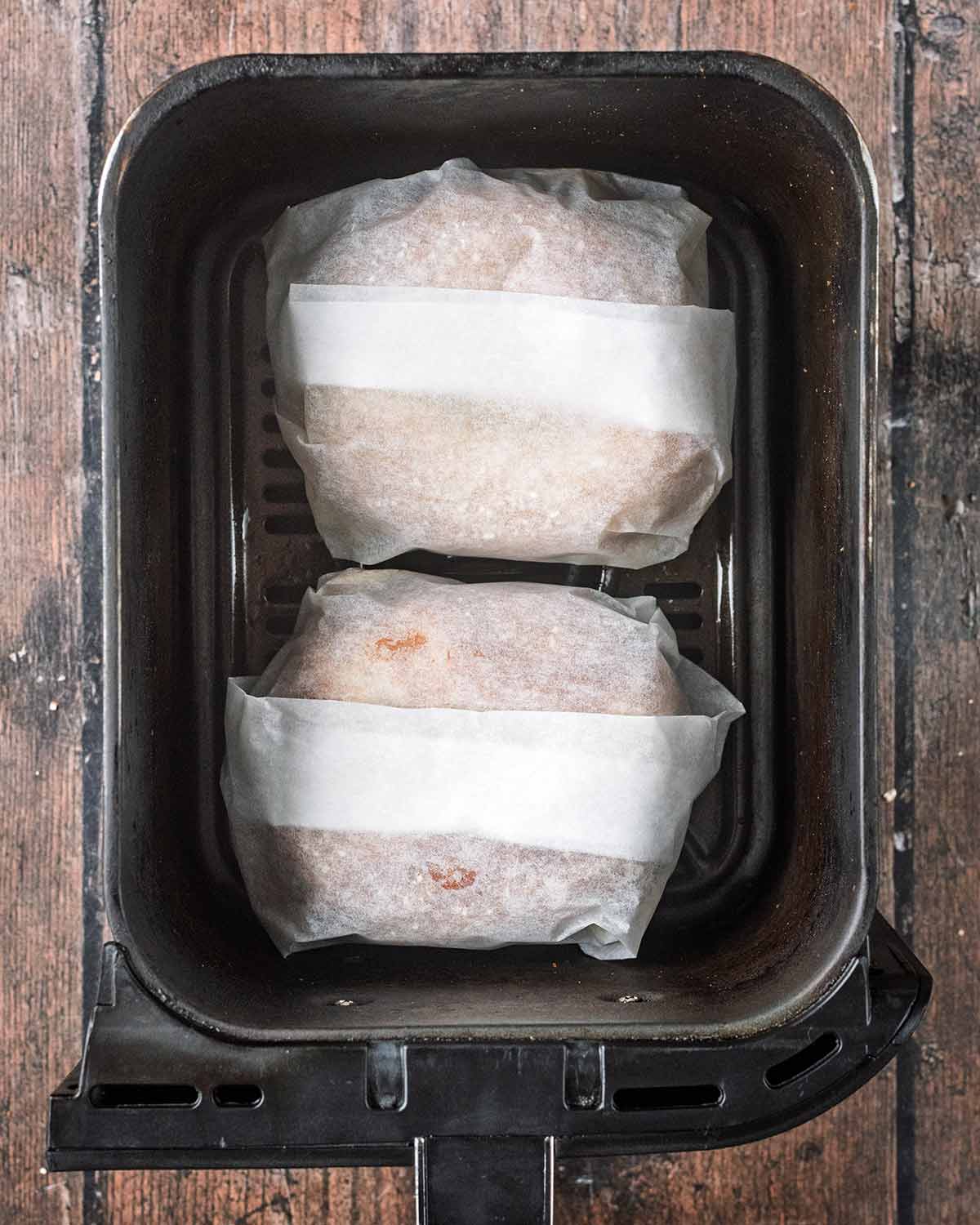
- Step 4: Wrap in baking paper and air fry at 180°C for 2 minutes, or until. the cheese has melted.
Storage and Meal Prep
Allow the omelettes and assembled bagels to cool completely before wrapping them. Wrapping them while warm can trap steam inside, resulting in a soggy bagel and extra ice crystals in the freezer.
Store - Wrap each bagel tightly in foil or baking paper followed by a freezer bag. You can also wrap them in reusable freezer wrap before placing them together in a labelled freezer container.
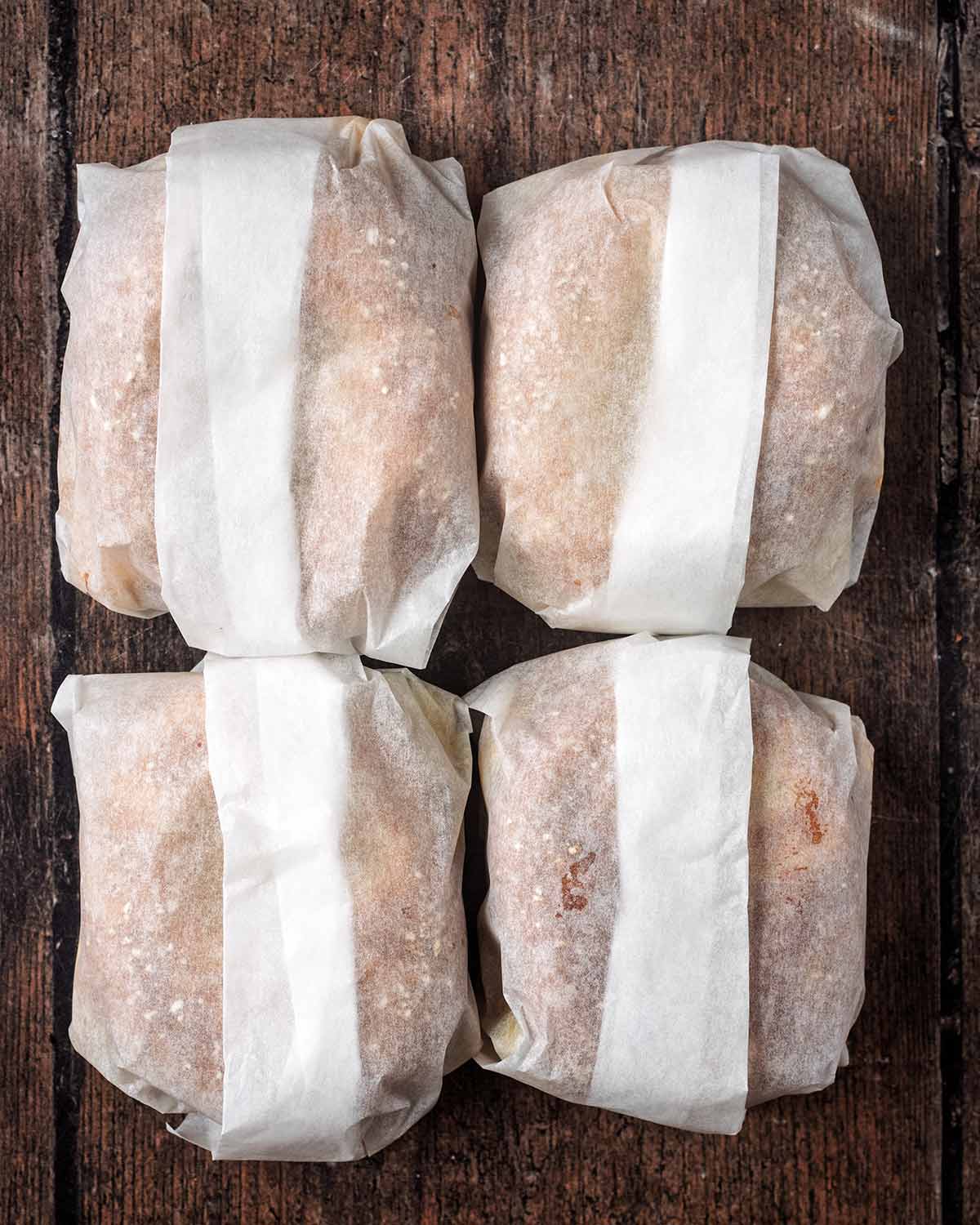
Store the bagels in the freezer for up to three months. They will still be safe beyond this when stored correctly, but the texture is best within this time.
Label the bag or container with the filling and freezing date, particularly when making several different varieties.
Defrost - Move a bagel from the freezer to the fridge the night before you plan to eat it. Once defrosted, reheat it within 24 hours and do not refreeze it.
How To Reheat Meal Prep Egg and Cheese Bagels
Remove the bagel from any plastic wrapping.
For a softer bagel, loosely wrap it in foil before placing it in the air fryer. For a crisper outside, heat it unwrapped or open the foil for the final couple of minutes.
Air fry a fully defrosted bagel at 160°C for approximately 4-6 minutes, turning halfway through if needed.
The exact cooking time will depend on the size and thickness of the bagel and the model of air fryer. Check that the middle is piping hot and the cheese has melted before serving.
Be careful when taking the first bite, as the egg and melted cheese can be much hotter than the outside of the bagel.
Can They Be Reheated From Frozen?
Short answer - No!
These don't reheat from frozen as it takes too long. We tried, and it took over 30 minutes before we gave up! The inside was still frozen and the bagel was burnt!

Dannii's Top Tips
- Do not overcook the omelette when first preparing it. It needs to be completely set, but cooking it until dry can make it rubbery after reheating.
- Shape the omelette as it cooks. Folding the edges towards the centre creates a thick, round portion that fits into the bagel more easily. You can also just fold it over to make a wedge.
- Cook wet vegetables thoroughly before adding the eggs. Mushrooms, tomatoes, courgette (zucchini) and spinach can all release water, which may make the frozen bagels soggy.
- Toast the cut sides of the bagel lightly before assembling if you prefer a firmer texture. This can also create a slight barrier between the bread and the filling.
- Avoid overfilling the bagels. Large amounts of meat, vegetables or sauce can make them difficult to wrap and may prevent the middle from heating evenly.
- Place the cheese directly next to the omelette. The warmth from the reheated egg will help it melt.
- Use thinly sliced fillings so the bagel remains easy to eat. Sausage patties and bacon should fit within the edges rather than hanging out of the sides.
- Make several flavours in the same meal prep session. You could make two plain egg and cheese bagels, one bacon bagel and one vegetable bagel for more variety during the week.

Frequently Asked Questions
This is usually caused by wrapping the bagel before the ingredients have cooled or adding fillings with too much moisture. Allow everything to cool fully and cook vegetables until any excess liquid has evaporated.
No, but lightly toasting the cut sides can help them maintain a firmer texture after freezing. Avoid heavily toasting them, as they will be heated again in the air fryer.
More Bagel Recipes


If you've tried this egg and cheese bagel breakfast sandwich recipe, let us know how you got on in the comments below.
Tag us in your creations on Instagram @hungryhealthyhappy - Use the hashtag #hungryhealthyhappy too.
Recipe

Egg and Cheese Bagel (Freezer Meal Prep - 26g Protein)




Ingredients
- 4 Protein bagels
- 8 Eggs - whisked
- 4 Cheese slices
- 1 tablespoon of Butter
Instructions
- Heat a small amount of butter in a pan and add the whisked eggs two at a time.
- Cook for 2-3 minutes to make an omelette.
- Slice the bagels in half and add the omelette to one side and a cheese slice to the other.
- Wrap in baking paper and air fry at 180°C for 2 minutes, or until. the cheese has melted.
Recipe Notes
- Do not overcook the omelette when first preparing it. It needs to be completely set, but cooking it until dry can make it rubbery after reheating.
- Shape the omelette as it cooks. Folding the edges towards the centre creates a thick, round portion that fits into the bagel more easily. You can also just fold it over to make a wedge.
- Cook wet vegetables thoroughly before adding the eggs. Mushrooms, tomatoes, courgette (zucchini) and spinach can all release water, which may make the frozen bagels soggy.
- Toast the cut sides of the bagel lightly before assembling if you prefer a firmer texture. This can also create a slight barrier between the bread and the filling.
- Avoid overfilling the bagels. Large amounts of meat, vegetables or sauce can make them difficult to wrap and may prevent the middle from heating evenly.
- Place the cheese directly next to the omelette. The warmth from the reheated egg will help it melt.
- Use thinly sliced fillings so the bagel remains easy to eat. Sausage patties and bacon should fit within the edges rather than hanging out of the sides.
- Make several flavours in the same meal prep session. You could make two plain egg and cheese bagels, one bacon bagel and one vegetable bagel for more variety during the week.
Nutritional Information
Where nutritional information is provided, it is approximate and calculated using online tools. Values can vary depending on the ingredients and brands used, but we endeavour to be as accurate as possible.
All timings are a guide and may vary depending on the ingredients, equipment and, where relevant, the appliance used. Changing the serving size may also affect the time needed.

Comments
No Comments