




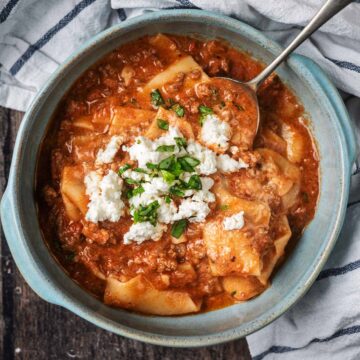
This Slow Cooker Lasagna Soup has all the comforting flavours of traditional lasagna, but without all the layering and time spent assembling it. Beef mince is slow cooked in a rich tomato and herb sauce, then broken lasagna sheets are cooked directly in the sauce before everything is finished with crème fraîche and Parmesan for an extra creamy texture. The ultimate easy comfort food.
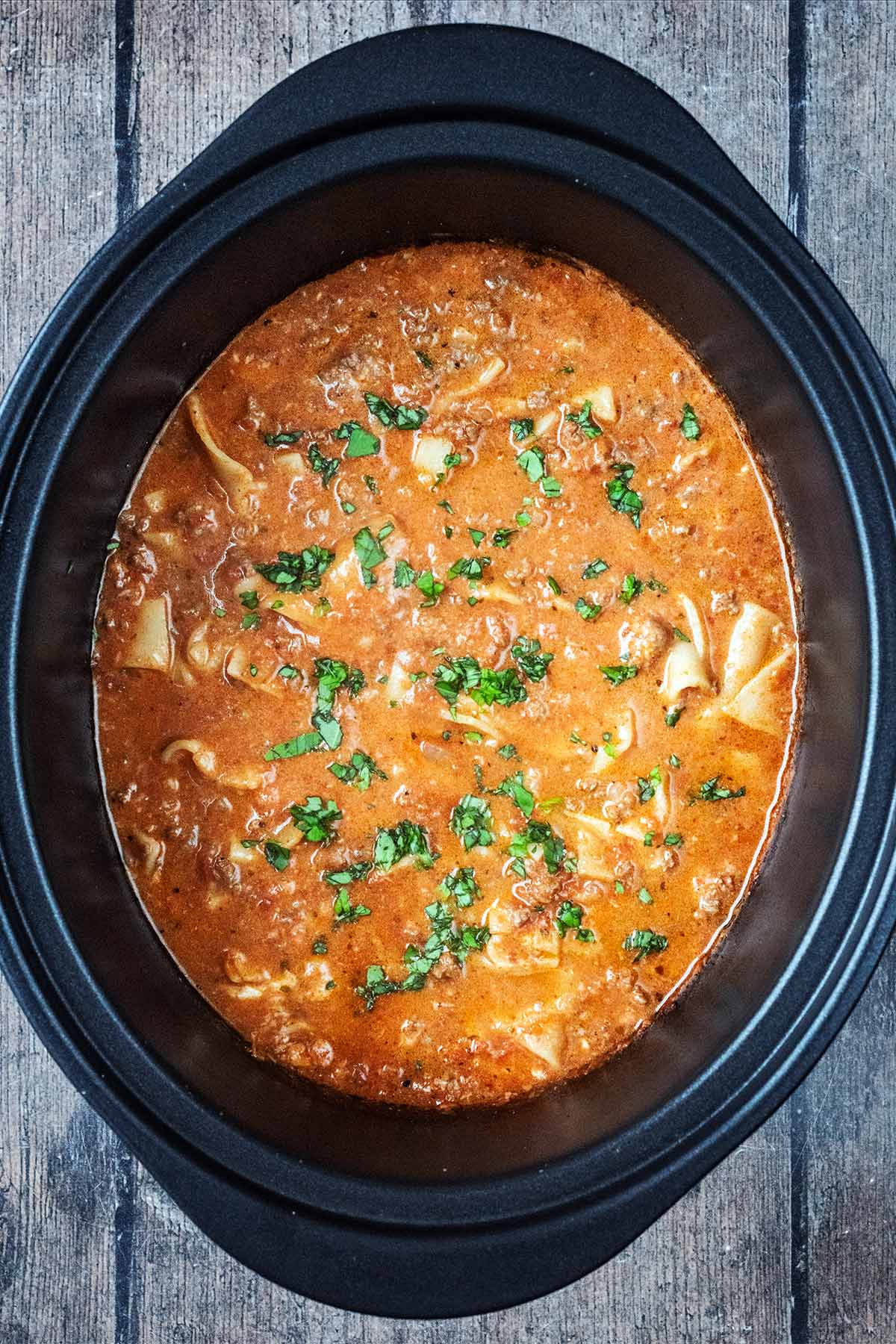
Top each bowl with crumbled ricotta and fresh basil and you have all those classic lasagna flavours in an easy slow cooker dinner. Honestly, this is one of my favourite "lazy" cooking hacks.
If you're in the UK, you might know this as slow cooker lasagne soup. It's exactly the same dish, just a different spelling.
We have tested this recipe several times, not only to get the cooking time for the pasta just right, but because it is THAT good. That's the important part with lasagna soup: add the pasta too soon and it becomes too soft and absorbs far too much of the liquid. Adding it towards the end gives you tender pasta that still holds its shape.
The full recipe takes around 3 hours on HIGH or 6 hours on LOW, including the time needed to cook the pasta.
Would you like to save this post?
Jump to:
- Why You'll Love It
- Recipe Overview
- Ingredients and Substitutions
- How To Make Slow Cooker Lasagna Soup
- Why Our Cooking Time is Shorter
- The Secret to Lasagna Soup That Isn't Mushy
- Variations
- What to Serve with Slow Cooker Lasagna Soup
- Storing and Reheating
- Dannii's Top Tips
- Troubleshooting Guide
- Frequently Asked Questions
- More Lasagna Recipes
- Recipe
- Feedback
Why You'll Love It
- All the flavour of lasagna with less work - No layering, baking or trying to cut neat slices.
- Tested slow cooker timings - We have tested both HIGH and LOW so you know exactly when to add the pasta.
- Creamy - Crème fraîche and Parmesan are stirred through at the end rather than relying only on cheese added on top.
- Family friendly - Beef, tomato, pasta and cheese is always a winning combination in our house.
- Easy to adapt - You can change the meat, add vegetables or adjust how creamy you want it.
- Great for colder days - It's hearty enough to be a complete dinner but still has that comforting soup consistency.
Recipe Overview
- Main ingredient: Beef mince
- Cooking method: Slow cooker
- Pasta: Dried lasagna sheets
- Flavour: Rich tomato, garlic and Italian herbs
- Texture: Thick, hearty soup with tender pieces of pasta
- Difficulty: Easy
- Best for: Family dinners and cold-weather comfort food
- Make ahead: The sauce can be prepared ahead; add the pasta shortly before serving
- Freezer friendly: Best frozen without the pasta
Ingredients and Substitutions
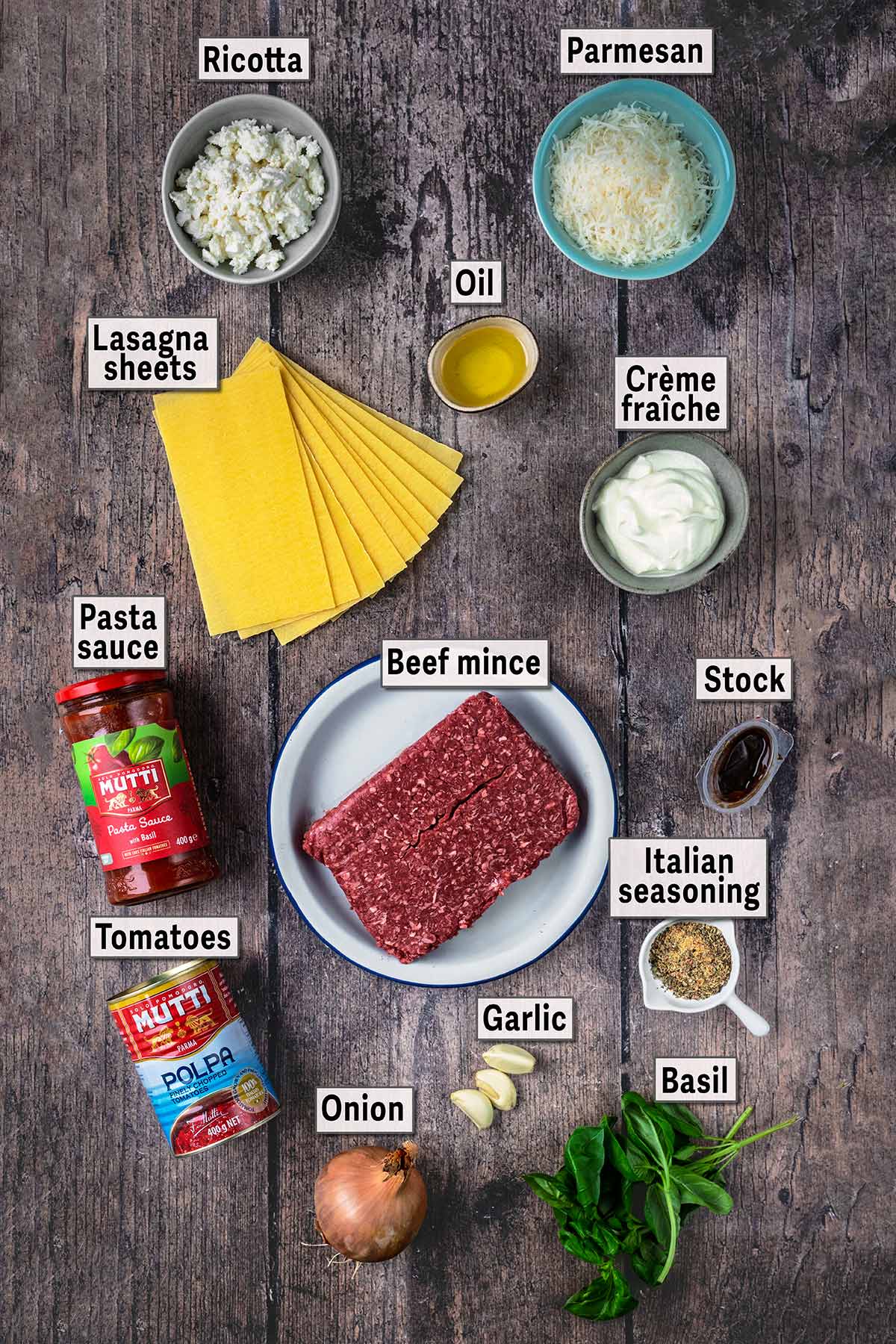
A full ingredients list, along with US Customary and Metric measurements, can be found in the recipe card at the end of this post.
- Olive oil - This is used for softening the onion and garlic and browning the beef. You only need a little, particularly if your beef mince isn't very lean.
- Onion - This gives the tomato sauce a good savoury base. Chop it fairly finely so it softens quickly before the beef is added.
- Garlic - Fresh crushed garlic gives the best flavour here. You can use frozen garlic if you prefer.
- Beef mince (ground beef) - We use beef for that traditional lasagna flavour. A fairly lean mince is ideal so the finished soup isn't greasy - we used 5% fat. If your beef releases a lot of fat when browning, drain some of it before transferring everything to the slow cooker.
You could also use turkey mince for a lighter variation, or replace some of the beef with Italian sausage for a richer flavour. - Stock - This is what turns the tomato sauce into a soup. Beef stock gives the richest flavour, although chicken stock works too. Remember that Parmesan and jarred pasta sauce can both be salty, so use a lower-salt stock if needed.
- Pasta sauce - Also called marinara sauce in the US. Use a tomato-based pasta sauce that you already enjoy, as its flavour will be concentrated during slow cooking. A simple tomato and basil sauce works particularly well.
- Chopped tomatoes - Diced tomatoes in the US. These add extra tomato flavour as well as a little texture to the soup.
- Italian seasoning - An easy way to add oregano, basil and other Mediterranean herbs without needing several different jars.
- Dried lasagna sheets - Break these into spoon-sized pieces before adding them. We recommend dried rather than fresh lasagna sheets because they hold their shape better during slow cooking.
The pasta goes in uncooked. It cooks directly in the tomato sauce and stock, which means it absorbs plenty of flavour. - Crème fraîche - This is stirred in after the pasta has cooked and makes the tomato broth rich and creamy. It also adds a slight tang that balances the tomatoes.
Full-fat crème fraîche will give the smoothest result. Sour cream can be used as an alternative, but stir it in at the very end and don't let the soup boil afterwards. - Parmesan - Finely grated Parmesan melts into the soup along with the crème fraîche, adding saltiness and a deeper savoury flavour.
- Fresh basil - Stir some through the finished soup and save a little extra for serving. The fresh flavour really lifts the rich tomato sauce.
- Ricotta - Crumble or spoon this over individual bowls just before serving. That creamy ricotta topping is what really gives the soup the feel of traditional lasagna.
How To Make Slow Cooker Lasagna Soup
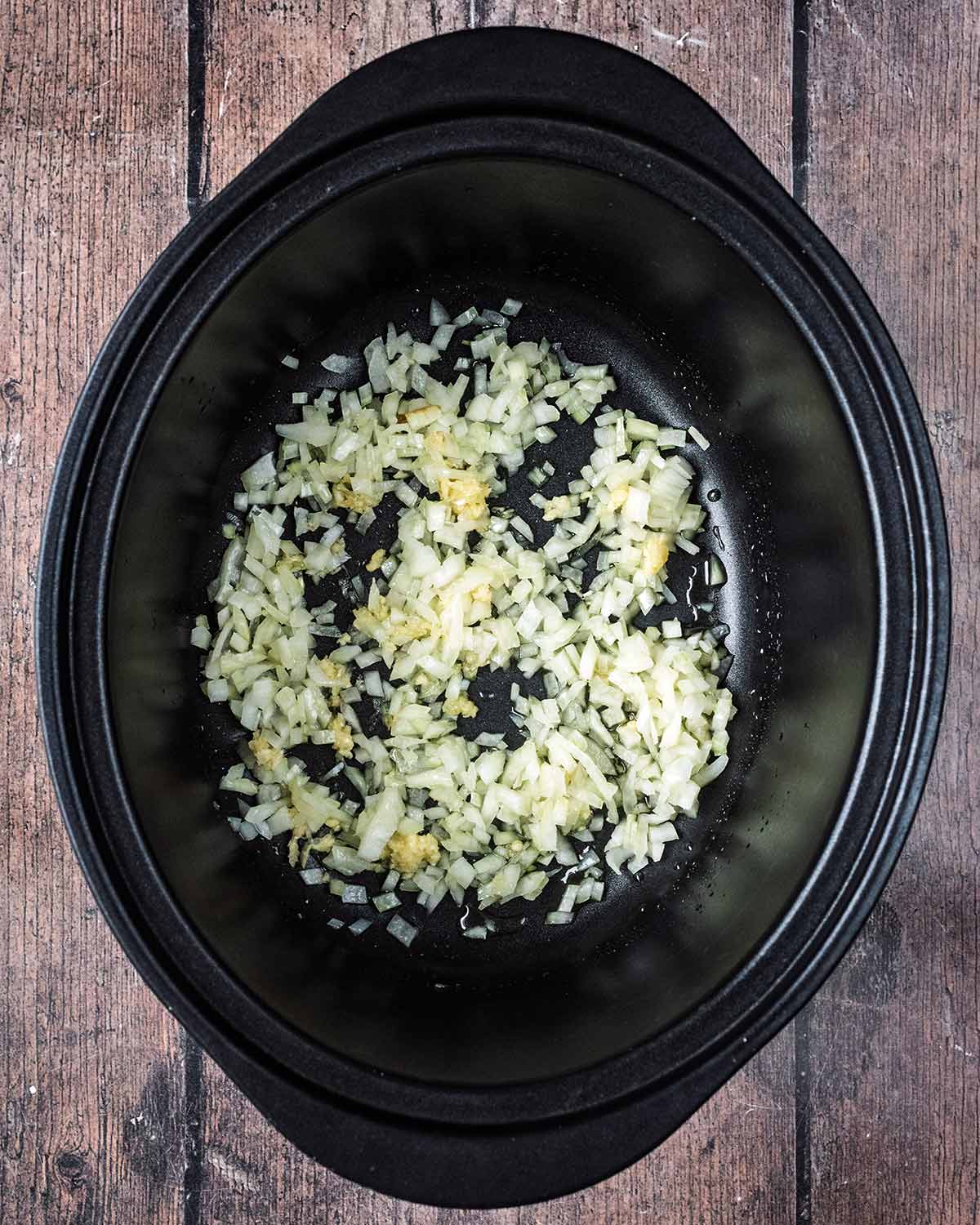
- Heat the oil: On the hob, heat the oil over a medium heat, either directly in the slow cooker (if your slow cooker is suitable), or in a pan.
- Cook the onion and garlic: Add the chopped onion and crushed garlic and cook for 3 minutes, until softened.
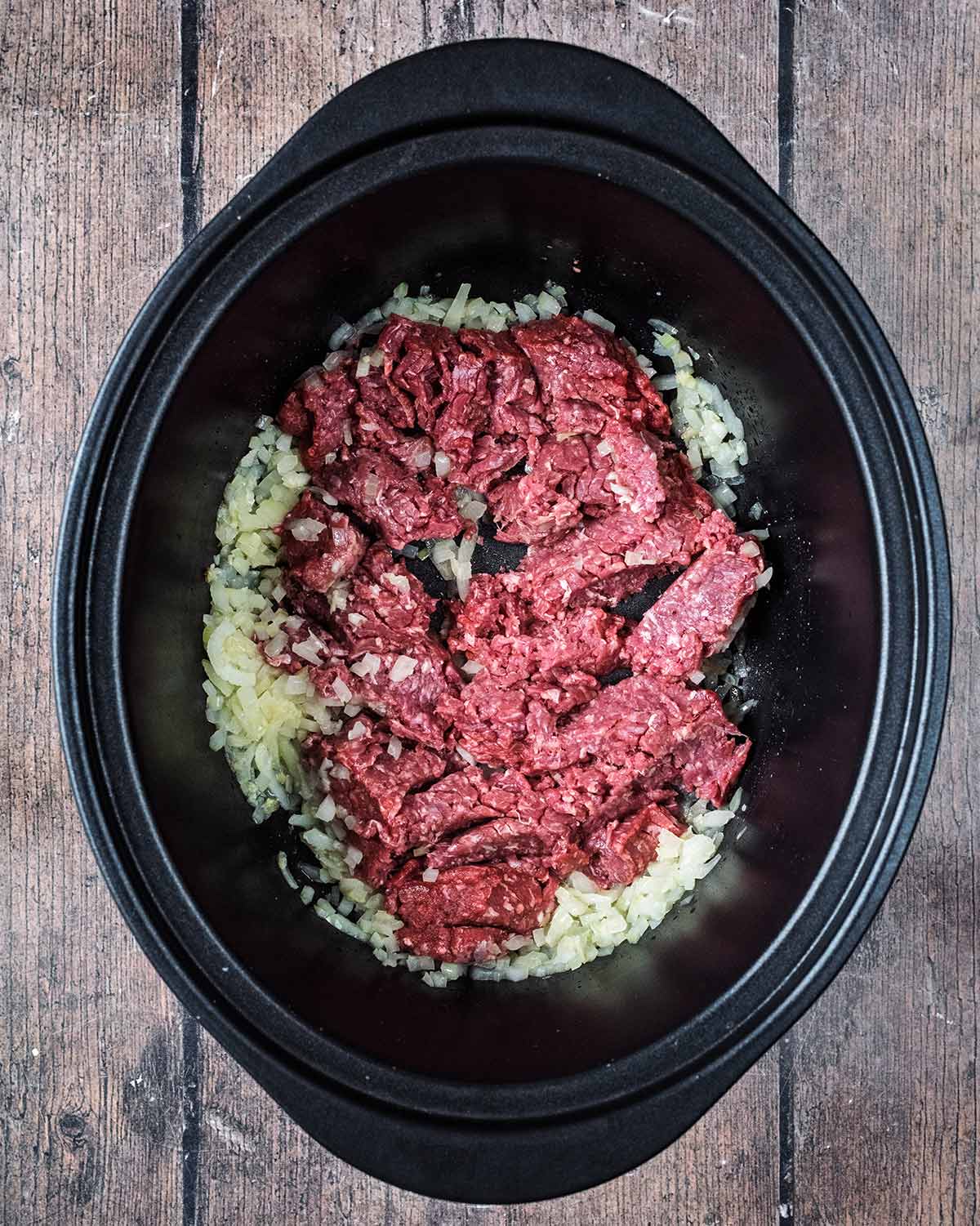
- Add the beef: Once the onion has softened, add the beef mince and break it up with a wooden spoon or a mince masher.
Browning the beef first is worth the few extra minutes. It gives the soup more flavour, stops the mince forming large clumps and allows you to remove any excess fat before slow cooking.
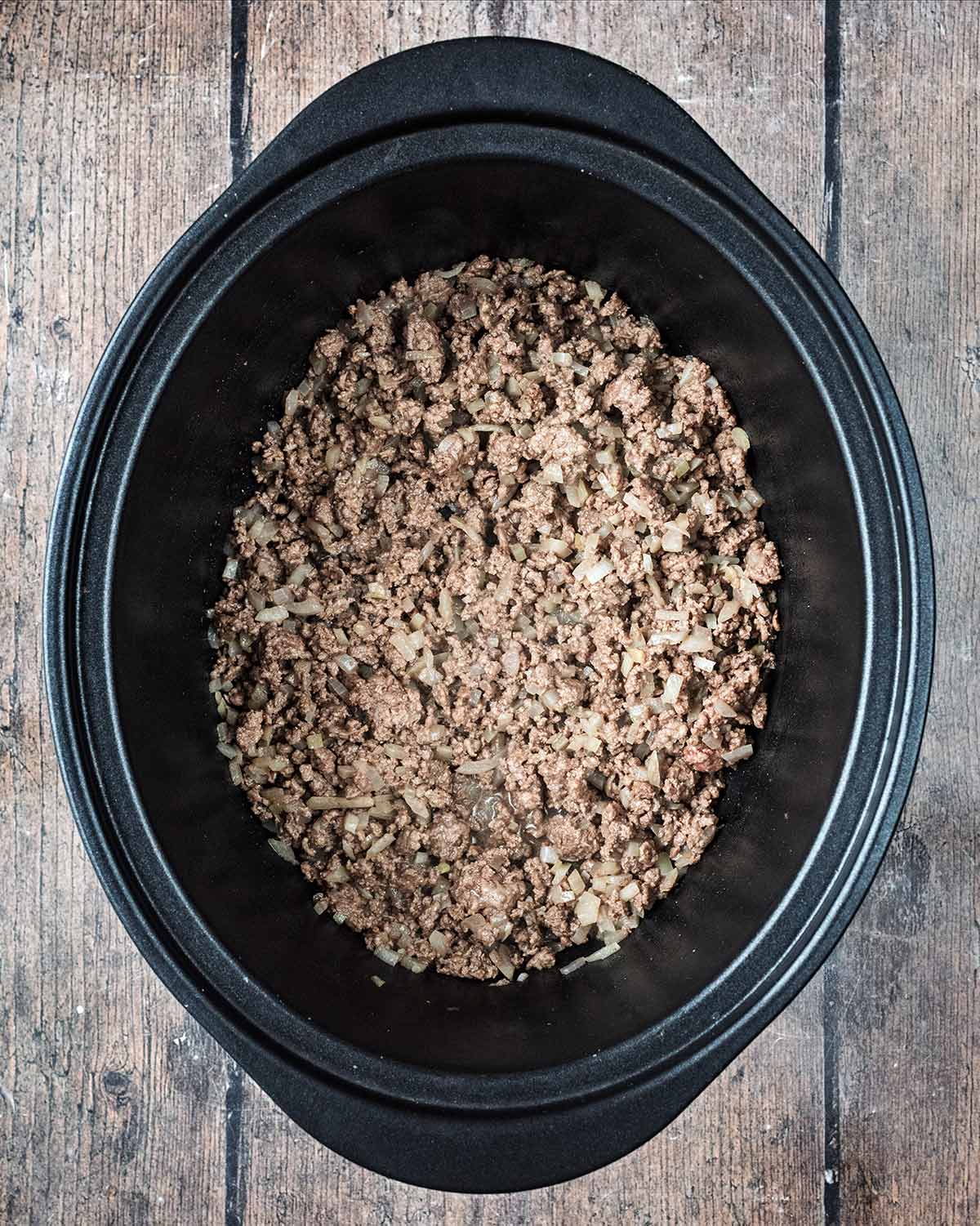
- Cook the beef: Continue breaking up the beef and cook until it has browned, about 4-5 minutes.
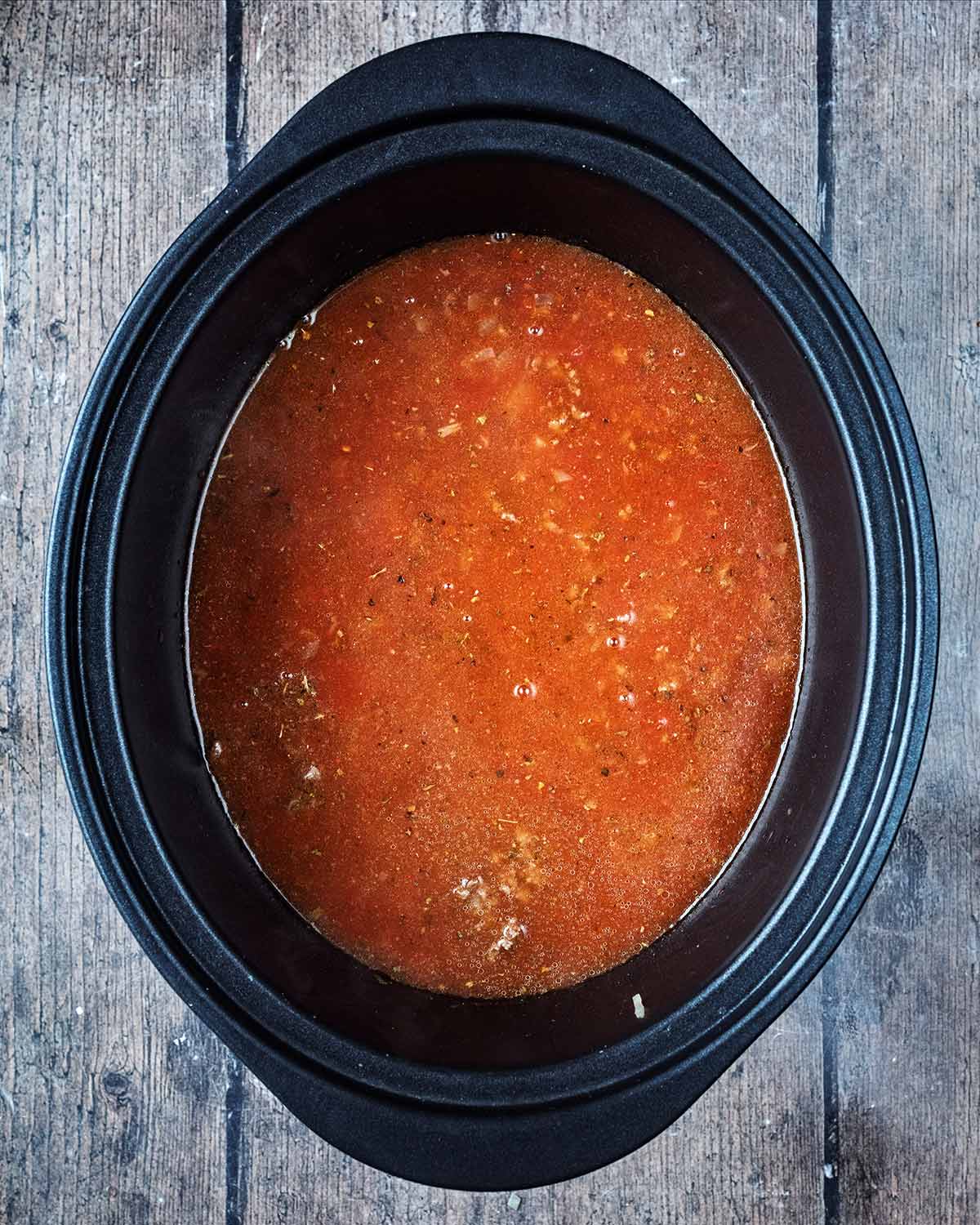
- Make the sauce: Once the beef is browned, remove from the hob and put into the slow cooker.
If browning in a pan, simply add everything to your slow cooker.
- Add the stock, pasta sauce, tomatoes and Italian seasoning to the slow cooker.
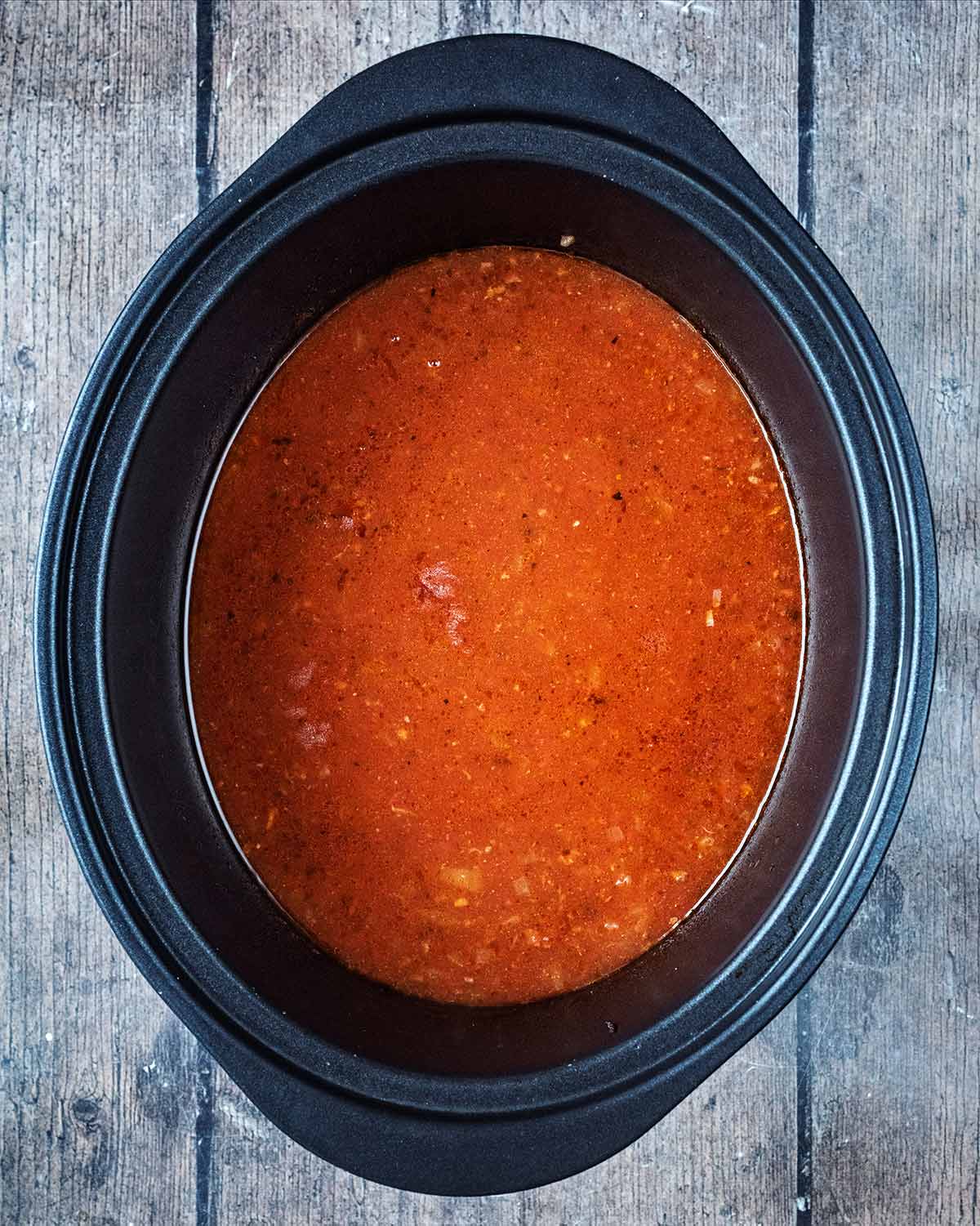
- Cook the sauce: Put the lid on the slow cooker and cook on HIGH for 2 hours 30 minutes or LOW for 5 hours 15 minutes.
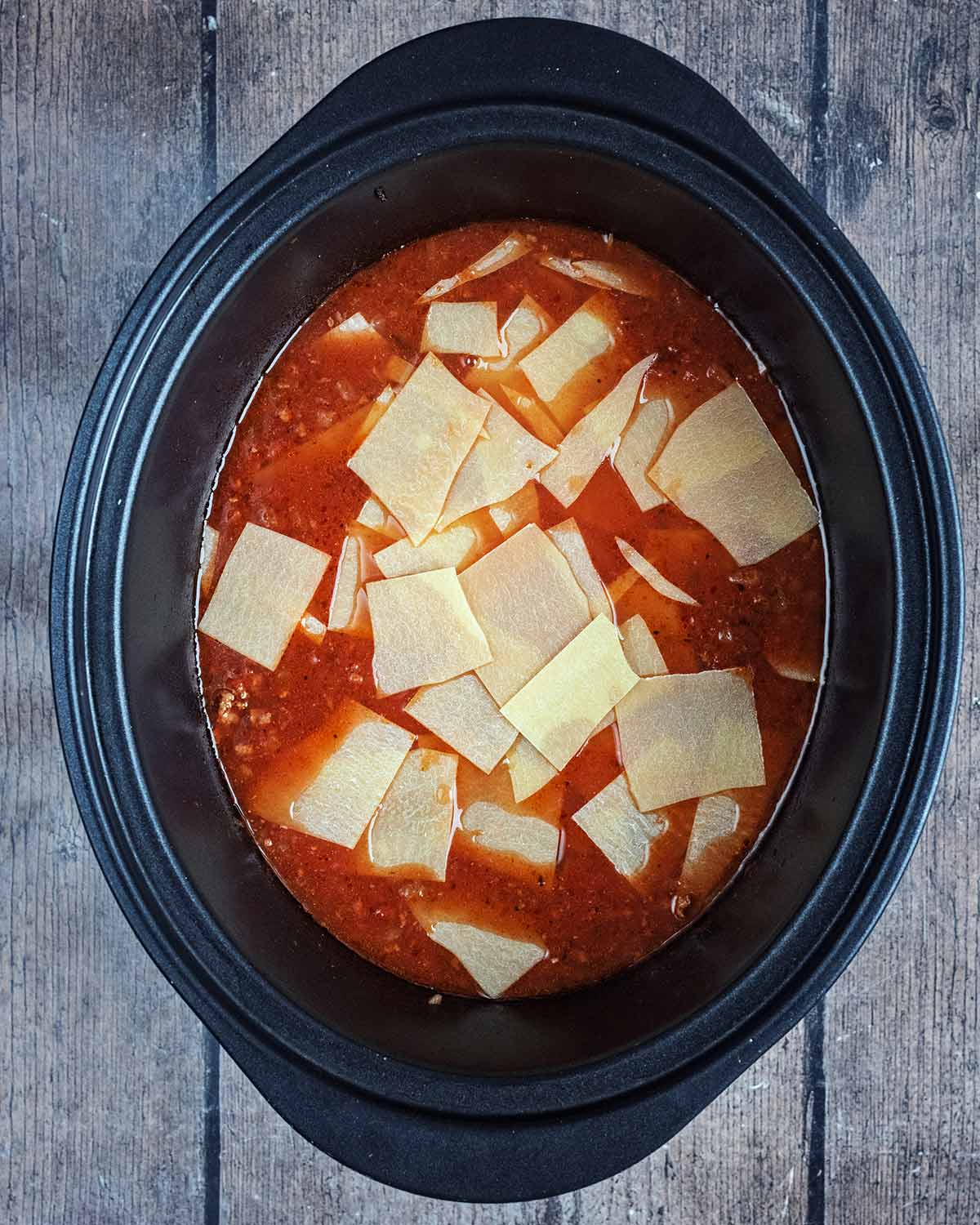
- Add the pasta: Break up the dried lasagna sheets and add them to the sauce.
- Mix well to submerge all of the pasta in the sauce.
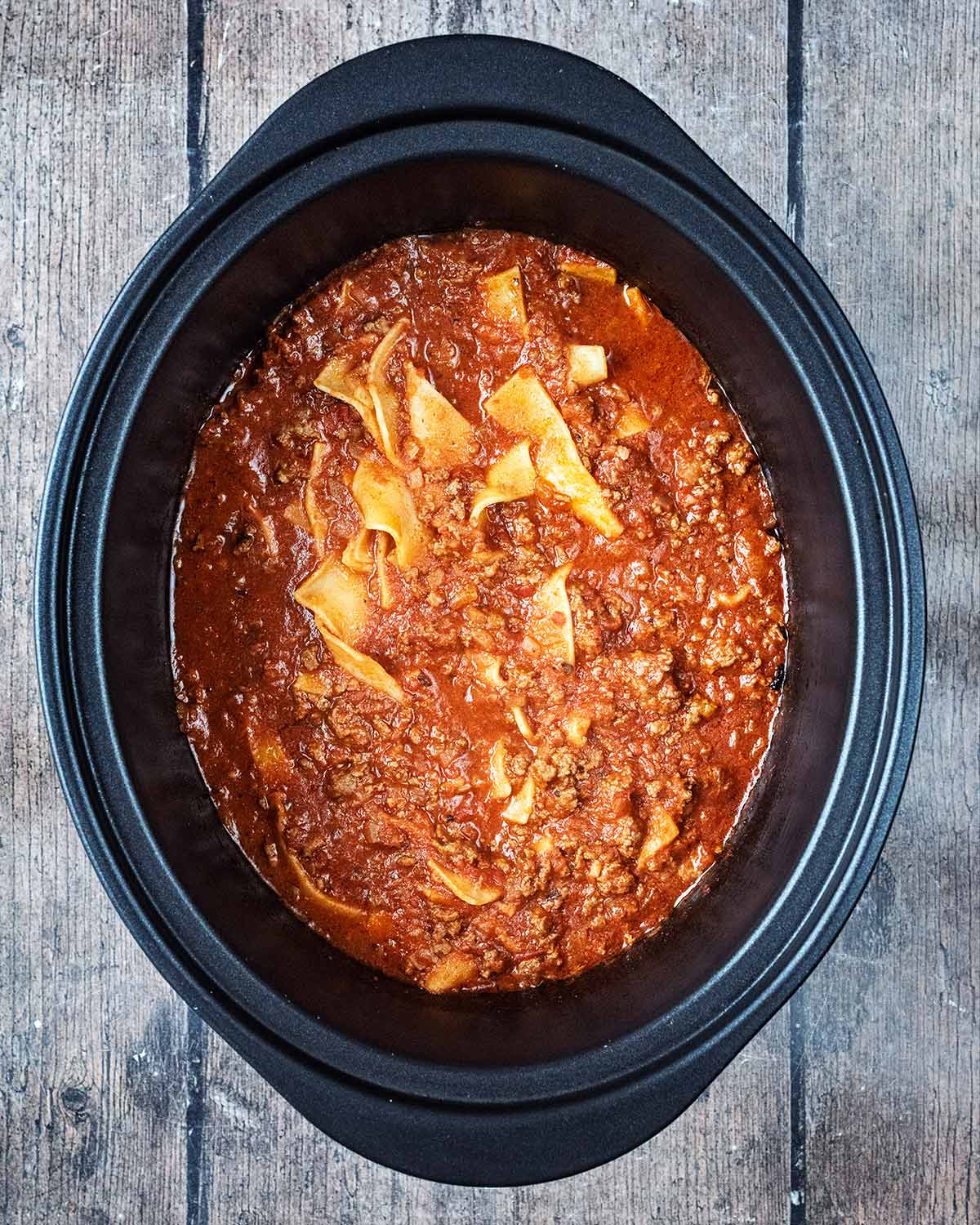
- Cook the pasta: Put the lid back on and cook for a further 30 minutes on HIGH or 45 minutes on LOW.
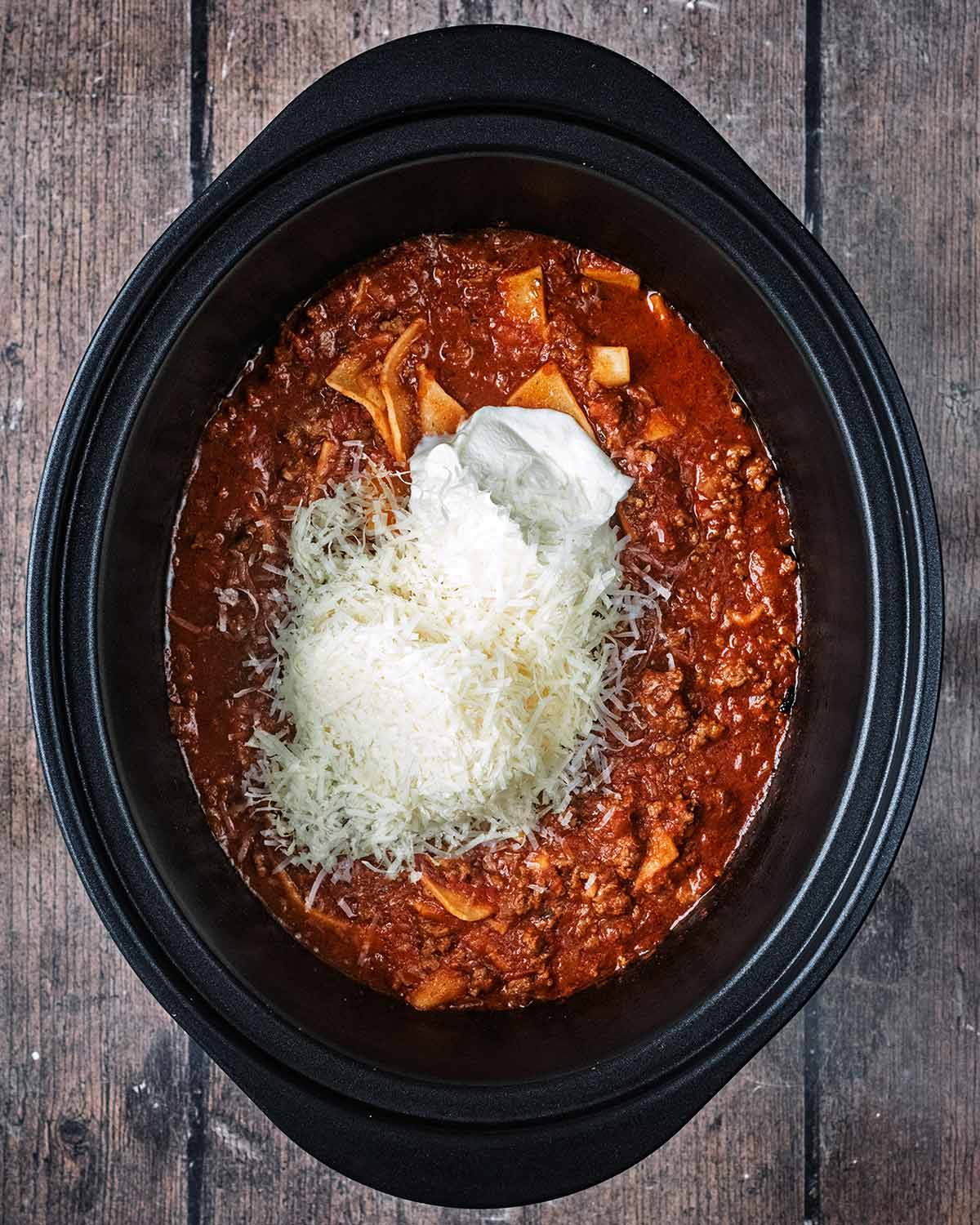
- Make it creamy: Once the pasta has cooked, add the crème fraîche and Parmesan.
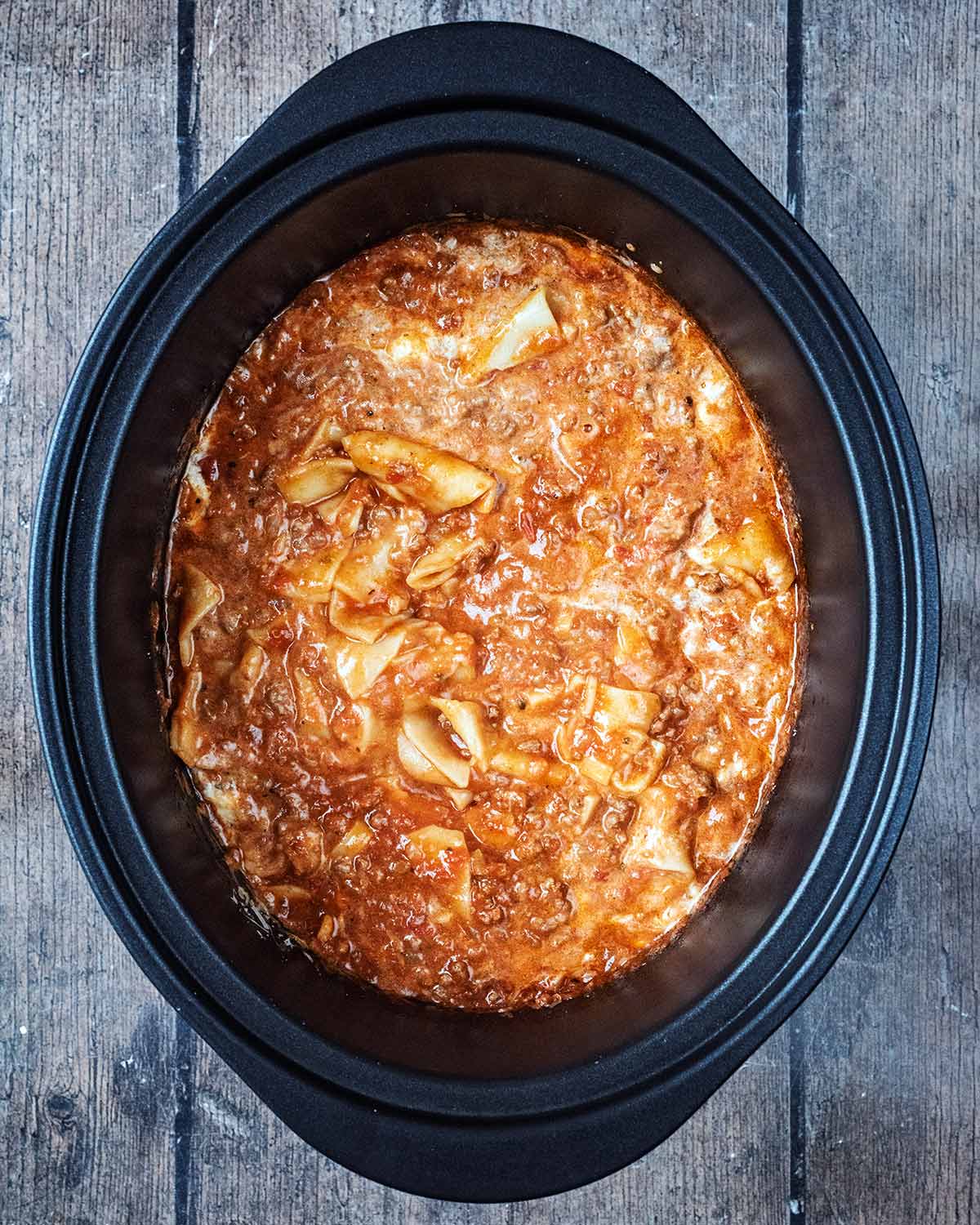
- Mix it all together: Mix the crème fraîche and Parmesan into the sauce, being careful not to break up the pasta.
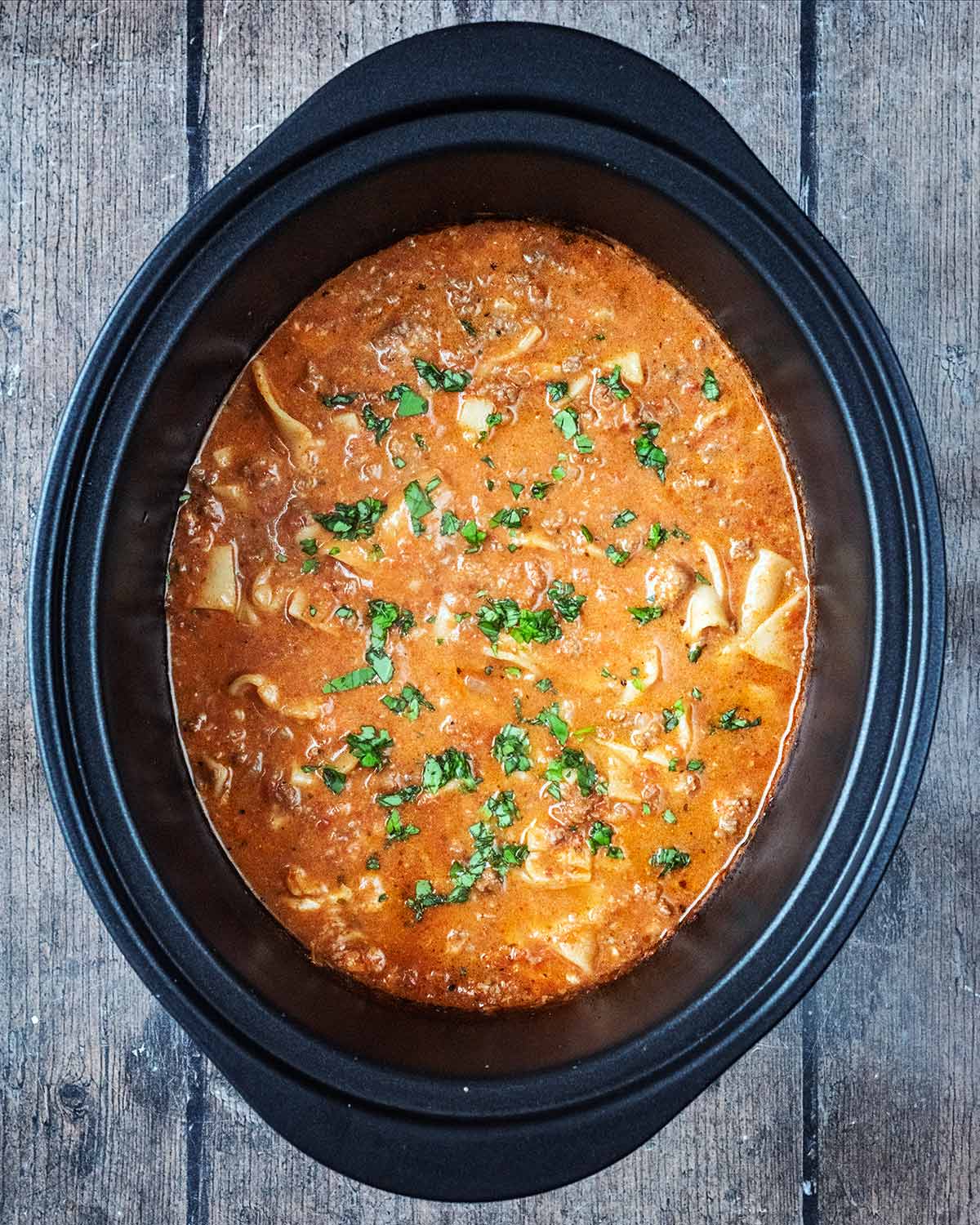
- Add the basil: Chop the basil and scatter over the sauce. Carefully mix it in.
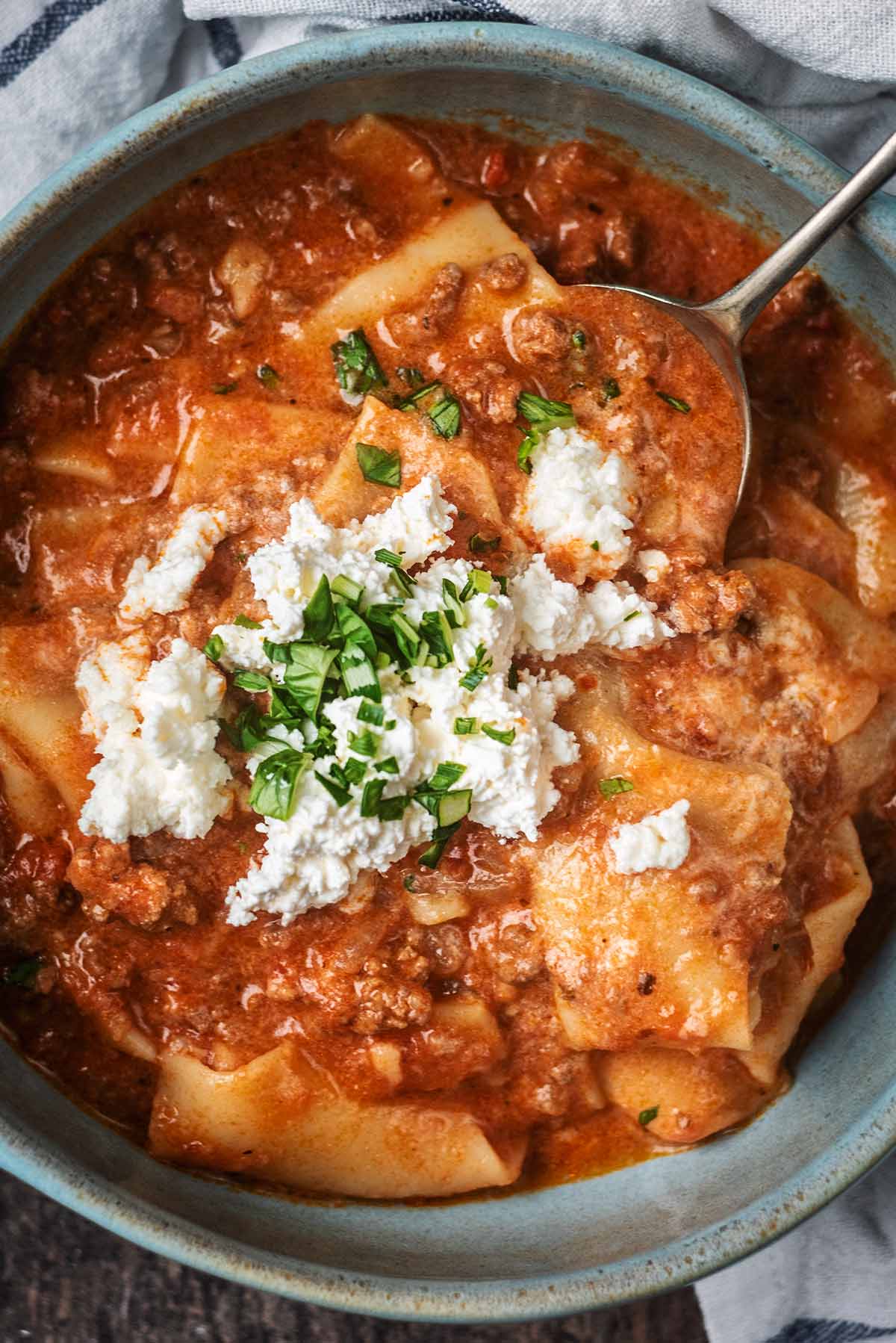
- Serve: Serve topped with crumbled ricotta and extra chopped basil.
Why Our Cooking Time is Shorter
We tested this with the beef already browned, so there is no need to cook the tomato sauce for 8 hours before adding the pasta.
We found 2 hours 30 minutes on HIGH or 5 hours 15 minutes on LOW gave us the rich flavour and texture we wanted.
The Secret to Lasagna Soup That Isn't Mushy
The most important part of this recipe is when you add the pasta.
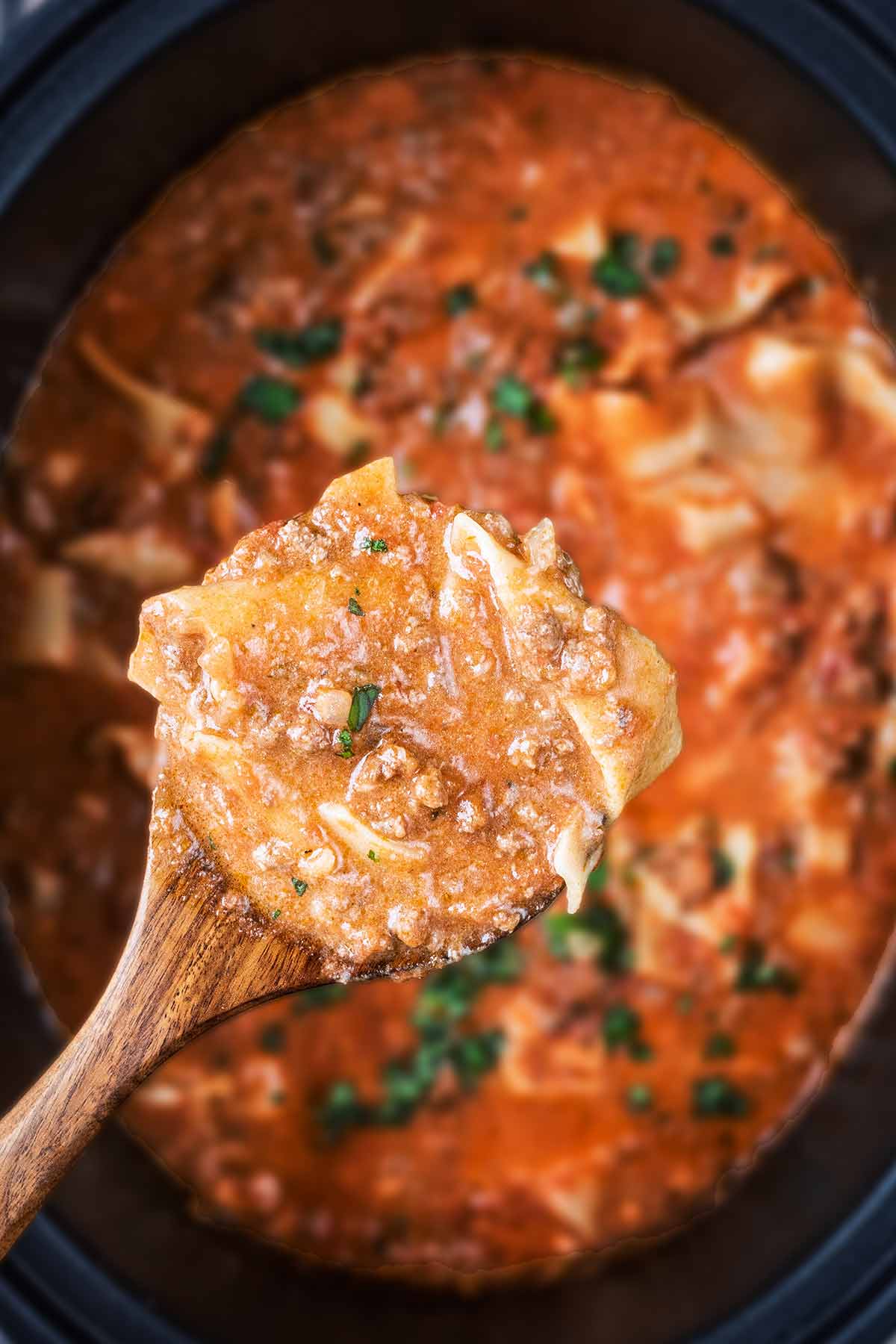
Don't put the lasagna sheets into the slow cooker at the beginning. Pasta continues to soften as it sits in hot liquid, and several hours of slow cooking will leave you with very soft pasta and a much thicker sauce.
That's why we cook the beef and tomato base first and add the dried pasta only towards the end.
We found 30 minutes on HIGH or 45 minutes on LOW worked well for our dried lasagna sheets. Different brands and slow cookers can vary slightly, so the first time you make it, check the pasta towards the end of the cooking time.
Once the pasta is tender, finish the soup and serve it rather than leaving it sitting on the warm setting for a long time.
Variations
Spicy - For a little heat, add some chilli flakes along with the Italian seasoning.
Meat - For an even richer meat sauce, replace some of the beef mince with Italian sausage meat. If you want to make the soup lighter, turkey mince works well in place of beef, although the flavour won't be quite as rich.
Vegetables - You can add more vegetables too. Finely diced carrot, courgette (zucchini), peppers or mushrooms can go into the tomato sauce, or stir a couple of handfuls of spinach through at the end.
Liquid - You can also adjust the consistency. Add a little extra stock if you prefer a brothier lasagna soup, or use slightly less if you like it thick and closer to a deconstructed lasagna.
What to Serve with Slow Cooker Lasagna Soup
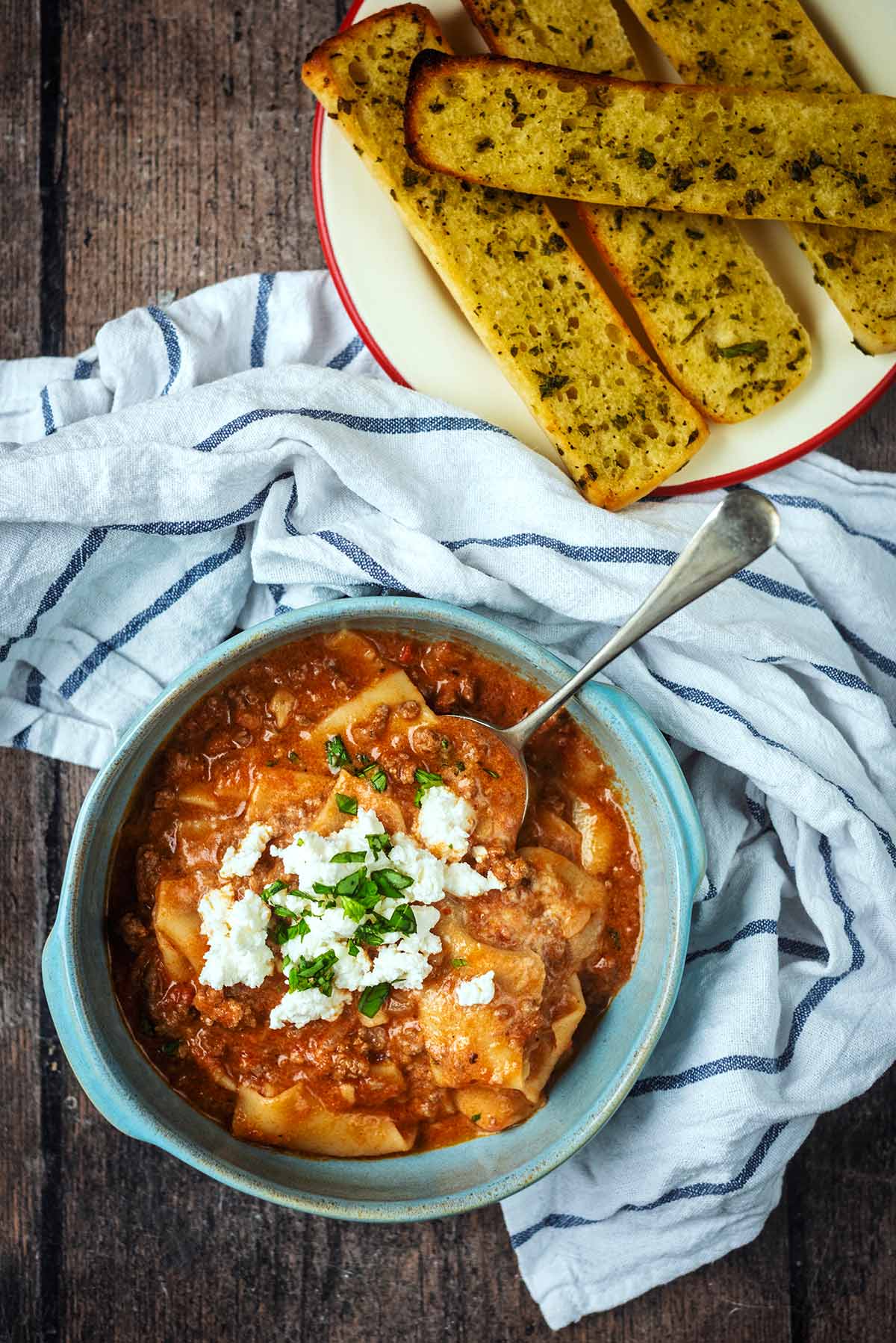
This slow cooker lasagna soup is filling enough to serve on its own, especially with the beef, pasta and cheese, but some bread on the side is perfect for soaking up the tomato sauce.
Our air fryer garlic bread would be my first choice because it takes just a few minutes and you don't need to turn the oven on. For something even more comforting, serve it with our easy cheesy garlic bread.
You could also serve it with soft homemade bread rolls or some crusty bread.
If you want to add something lighter alongside it, our Italian chopped salad gives you plenty of fresh crunch, or try Italian roasted vegetables for an extra portion of vegetables.
Storing and Reheating
Fridge - Allow leftovers to cool and transfer them to an airtight container. Store in the fridge for up to 3 days. The most important thing to remember is that the pasta will continue absorbing liquid while the soup is stored. By the following day it will be noticeably thicker.
Reheating - Add a splash of stock or water when reheating to loosen it back to your preferred consistency. Reheat gently on the hob or in the microwave until piping hot throughout.
Freezer - You can freeze it, but pasta becomes softer after freezing and reheating. For the best texture, if you are intentionally making this recipe for the freezer, freeze the beef and tomato soup base before adding the lasagna sheets, crème fraîche and Parmesan.
Defrost the base thoroughly, reheat it and then add freshly cooked pasta and the creamy ingredients. If you freeze leftover finished soup instead, it will still taste good, but expect the pasta to be much softer when reheated.
Make ahead - The tomato and beef base is ideal for making ahead. Cook it as far as the point before adding the pasta, cool it and store it in the fridge. When you are ready to eat, reheat the sauce thoroughly and continue with the pasta, crème fraîche, Parmesan and basil.
This is also the best method if you know dinner won't be served immediately, because it stops the pasta sitting in the hot soup and becoming too soft.
Dannii's Top Tips
- Use dried lasagna sheets rather than fresh for the most reliable texture.
- Break the sheets into fairly small, spoon-friendly pieces before adding them.
- Make sure all the pasta is submerged in the sauce and all separated as much as possible so it cooks evenly.
- Don't add the pasta at the beginning - it only needs the final part of the cooking time.
- Serve the soup soon after the pasta is cooked because it will continue absorbing liquid as it sits.
- If leftovers become too thick, simply add a splash of stock or water when reheating.
- Finely grate the Parmesan so it melts smoothly into the soup.
- Add the crème fraîche and Parmesan after the pasta has cooked, rather than slow cooking the dairy for several hours.
- If your beef mince releases a lot of fat when browning, drain the excess before adding it to the slow cooker.
- Keep some extra basil and ricotta for serving so every bowl gets that classic lasagna-style creamy finish.
Troubleshooting Guide
| Problem | Likely cause | Fix |
|---|---|---|
| The pasta is too soft or mushy | The lasagna sheets were added too early or the soup was left on the warm setting after the pasta cooked. | Add the pasta only for the final 30 minutes on HIGH or 45 minutes on LOW. Serve once the pasta is tender rather than leaving it sitting in the hot soup. |
| The pasta is still too firm | The lasagna pieces weren't fully submerged, or your slow cooker runs slightly cooler. | Stir gently to make sure all the pasta is covered by the sauce, then cook for another 5-10 minutes and check again. |
| The soup is too thick | The pasta has absorbed more of the liquid, particularly if the soup has been left standing or refrigerated. | Stir in a little hot stock or water until the soup reaches your preferred consistency. |
| The soup is too thin | Your tomatoes or pasta sauce contained more liquid, or the pasta has not absorbed enough yet. | Leave the lid off for a short time after cooking to allow some liquid to evaporate, or let the soup stand for 5-10 minutes before serving. |
| The crème fraîche looks grainy or has split | The dairy was added too early or the soup was allowed to boil after it was added. | Stir the crème fraîche and Parmesan through only after the pasta has cooked. Mix gently and don't continue boiling the soup afterwards. |
| The soup is greasy | The beef mince released more fat than expected. | Use lean beef mince and drain off excess fat after browning before transferring it to the slow cooker. |
Frequently Asked Questions
No. Add the dried lasagna sheets uncooked. They cook directly in the soup during the final 30 minutes on HIGH or 45 minutes on LOW.
Cooking them directly in the sauce also means they absorb plenty of flavour.
You can, but they cook much more quickly and can be more prone to sticking together.
We prefer dried sheets for this slow cooker lasagna soup because the cooking time is easier to control and the pasta holds its shape better.
Yes. A short pasta such as rigatoni, fusilli or penne will work, although cooking times will vary.
Broken lasagna sheets are our preference because they give you the closest texture and feel to actual lasagna.
This is almost always because the pasta has absorbed some of the liquid.
It happens naturally while the soup stands and becomes more noticeable once it has been refrigerated overnight.
Simply stir through a little extra stock or water when reheating until you reach the consistency you want.
I strongly recommend it.
Browning develops much more flavour than adding the mince directly to the slow cooker. It also helps keep the mince separated rather than forming clumps and allows you to drain off excess fat.
Yes, but gluten-free pasta can sometimes soften or break apart more easily.
For the best result, cook your gluten-free pasta separately according to the packet instructions and stir it into individual servings rather than slow cooking it in the soup.
Cottage cheese is a good substitute for ricotta and still gives you that creamy lasagna-style topping. You could also simply add a little extra Parmesan when serving. Instead of crème fraîche, full-fat sour cream is the closest easy substitute. Stir it through at the end of cooking and avoid boiling the soup afterwards.
Double cream/heavy cream will also make the soup creamy, although it won't have the same slight tang as crème fraîche.
More Lasagna Recipes


If you've tried this slow cooker lasagna soup recipe, let us know how you got on in the comments below.
Tag us in your creations on Instagram @hungryhealthyhappy and use the hashtag #hungryhealthyhappy too.
Recipe
Slow Cooker Lasagna Soup


Recipe Video
Ingredients
- 2 tablespoons of Olive oil
- 1 Onion - large; diced
- 3 Garlic cloves - crushed
- 500 g (1.1 lb) of Lean beef mince
- 750 ml (3 cups) of Beef stock
- 500 ml (2 cups) of Tomato pasta sauce
- 400 g (14 oz) of Chopped tomatoes - canned
- 1 tablespoon of Italian seasoning
- 180 g (6 ⅓ oz) of Dried lasagna sheets
- 150 ml (½ cup) of Reduced fat crème fraîche
- 45 g (¾ cup) of Parmesan - grated
- 5 g (⅓ cup) of Fresh basil - chopped
- 100 g (½ cup) of Ricotta
Instructions
- Heat the oil: On the hob, heat 2 tablespoons of Olive oil over a medium heat, either directly in the slow cooker (if your slow cooker is suitable), or in a pan.
- Cook the onion and garlic: Add 1 Onion (chopped) and 3 Garlic cloves (crushed) and cook for 3 minutes, until softened.
- Add the beef: Once the onion has softened, add 500 g of Lean beef mince and break it up with a wooden spoon or a mince masher.
- Cook the beef: Continue breaking up the beef and cook until it has browned, about 4-5 minutes.
- Make the sauce: Add 750 ml of Beef stock, 500 ml of Tomato pasta sauce, 400 g of Chopped tomatoes and 1 tablespoon of Italian seasoning to the slow cooker
- Cook the sauce: Put the lid on the slow cooker and cook on HIGH for 2 hours 30 minutes or LOW for 5 hours 15 minutes.
- Add the pasta: Break up 180 g of Dried lasagna sheets and add them to the sauce.
- Mix well to submerge all of the pasta in the sauce.
- Cook the pasta: Put the lid back on and cook for a further 30 minutes on HIGH or 45 minutes on LOW.
- Make it creamy: Once the pasta has cooked, add 150 ml of Reduced fat crème fraîche and 45 g of Parmesan.
- Add the basil: Chop 5 g of Fresh basil and scatter over the sauce. Carefully mix it in.
- Serve: Serve in bowls and divide the 100 g of Ricotta over the top and add extra chopped basil.
Recipe Notes
- Use dried lasagna sheets rather than fresh for the most reliable texture.
- Break the sheets into fairly small, spoon-friendly pieces before adding them.
- Make sure all the pasta is submerged in the sauce and all separated as much as possible so it cooks evenly.
- Don't add the pasta at the beginning - it only needs the final part of the cooking time.
- Serve the soup soon after the pasta is cooked because it will continue absorbing liquid as it sits.
- If leftovers become too thick, simply add a splash of stock or water when reheating.
- Finely grate the Parmesan so it melts smoothly into the soup.
- Add the crème fraîche and Parmesan after the pasta has cooked, rather than slow cooking the dairy for several hours.
- If your beef mince releases a lot of fat when browning, drain the excess before adding it to the slow cooker.
- Keep some extra basil and ricotta for serving so every bowl gets that classic lasagna-style creamy finish.
Nutritional Information
Where nutritional information is provided, it is approximate and calculated using online tools. Values can vary depending on the ingredients and brands used, but we endeavour to be as accurate as possible.
All timings are a guide and may vary depending on the ingredients, equipment and, where relevant, the appliance used. Changing the serving size may also affect the time needed.


Comments
No Comments