




This Leftover Turkey Risotto is a creamy, comforting way to use up Christmas or Thanksgiving turkey. Made with mushrooms, leeks, garlic, Parmesan and a little lemon, it's a delicious one-pan dinner that gives leftover roast turkey a completely different flavour.

After all the cooking that goes into Christmas dinner, the last thing I want is another complicated meal. This is perfect when you're bored of turkey sandwiches but still have some meat and vegetables to use up.
You don't need any wine or cream to make this turkey risotto deliciously creamy, and it's easy to adapt depending on what's left in the fridge.
Recipe update: This recipe was originally published on 11 December 2024 and was fully retested in October 2026 to check the cooking time and ingredient quantities. The original recipe still worked well, but I've expanded the instructions, tips and FAQs.
Take a look at some more leftover turkey recipes: We have our creamy turkey fricassee, comforting turkey pasta bake or our speedy 15 minute turkey curry.
Would you like to save this post?
Jump to:
Why You'll Love It
- A different way to use leftover turkey - Perfect for Boxing Day or the days after Thanksgiving, when you want something other than sandwiches or curry.
- Creamy without cream - The risotto rice releases starch as it cooks, while Parmesan adds richness and lemon brightens everything up.
- Easy to adapt - Use whatever cooked turkey you have, add leftover vegetables or swap the mushrooms depending on what needs using up.
- A simple one-pan dinner - Everything cooks in one pan with minimal washing up, and there's no need for any complicated ingredients.
Ingredients and Substitutions
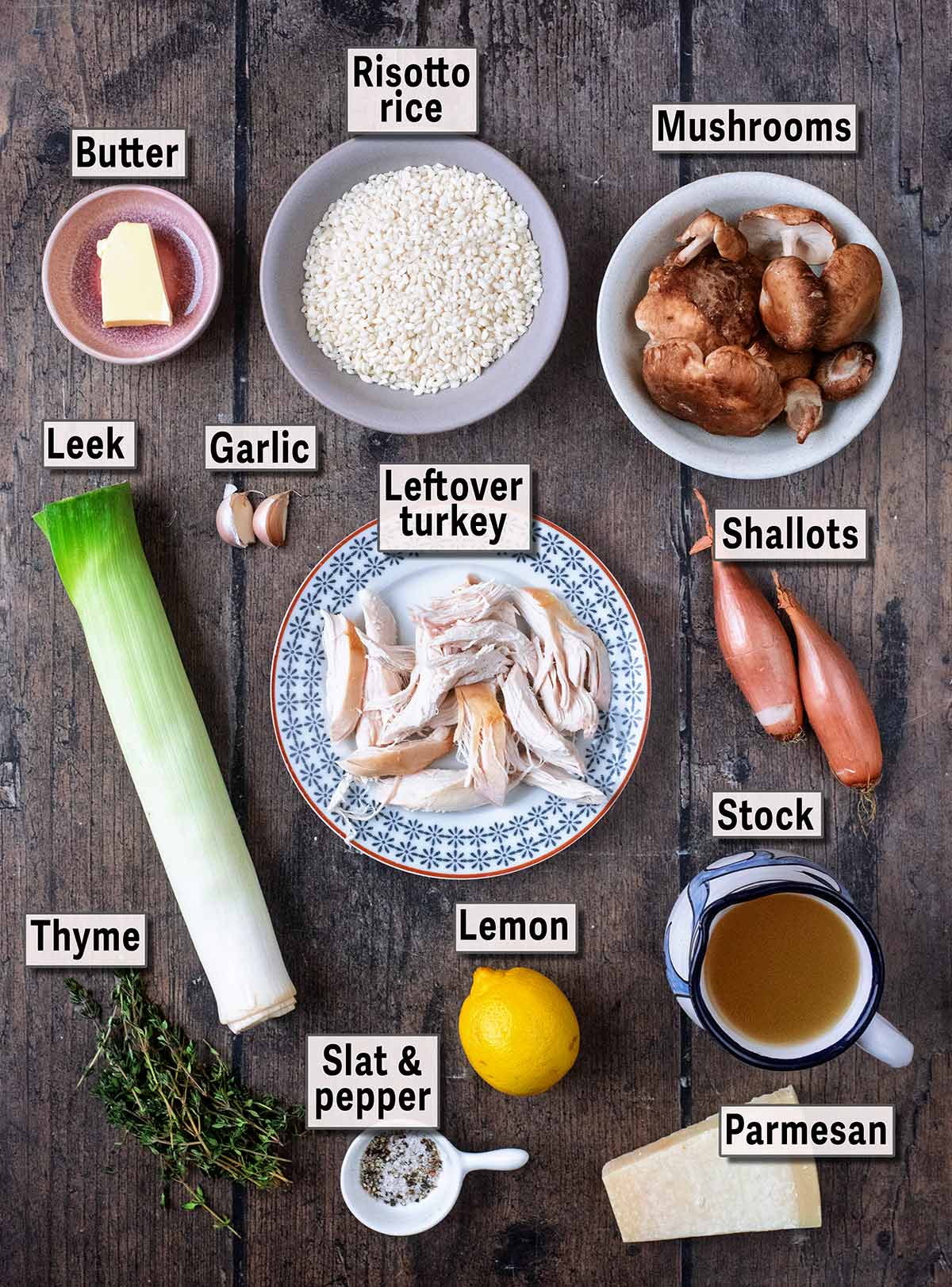
A full ingredients list, along with US Customary and Metric measurements, can be found in the recipe card at the end of this post.
- Turkey - Any leftover cooked turkey works, whether that's breast, leg or a mixture. Shred or chop it into bite-sized pieces. We use leftovers from our easy roast turkey breast, but you can also use cooked chicken.
- Risotto rice - Arborio is our usual choice because it gives the risotto its lovely creamy consistency. Carnaroli works too. Regular long-grain or brown rice won't give the same result.
- Mushrooms - We used shiitake mushrooms for their rich flavour, but chestnut mushrooms are a good budget-friendly alternative. You can also use a mixture of mushrooms.
- Leeks and shallots - These add sweetness and plenty of flavour. If you haven't got shallots, use a small brown onion instead.
- Butter - Used to soften the vegetables and add richness. Olive oil works as an alternative.
- Garlic - Freshly crushed garlic works well, but frozen chopped garlic saves a little preparation time.
- Stock - Turkey stock is ideal if you've made some from the Christmas carcass. Otherwise, use chicken stock or vegetable stock. You could also try our homemade chicken stock.
- Thyme - Fresh thyme adds a lovely herby flavour and is often something we have leftover from Christmas dinner. Dried thyme can be used if needed.
- Parmesan - Adds a savoury flavour and makes the risotto extra creamy. Freshly grated Parmesan melts into the rice particularly well.
- Lemon - A squeeze of fresh lemon juice at the end balances the richness of the cheese and butter. You can add a little zest too.
- Salt and pepper - Season to taste, especially if you're using stock or leftover turkey that has already been seasoned.
More ways to adapt this recipe can be found in the Variations section below.
How To Make Leftover Turkey Risotto

- Soften the shallots and leek: Melt the butter in a large, deep frying pan or saucepan over a medium heat. Add the finely chopped shallots and sliced leek. Cook gently for 5-7 minutes, until softened but not browned. Add the garlic and cook for another 30 seconds.

- Cook the mushrooms: Add the chopped mushrooms and cook for another 4-5 minutes, until they soften and most of their released moisture has evaporated.

- Add the rice: Stir in the Arborio rice and cook for 1-2 minutes, until the grains are coated in the butter and the edges look slightly translucent.

- Simmer: Add the thyme leaves and a ladleful of hot stock. Stir regularly over a gentle simmer until most of the liquid has been absorbed, then add another ladleful. Continue for approximately 18-25 minutes, adding more stock as needed.

- Add the turkey: When the rice is nearly tender, stir in the cooked shredded turkey with another splash of stock. Continue cooking for approximately 3-5 minutes, until the rice is tender with a slight bite and the turkey is piping hot throughout.
- Add the final ingredients: Remove from the heat and stir through the Parmesan, lemon juice and black pepper. Taste before adding salt. If the risotto looks too thick, stir in a little more hot stock until it is creamy and loose enough to spread gently across the plate. Serve immediately.
Turkey Risotto Variations
One of the best things about this recipe is how easy it is to adapt, especially when you have a fridge full of Christmas leftovers.
Add more vegetables: Frozen peas or sweetcorn are easy additions. Stir them in for the last few minutes of cooking. Spinach can be added just before serving, while peppers or courgette can be cooked with the mushrooms.
Use leftover Christmas vegetables: Cooked Brussels sprouts, carrots or other roasted vegetables can be chopped and added towards the end, just long enough to heat them through thoroughly.
Turkey and ham risotto: If you have any leftover honey roast ham, chop it into small pieces and replace some of the turkey with it. Remember to adjust the seasoning, as ham can be salty.
Add white wine: We rarely have wine in the house, so this version doesn't need any. However, if you have an open bottle after Christmas, replace around 100ml of the stock with a dry white wine such as Sauvignon Blanc or unoaked Chardonnay. Add it after toasting the rice and let it reduce before adding the stock.
Make it extra rich: Stir through a small knob of butter with the Parmesan just before serving, or finish with some extra freshly grated cheese.

Serving Suggestions
This creamy turkey risotto is filling enough to be served on its own, but I like adding something green or crunchy alongside it, particularly after a few days of rich festive food.
For a simple vegetable side, try our roasted Brussels sprouts or air fryer kale. Our roasted tenderstem broccoli is another favourite, and the lemon works really well with the creamy risotto.
If you would prefer something fresh, serve it with our rocket salad, or toss some simple salad leaves in our easy lemon vinaigrette.
For a more substantial meal, especially if you have family staying over Christmas, add some air fryer garlic bread or easy cheesy garlic bread.
Dannii's Top Tips
- Don't rinse the rice. The starch is what helps give risotto its naturally creamy texture.
- Keep the stock hot. Adding cold stock repeatedly lowers the temperature of the pan and makes cooking less consistent.
- Add the stock gradually. Stir regularly, but you don't need to stir constantly. Add more liquid when the previous addition has mostly been absorbed.
- Don't rely on an exact amount of stock. Different rice varieties and cooking temperatures affect how much you'll need. The finished risotto should be creamy and slightly loose, not dry or stodgy.
- Add the turkey towards the end. It's already cooked, so it only needs to be heated through thoroughly. Adding it too early can make the meat dry.
- Taste before adding salt. Stock, Parmesan and leftover roast turkey can all be salty.
- Finish with cheese and lemon. Stirring Parmesan into the risotto makes it creamy, and you can always add a little more on top. A small knob of butter at the end will make it even richer.

Storage
Best eaten fresh: Risotto has the best texture when served immediately, so we recommend making just enough for the meal.
Refrigerating: Cooked rice needs to be cooled quickly, ideally within one hour, and refrigerated promptly. Spread it in a shallow container (like a baking tray; pictured below) to help it cool. Refrigerated cooked rice should be eaten within 24 hours.

Reheating: Because this recipe uses turkey that has already been cooked and reheated in the risotto, we don't recommend reheating the finished dish again. The Food Standards Agency advises reheating leftovers only once.
Freezing: We don't recommend freezing the finished turkey risotto, as the rice texture can become soft and stodgy when defrosted. A better option is to freeze suitable portions of your leftover cooked turkey promptly and make a fresh risotto another day.
For more details, see the Food Standards Agency's Christmas leftovers guidance.
Troubleshooting Guide
| Problem | Likely cause | Fix |
|---|---|---|
| Rice is still hard | Not enough liquid or the heat is too high | Add another ladle of hot stock and continue cooking gently until the rice is tender with a slight bite. |
| Risotto is too thick or dry | Too much liquid has been absorbed or the risotto has been left standing | Stir in a splash of hot stock at a time until it's creamy and slightly loose again. |
| Risotto is too watery | Too much stock has been added before the rice can absorb it | Simmer uncovered for another minute or two, stirring gently, until the liquid reduces. |
| Risotto tastes bland | The stock is lacking flavour or it needs finishing | Add a little extra Parmesan, lemon juice or black pepper. Taste before adding salt. |
| Turkey is dry | It was added too early or cooked for too long | Add cooked turkey only for the final few minutes, just long enough to heat it thoroughly. A splash of stock can help moisten it if needed. |
Frequently Asked Questions
Yes, as long as the turkey was cooled, frozen and defrosted safely. Defrost it thoroughly in the fridge and follow appropriate storage guidance. Add it towards the end and make sure it's piping hot throughout before serving. Don't reheat it again after this meal.
Arborio is an excellent choice because it contains plenty of starch and creates a creamy texture while the grains retain a slight bite. Carnaroli is another good option. We wouldn't recommend using ordinary long-grain or brown rice as a direct substitute, because both the cooking method and resulting texture will be different.
Yes! This recipe is made without wine, and you don't need it to make a delicious risotto. Good-quality stock, mushrooms, Parmesan and lemon provide plenty of flavour.
You can prepare the ingredients in advance by slicing the vegetables, grating the cheese and measuring the rice. Keep the cooked turkey refrigerated until needed. For the best texture and food safety, cook the risotto fresh when you're ready to eat.
More Risotto Recipes


If you've tried this turkey risotto recipe, let us know how you got on in the comments below.
Tag us in your creations on Instagram @hungryhealthyhappy and use the hashtag #hungryhealthyhappy too.
Recipe

Leftover Turkey Risotto


Recipe Video
Ingredients
- 2 tablespoons of Butter
- 1 Leek - sliced
- 2 Shallots - diced
- 2 Garlic cloves - crushed
- 120 g (1 ½ cup) of Shiitake mushrooms - chopped
- 150 g (¾ cup) of Risotto (arborio) rice
- 700 ml (3 cups) of Chicken stock - (use certified gluten free stock to ensure this recipe is gluten free)
- 4 sprigs of Fresh thyme - leaves only
- 115 g (4 oz) of Leftover turkey
- 30 g (⅓ cup) of Parmesan - grated
- 1 tablespoon of Lemon juice
- ½ teaspoon of Ground black pepper
- ¼ teaspoon of Fine sea salt
Instructions
- Soften the shallots and leek: Melt 2 tablespoons of Butter in a large, deep frying pan or saucepan over a medium heat. Add 2 Shallots (finely chopped) and 1 Leek (sliced). Cook gently for 5-7 minutes, until softened but not browned. Add 2 Garlic cloves (crushed) and cook for another 30 seconds.
- Cook the mushrooms: Add 120 g of Shiitake mushrooms (chopped) and cook for another 4-5 minutes, until they soften and most of their released moisture has evaporated.
- Add the rice: Stir in 150 g of Risotto (arborio) rice and cook for 1-2 minutes, until the grains are coated in the butter and the edges look slightly translucent.
- Simmer: Add 4 sprigs of Fresh thyme (leaves only) and a ladleful of the 700 ml of Chicken stock.Stir regularly over a gentle simmer until most of the liquid has been absorbed, then add another ladleful. Continue for approximately 18-25 minutes, adding more stock as needed.
- Add the turkey: When the rice is nearly tender, stir in 115 g of Leftover turkey (shredded) with another splash of stock.Continue cooking for approximately 3-5 minutes, until the rice is tender with a slight bite and the turkey is piping hot throughout.
- Add the final ingredients: Remove from the heat and stir through 30 g of Parmesan, 1 tablespoon of Lemon juice and ½ teaspoon of Ground black pepper.Taste before adding up to ¼ teaspoon of Fine sea salt.If the risotto looks too thick, stir in a little more hot stock until it is creamy and loose enough to spread gently across the plate.
- Serve immediately.
Recipe Notes
- Don't rinse the rice. The starch is what helps give risotto its naturally creamy texture.
- Keep the stock hot. Adding cold stock repeatedly lowers the temperature of the pan and makes cooking less consistent.
- Add the stock gradually. Stir regularly, but you don't need to stir constantly. Add more liquid when the previous addition has mostly been absorbed.
- Don't rely on an exact amount of stock. Different rice varieties and cooking temperatures affect how much you'll need. The finished risotto should be creamy and slightly loose, not dry or stodgy.
- Add the turkey towards the end. It's already cooked, so it only needs to be heated through thoroughly. Adding it too early can make the meat dry.
- Taste before adding salt. Stock, Parmesan and leftover roast turkey can all be salty.
- Finish with cheese and lemon. Stirring Parmesan into the risotto makes it creamy, and you can always add a little more on top. A small knob of butter at the end will make it even richer.
Nutritional Information
Where nutritional information is provided, it is approximate and calculated using online tools. Values can vary depending on the ingredients and brands used, but we endeavour to be as accurate as possible.
All timings are a guide and may vary depending on the ingredients, equipment and, where relevant, the appliance used. Changing the serving size may also affect the time needed.


Comments
No Comments