



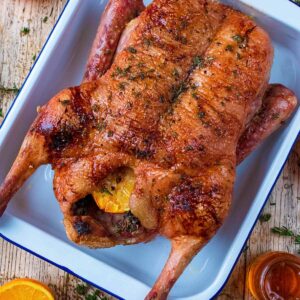
This easy Honey Roast Duck is a delicious alternative to turkey for Christmas or Thanksgiving, and it's just as good for a Sunday roast. With golden, crispy skin, tender meat and a little sweetness from honey and orange, it's a roast dinner that feels special without too much effort.
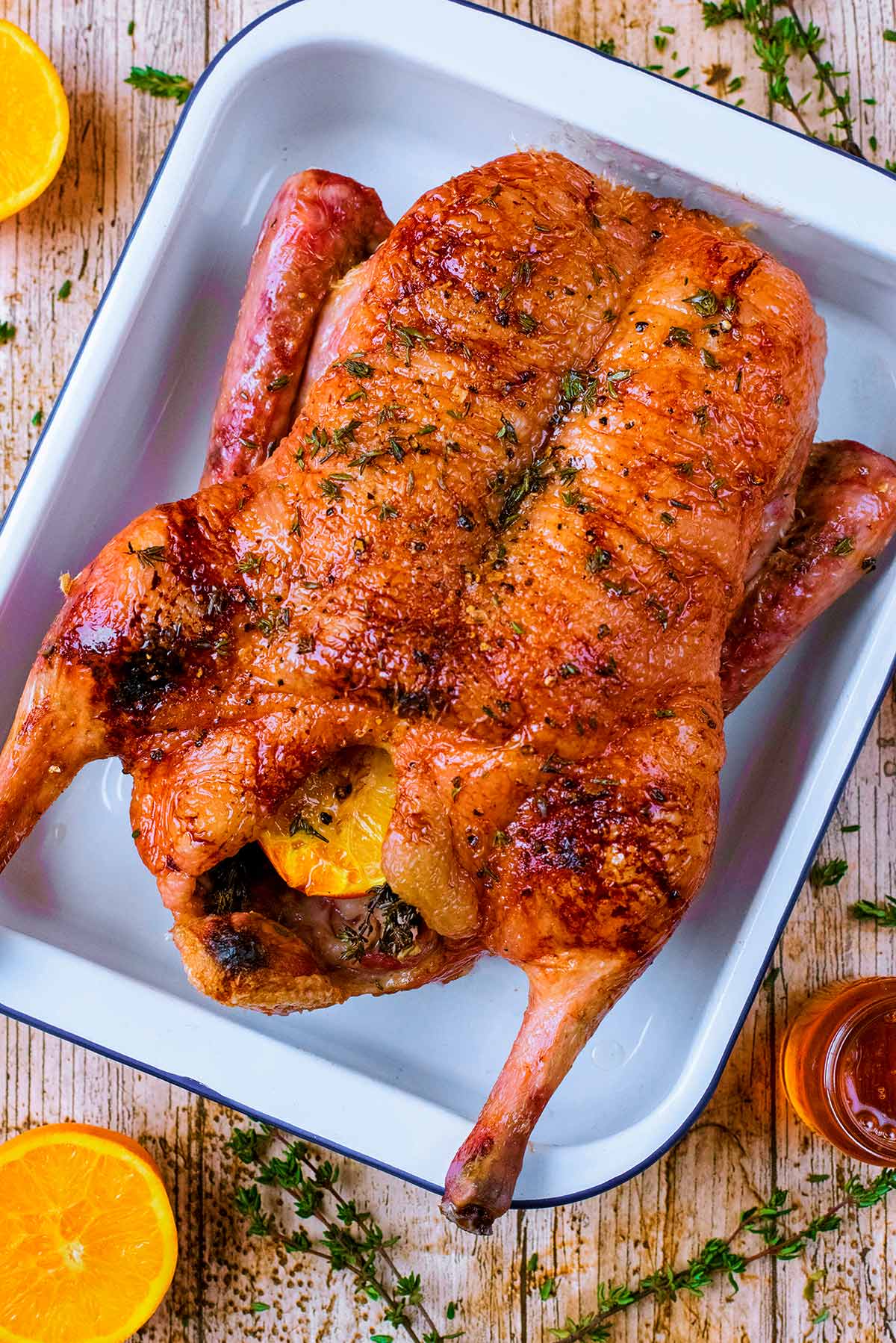
I love a roast dinner, but when there are lots of side dishes to organise, I want the main part of the meal to be as simple as possible. This whole roast duck needs just a few ingredients, and most of the cooking time is hands-off.
If you've never cooked a whole duck before, don't be put off. I'll show you how to prepare it, get the skin crispy and know when it's properly cooked.
Recipe update: This recipe was originally published on 5 December 2018 and was fully retested in October 2026 to check the cooking time and ingredient quantities. The original recipe still worked well, but I've expanded the instructions, tips and FAQs.
Would you like to save this post?
Jump to:
- Why You'll Love It
- Recipe Overview
- Ingredients and Substitutions
- How to Roast a Whole Duck
- How to Get Crispy Roast Duck Skin
- Roast Duck Cooking Time and Serving Size
- How Many People Does a Whole Duck Serve?
- What to Serve with Roast Duck
- How to Make Gravy with Roast Duck Juices
- Storage
- Dannii's Top Tips
- Troubleshooting Guide
- Frequently Asked Questions
- More Sunday Meat Recipes
- Recipe
- Feedback
Why You'll Love It
- Perfect for Christmas and Thanksgiving - A delicious alternative to roast turkey, especially if you're having a smaller gathering.
- Just a few ingredients - All you need is a whole duck, honey, orange, thyme and some seasoning.
- Golden, crispy skin - Roasting the duck allows the fat to render, while the honey gives it a lovely golden glaze.
- A change from roast chicken - Duck has a deliciously rich flavour that works beautifully with sweet citrus and herbs.
- Great for a special Sunday roast - It looks impressive on the table, but the preparation is surprisingly straightforward.
Recipe Overview
- Duck size: This recipe uses a 1.3kg (3lb) whole duck and serves 3 people generously, or 4 with plenty of side dishes.
- Flavours: A simple combination of honey, fresh orange and thyme that complements the rich duck meat.
- Cooking method: Roast uncovered, starting at a high temperature to help crisp the skin, before reducing the heat and adding the honey for the final 20 minutes.
- Equipment: You'll need a large roasting tin and a meat thermometer. A roasting rack is helpful but not essential.
- Make ahead: You can prepare and season the duck the day before, then roast it fresh for the crispiest skin.
Ingredients and Substitutions
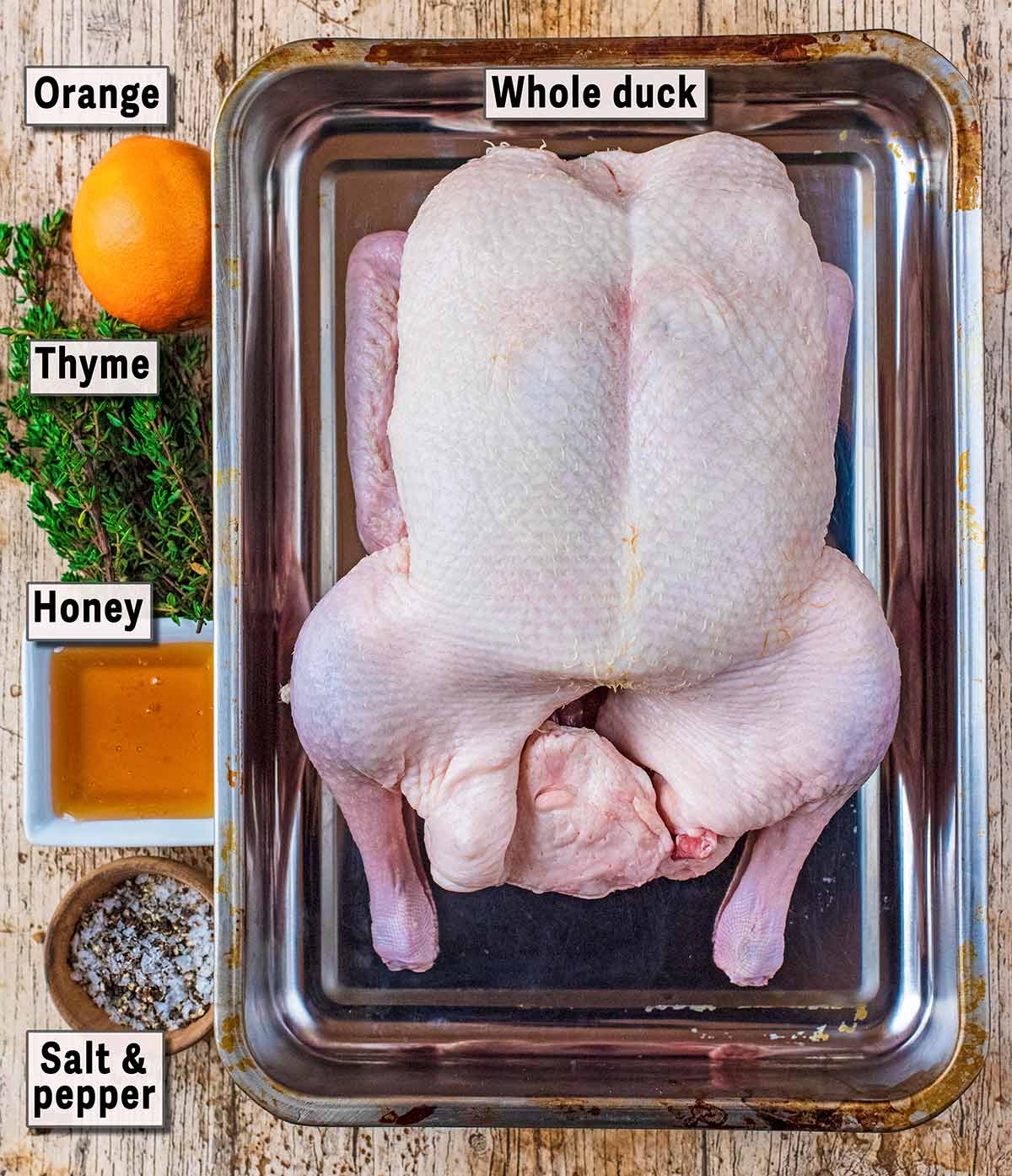
A full ingredients list, along with US Customary and Metric measurements, can be found in the recipe card at the end of this post.
- Whole duck - We used a 1.3kg (3lb) whole duck. You can usually find these in larger supermarkets around Christmas, or buy one from your local butcher. Make sure it's completely defrosted before cooking. For this recipe, we used Gressingham duck.
- Orange - The orange goes inside the duck and adds a lovely citrus flavour that balances the richness of the meat.
- Honey - Runny honey is best as it's easier to spread over the skin. It adds a little sweetness and helps create that lovely golden finish.
- Thyme - Fresh thyme works really well with the honey and orange. You could use rosemary or marjoram instead.
- Salt and pepper - Don't forget to season the duck well, as this brings out the flavour and helps with the skin.
How to Roast a Whole Duck
- Prep: Preheat your oven to 220°C/200°C fan/425°F/Gas 7.
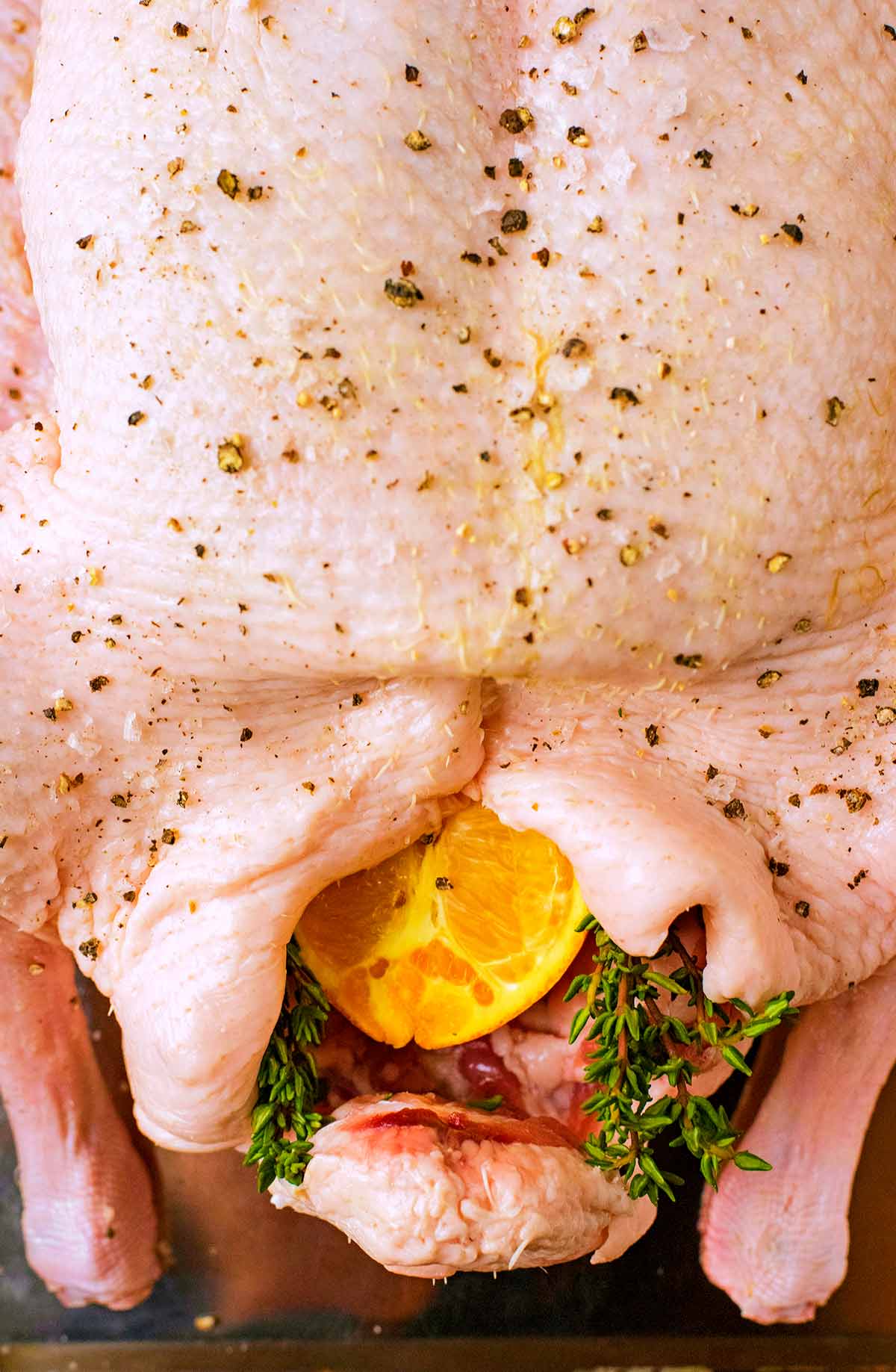
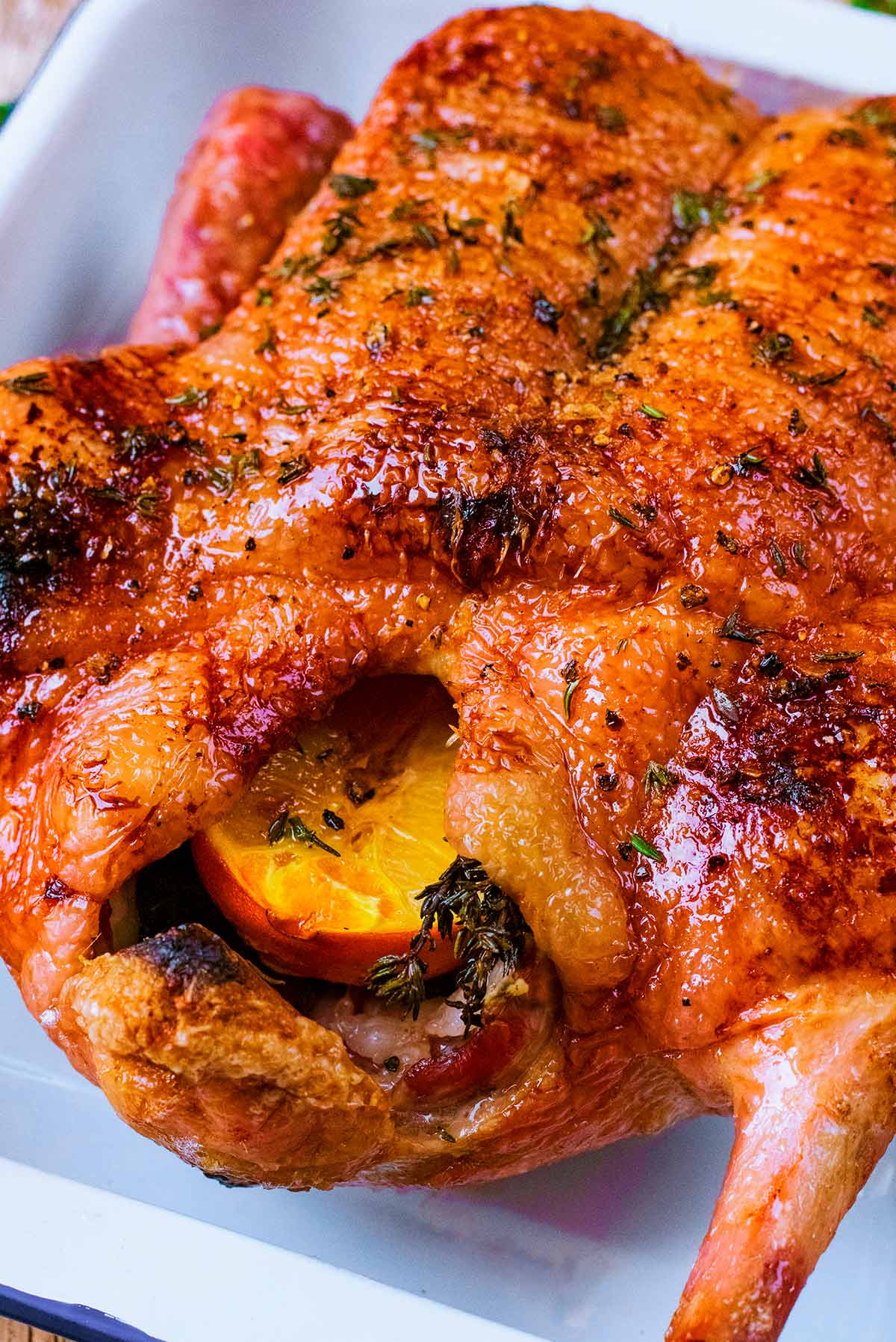
- Prepare the duck Remove any giblets or packaging from the cavity. Pat the duck dry with kitchen paper, then lightly prick the fatty skin with a skewer, taking care not to pierce the meat.
- Flavour the duck: Squeeze a little orange juice inside the duck, then place the orange halves and two sprigs of thyme loosely inside the cavity. Season all over with salt and pepper.
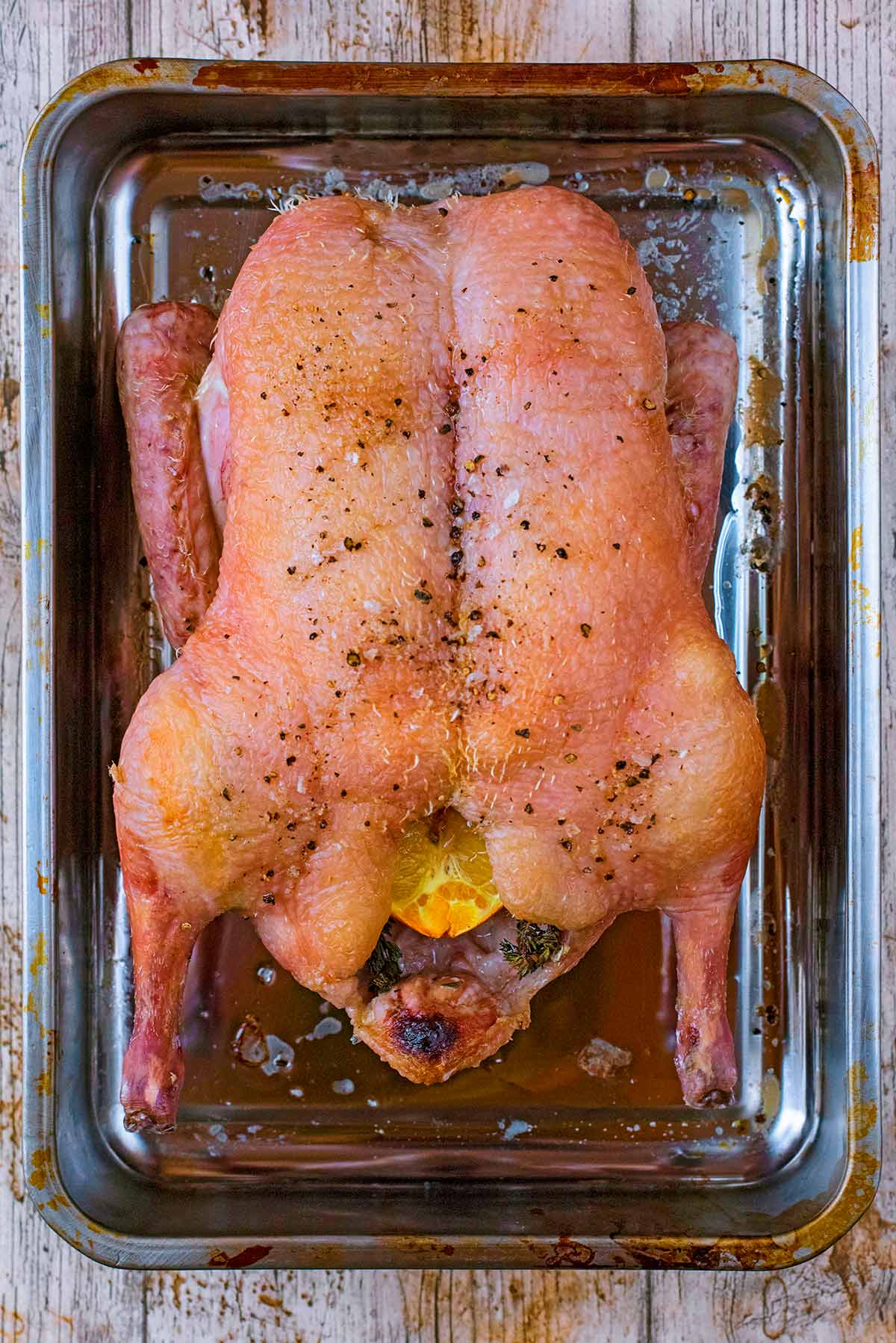
- Start cooking the duck: Place the duck breast-side up in a large roasting tin, preferably on a rack if you have one. Roast for 20 minutes, until the skin starts to turn golden.
- Turn the heat down: Reduce the oven temperature to 190°C/170°C fan/375°F/Gas 5 and cook for another 40 minutes.
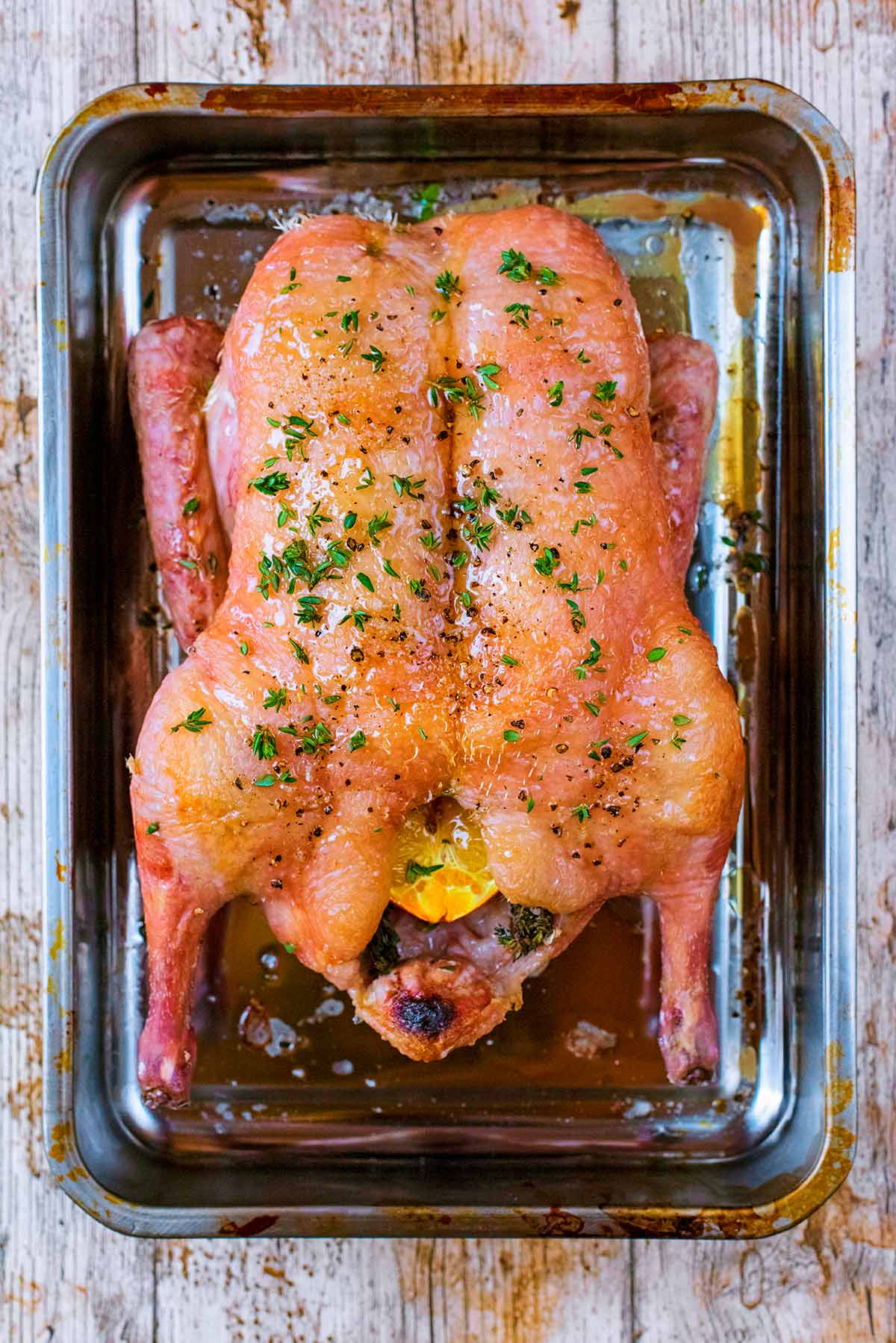
- Add the honey: Remove the duck from the oven and drizzle over the honey, spreading it across the skin. Sprinkle over the remaining thyme leaves, then return to the oven for approximately 20 minutes. Baste lightly with the honey and pan juices during this final stage, taking care not to soften the skin with too much liquid.
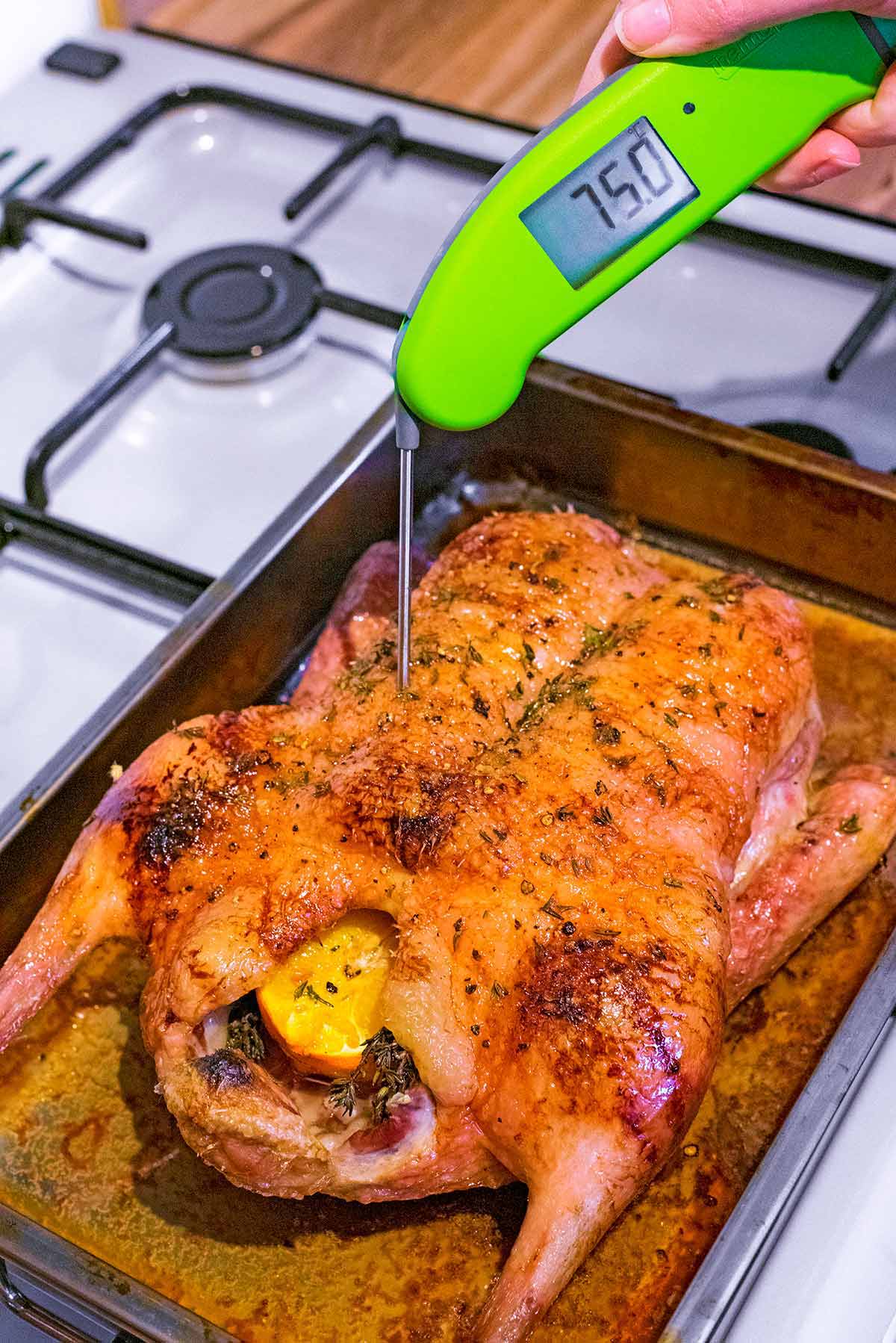
- Check the duck: Check the internal temperature with a meat thermometer. The duck should reach at least 75°C/167°F in the thickest parts of the breast and thigh, without the probe touching bone. Check the inner wing area too. If it needs longer, return it to the oven and check again.
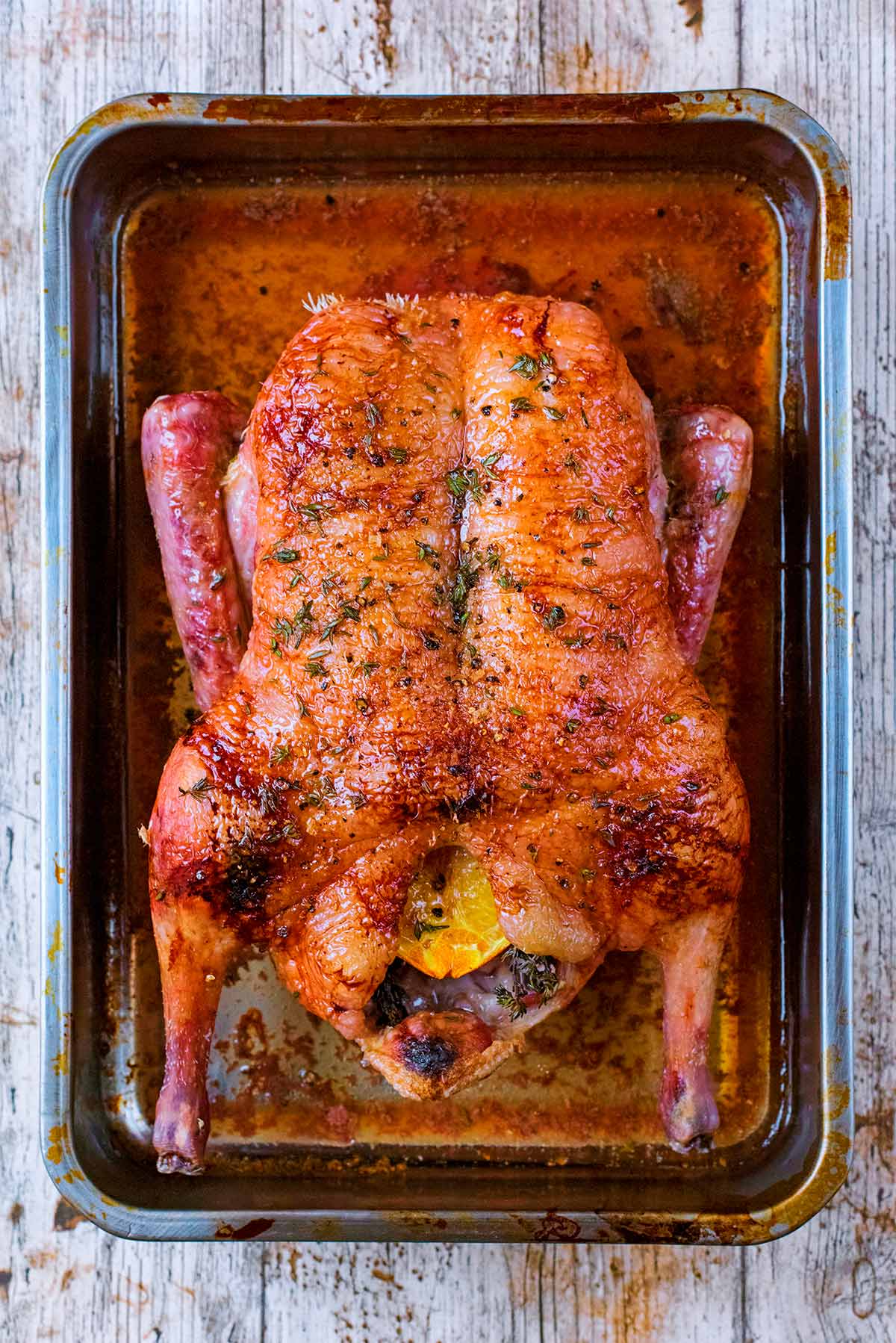
- Rest the duck: Remove the duck from the oven and leave it to rest, uncovered, for 10 minutes before carving.
These cooking times are based on our 1.3kg duck. Larger ducks will take longer, so use the weight and internal temperature as your guides. Add the honey during the final 15-20 minutes rather than too early, as it can burn.
How to Get Crispy Roast Duck Skin
One of the best things about roast duck is the crispy skin. Duck has a thick layer of fat underneath its skin, so the secret is allowing that fat to render as it cooks.
Start by patting the duck completely dry. For even crispier skin, you can season it and leave it uncovered on a rack in the fridge overnight before roasting.
Lightly pricking the fatty skin also helps the fat escape. Be careful not to pierce the meat underneath, as you don't want to lose those juices.
Roast the duck uncovered, ideally on a rack so the fat can drip into the tin below. If a lot of fat collects in the tin, carefully remove some during cooking.
Finally, don't add the honey too early. The last 15-20 minutes is enough time for it to create a golden glaze without burning.
Roast Duck Cooking Time and Serving Size
The exact cooking time will depend on the size of your duck and your oven.
Our 1.3kg (3lb) duck takes approximately 1 hour and 20 minutes to roast, followed by 10 minutes of resting.
For a larger 2kg (4lb 6oz) duck, allow approximately 1 hour and 40 minutes to 1 hour and 50 minutes as a starting estimate, but always check that it's cooked through with a meat thermometer. Oven temperatures and the shape of the bird can make a difference.
How Many People Does a Whole Duck Serve?
A whole duck doesn't provide as much meat as a chicken of the same weight because it has more fat and bone.
When I retested this recipe, our 1.3kg duck yielded approximately 800g (1lb 12oz) of cooked meat and skin. The exact amount will vary depending on the duck and how it's carved.
A 1.3kg duck is best for two to three generous portions or around four smaller portions with plenty of side dishes. For a larger family Christmas or Thanksgiving dinner, choose a bigger duck or roast more than one.
What to Serve with Roast Duck
This honey roast duck goes perfectly with all the traditional Sunday roast sides, especially potatoes and vegetables that balance the rich meat.
You can't go wrong with some easy roast potatoes, but if you want to make the most of the fat from the roasting tin, try our duck fat roast potatoes. They make a fantastic addition to a festive roast dinner.
For vegetables, I love the combination of slow cooker red cabbage, garlic and parsley roasted carrots and roasted tenderstem broccoli. You could also serve honey roasted parsnips or roasted butternut squash for some extra sweetness.
If you're serving this for Christmas, add some easy cauliflower cheese and air fryer pigs in blankets for all the trimmings. Our easy bread sauce is another lovely festive addition.
How to Make Gravy with Roast Duck Juices
Don't throw away the delicious juices left in the roasting tin. They make a lovely gravy to serve with the duck.
First, carefully separate the excess duck fat from the darker cooking juices. Save the fat for roasting potatoes.
For a simple gravy, heat 1 tablespoon of the reserved duck fat in a saucepan and stir in 1 tablespoon of plain flour. Cook for a minute, then gradually whisk in 250ml of chicken stock and the reserved cooking juices.
Simmer for a few minutes until thickened, then taste and adjust the seasoning. You can strain the gravy before serving if you prefer it completely smooth.
This is an optional gravy rather than part of the main five-ingredient duck recipe.
For a gluten-free gravy, use a gluten-free plain flour blend instead of regular flour, and make sure your chicken stock is gluten-free too.
Storage
Store: Allow the leftover duck to cool, remove the meat from the bones and put it in an airtight container in the fridge within two hours of cooking. Eat within 48 hours.
Freeze: Cooked roast duck freezes well. Once cooled, put the meat into freezer-safe containers or bags, removing as much air as possible. Freeze for up to 2 months for best quality.
Defrost: Defrost the duck thoroughly in the fridge, never at room temperature. Use it promptly once defrosted.
Reheat: Put the duck in an ovenproof dish with a splash of stock or water to help stop it drying out. Cover loosely with foil and heat in the oven at 180°C/160°C fan/350°F/Gas 4 until piping hot throughout. Reheat only once.
Leftovers: Shredded roast duck is delicious in sandwiches, wraps, fried rice or noodle dishes. You can also serve it cold in salads once it has been properly cooked and chilled.
Dannii's Top Tips
- Use a roasting rack if possible. This raises the duck above the fat and allows the hot air to circulate more evenly. A large roasting tin will still work if you don't have one.
- Dry the skin well. Removing excess moisture helps the skin become crispy instead of steaming.
- Add the honey towards the end. Honey can burn if it's exposed to high temperatures for too long, so keep it for the final 15-20 minutes.
- Keep an eye on the fat. Duck releases a lot of fat as it roasts. If there's too much collecting in the tin, carefully spoon or pour some away into a heatproof container. Don't pour hot fat down the sink.
- Use a meat thermometer. It's the easiest way to tell when the duck is cooked, especially if you're using a different-sized bird.
- Let the duck rest. Leave it for 10 minutes before carving to allow the juices to settle. Resting it uncovered also helps stop the skin from becoming soggy.
- Save the cooking juices. They are full of flavour and can be used to make the simple gravy above.
- Don't throw away the carcass. Use it to make stock, following the same basic method as our Chicken Stock recipe.
- Prefer chicken? Try our Perfect Roast Chicken instead, rather than using the duck cooking times for a chicken.
Troubleshooting Guide
| Problem | Likely cause | Fix |
|---|---|---|
| The skin isn't crispy | Too much moisture on the skin or fat hasn't rendered properly. | Pat the duck completely dry before roasting and lightly prick the fatty skin. Use a roasting rack if possible, and avoid excessive basting. |
| The honey glaze is burning | The honey was added too early or the oven is too hot. | Only add the honey during the final 15-20 minutes. If the skin becomes too dark before the duck is cooked, loosely cover the browned areas with foil. |
| The duck is dry | It has been cooked for too long. | Use a meat thermometer rather than relying on cooking time alone. Rest the duck for 10 minutes before carving. Serve any dry meat with some of the gravy to add moisture. |
| The duck isn't cooked after 80 minutes | The bird is larger than 1.3kg or your oven cooks more slowly. | Continue roasting, checking every 10-15 minutes until the thickest parts reach at least 75°C/167°F. |
| There's lots of fat in the roasting tin | Duck naturally releases a large amount of fat as it cooks. | This is normal. Carefully remove excess fat into a heatproof container during cooking if necessary. Save it for roast potatoes. |
| The gravy is too greasy | Too much rendered duck fat has been mixed with the cooking juices. | Separate the fat from the juices before making the gravy. You only need 1 tablespoon of duck fat to start the gravy. |
Frequently Asked Questions
Yes. You can prepare and season the duck the day before, then keep it uncovered on a rack in the fridge. This can actually help the skin become crispier.
For the best texture, I recommend roasting it on the day you plan to serve it. You can cook it ahead and reheat it, but the skin won't be quite as crispy.
Yes, but it must be fully defrosted before cooking. A whole frozen duck can take a couple of days to thaw in the fridge, depending on its size, so make sure you plan ahead. Follow the packaging instructions.
The honey, orange and thyme flavours would work well with duck breasts, but the cooking method and timings would be completely different. This recipe is specifically for a whole duck, so I wouldn't use the same instructions for individual breasts.
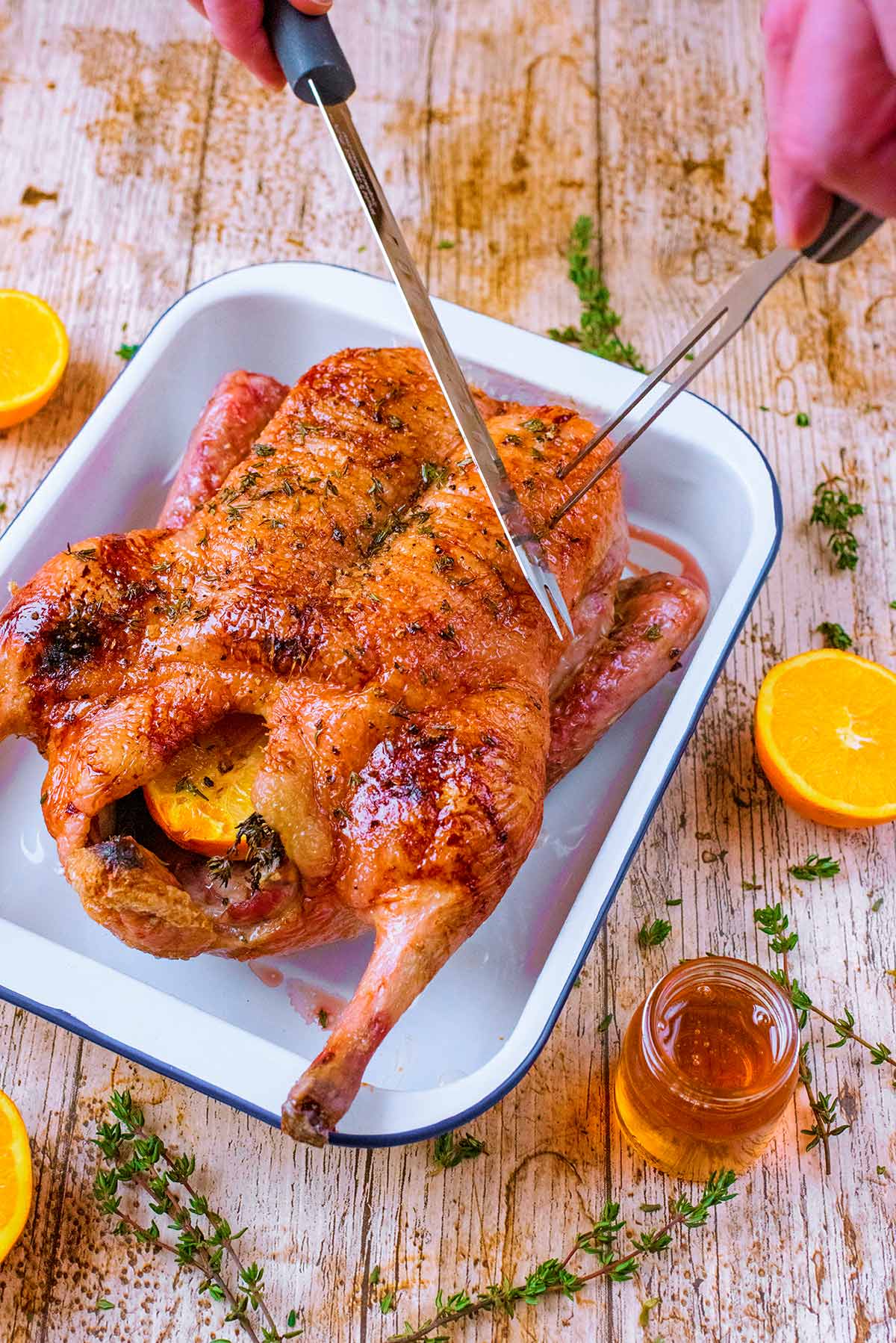
Leave the duck to rest before carving. Remove the legs by cutting through the joints, then carefully slice the breast meat away from the breastbone. Cut the breast meat into slices and serve with the legs and your favourite sides.
Duck is slightly different to carving a roast chicken because there's less breast meat and more fat under the skin, so use a sharp knife and take your time.
Duck is naturally higher in fat than chicken or turkey, particularly when you eat the skin. That fat gives duck its deliciously rich flavour and helps create the lovely crispy skin. A lot of the fat renders out during roasting, and the nutritional information for this recipe is calculated using the cooked meat and skin, rather than the weight of the whole raw duck.
The nutritional information is based on three generous portions, with approximately 267g of cooked duck meat and skin per person. If you're serving this as part of a Christmas or Thanksgiving dinner with lots of side dishes, you could easily divide it into four smaller portions instead.
More Sunday Meat Recipes
If you've tried this Honey Roasted Duck recipe, let us know how you got on in the comments below.
Tag us in your creations on Instagram @hungryhealthyhappy and use the hashtag #hungryhealthyhappy too.
Recipe
Honey Roast Duck


Recipe Video
Ingredients
- 1.3 kg (3 lb) of Whole duck
- 1 Orange
- 2 tablespoons of Honey
- 2 sprig of Thyme - whole
- 2 sprig of Thyme - leaves only
- ½ teaspoon of Fine sea salt
- 1 teaspoon of Ground black pepper
Instructions
- Prep: Preheat your oven to 220°C/200°C fan/425°F/Gas 7.
- Prepare the duck Remove any giblets or packaging from the cavity. Pat the duck dry with kitchen paper, then lightly prick the fatty skin with a skewer, taking care not to pierce the meat.
- Flavour the duck: Squeeze a little orange juice inside the duck, then place the orange halves and two sprigs of thyme loosely inside the cavity. Season all over with salt and pepper.
- Start cooking the duck: Place the duck breast-side up in a large roasting tin, preferably on a rack if you have one. Roast for 20 minutes, until the skin starts to turn golden.
- Turn the heat down: Reduce the oven temperature to 190°C/170°C fan/375°F/Gas 5 and cook for another 40 minutes.
- Add the honey: Remove the duck from the oven and drizzle over the honey, spreading it across the skin. Sprinkle over the remaining thyme leaves, then return to the oven for approximately 20 minutes.Baste lightly with the honey and pan juices during this final stage, taking care not to soften the skin with too much liquid.
- Check the duck: Check the internal temperature with a meat thermometer. The duck should reach at least 75°C/167°F in the thickest parts of the breast and thigh, without the probe touching bone. Check the inner wing area too. If it needs longer, return it to the oven and check again.
- Rest the duck: Remove the duck from the oven and leave it to rest, uncovered, for 10 minutes before carving.
Recipe Notes
- Timings are based on a 1.3kg duck. Larger birds will take longer.
- Patting the skin dry and lightly pricking the fatty areas helps the fat render during roasting.
- Add the honey towards the end to stop it burning.
- Swap thyme for rosemary or add garlic cloves inside the cavity for extra flavour.
- Carefully save the excess duck fat for roast potatoes and the cooking juices for gravy.
- Leftovers can be refrigerated for up to 48 hours or frozen for up to 2 months for best quality.
Nutritional Information
Where nutritional information is provided, it is approximate and calculated using online tools. Values can vary depending on the ingredients and brands used, but we endeavour to be as accurate as possible.
All timings are a guide and may vary depending on the ingredients, equipment and, where relevant, the appliance used. Changing the serving size may also affect the time needed.

Catherine Brown says
Love the oranges and thyme in there... adds so much flavor! and that skin....OMG, beautiful!
Mike Hultquist says
The duck turned out perfect. Everyone loved it. Great tips on the temps. It made everything very easy. Much appreciated.
Taylor W. says
So crispy and full of flavor! Love the fresh orange!
Louise says
I love duck and your skin looks perfectly crispy!
Erin says
This duck recipe looks amazing! This would be great for smaller holiday gatherings for sure.
Luci says
That looks for perfect a holiday feast. I love the honey and orange.
Emily says
Wow! That duck is cooked perfectly. I would never have thought to make duck on Christmas, but now I am seriously thinking about it. I am going to pin this for later.
Suzy says
Not so many good recipes out there for duck! Thanks so much for sharing.
Maira CLoseothome says
I have never cooked or eaten Duck before. You make it look so pretty and easy.
Tawnie Kroll says
I can't wait to make this for Christmas - thank you!!
Michael Watson says
Thank you so much for the detailed information about cooking the roast duck. I am used to turkey (which is a bit dry) or chicken and occasional lamb which I love. But I must admit I never really thought about roast duck with all the ingredients you mentioned.
If I don't try it for Christmas I will try it for Easter.
It certainly looks very appetising.
Julia says
This is one of my favorite meals but haven't had it in a while! Gotta make it this Holiday season! :)
Claudia Lamascolo says
I have never had duck before and looking at this which is so incredible and perfect I just want to dive right in. Bravo and I need to get a duck soon!
Jacqueline Debono says
I love duck a lot more than turkey, although I haven't roasted one for a while. Good idea for Christmas! Love the addition of honey!
Emily says
I have never attempted a duck before, but this post has given me confidence. Good to know how easy it is. Beautiful pictures too.